
Close Menu
Zero2Turbo | High-Performance Car News, Reviews and Videos from South Africa
    Facebook X (Twitter) Instagram
    Facebook X (Twitter) Instagram RSS
    Zero2Turbo | High-Performance Car News, Reviews and Videos from South Africa
    • Home
    • Contact
    • Videos
      Featured

      Ferrari 12Cilindri Gets the Novitec N-Largo Treatment

      By Zero2TurboNovember 16, 2026
      Recent

      Ferrari 12Cilindri Gets the Novitec N-Largo Treatment

      November 16, 2026

      BYD’s Yangwang U9 Xtreme Hits 503.17 km/h in Abu Dhabi

      November 6, 2026

      BMW Alpina Tests New V8 Model Beyond 300 KM/H

      November 3, 2026
    • South Africa
    • WhatsApp Channel
    • Preferred Source On Google
    Zero2Turbo | High-Performance Car News, Reviews and Videos from South Africa
    Home»Zero2Turbo»The Two Different McLaren Senna Exhausts Explained
    Zero2Turbo

    The Two Different McLaren Senna Exhausts Explained

    By Zero2TurboAugust 15, 2018No Comments
    Facebook Email Twitter LinkedIn Telegram WhatsApp
    Share
    Facebook Email Twitter LinkedIn WhatsApp Telegram

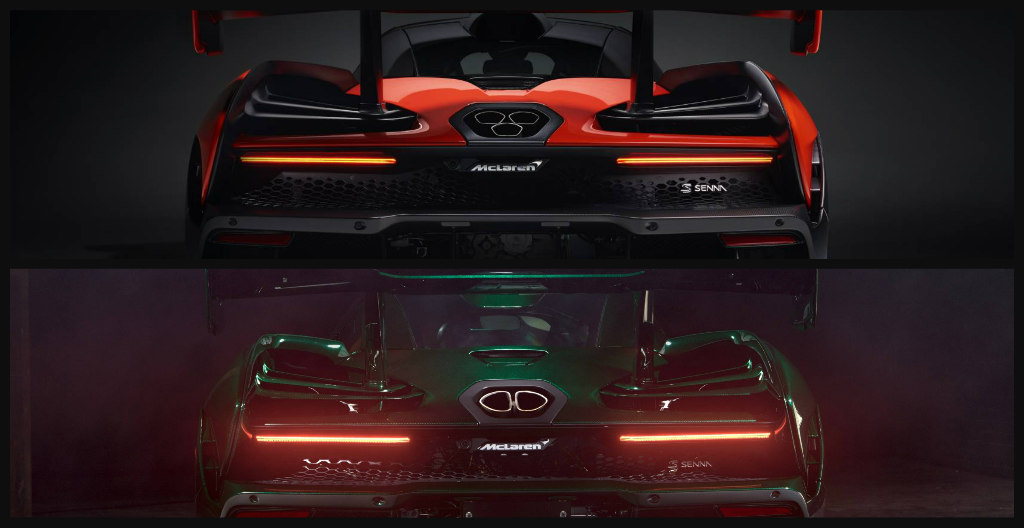
    For those with a keen eye and maybe a slight obsession with the new McLaren Senna you will notice that there are two different variations of exhaust layout now that deliveries have started taking place and it was not exactly clear why.

    Well luckily for us, McLaren-mad Instagrammer Peloton25 has cleared it up for us in a sweet and to the point post on the social media platform.

    The twin exit exhaust should be referred to as the “non-EU spec” because the EU-spec cars will all get the three pipe system we saw on the launch car.

    The reason for this is fairly simple and it is because countries which have to conform to European Union Type Approval standards for automobiles (including the UK, for now) there are ever increasing rules to limit noise from exhaust. McLaren stuck to these conforms with the SennaΒ by creating a unique exhaust setup with three outlets. It uses a set of baffles to block the upper two pipes at lower engine speeds and cause exhaust to exit only through the third pipe.Β That route includes an additional muffler which then reduces noise to acceptable levels. At higher speeds the baffles inside switch over and exhaust is routed through the two upper pipes, closing off the lower pipe.


    I still see a lot of questions/confusion on this topic, so let’s talk briefly here about #McLarenSenna exhausts. πŸš•πŸ’¨ . Of course this is a US car but what you see here on chassis #003 should not really be referred to as the “US-spec exhaust”. Rather this is the “non-EU spec” setup as Senna’s in many markets besides the US will have this two-pipe system. A few Senna’s already delivered in the Middle East do, and I believe very soon we will see it on Senna’s arriving in Asia too. 🌎 . In the countries which have to conform to European Union Type Approval standards for automobiles (including the UK, for now) there are ever increasing rules to limit noise from exhaust. It seems these rules came into play around 2011 and new vehicles sold in the EU will continue getting ever quieter moving into the future. πŸ™Š McLaren chose to conform to this on the Senna by creating a unique exhaust setup with three outlets. It uses a set of baffles to block the upper two pipes at lower engine speeds and cause exhaust to exit only through the third pipe. That route includes an additional muffler which then reduces noise to acceptable levels. At higher speeds the baffles inside switch over and exhaust is routed through the two upper pipes, closing off the lower pipe. πŸ‘πŸ» . For the rest of us McLaren chose to improve performance by designing a system that loses the added complexity and additional weight, and just go with two pipes. I know some people prefer the look of the three pipes partially because that’s the first style you saw in press photos. I’ll also agree the three pipes do fill in the opening a bit better. However, on a car like this you should probably care about more than just visual appeal, right? πŸ˜‰ . So that’s the story – a rare case where something that might appear to be a negative on a car isn’t actually a bad thing, nor is it the fault of US regulations. Hopefully you have been enlightened. Tag your friends who are still confused and help educate them too. πŸ“™ . #McLaren #exhaust #hypercar #supercar #stunning #awesome #incredible #instacar #instagood #carsofIG #blacklist #speedlist #gtspirit #lovecars #picoftheday

    A post shared by Erik – ❀️’s πŸš™πŸ’¨ 🏁 🚲 ✈️ πŸš€ πŸ“· (@peloton25) on Aug 14, 2018 at 3:44am PDT

    McLaren
    Share. Facebook Email Twitter LinkedIn WhatsApp Telegram
    Previous ArticleRenew Your Bike Insurance On Time
    Next Article RaceChip Crank Hyundai i30 N Up To 320 HP (238 kW)

    Related Posts

    McLaren McL 820 Confirmed As 809 HP (603 kW) Successor To The 750S

    November 2, 2026

    McLaren 750S To Be Axed In 2027 Amid Major Brand Overhaul

    October 8, 2026

    McLaren Gets A New Logo As The Brand Prepares For Major Expansion

    September 23, 2026

    McLaren Performance SUV Officially Coming Before 2030

    September 16, 2026

    New McLaren ‘P34’ Could Get 810 HP And McLaren F1-Inspired Styling

    September 10, 2026

    McLaren McL 6GT Brings Back The Manual Supercar For 2028

    August 14, 2026
    Popular Posts
    • Lamborghini Reveal Urus Pearl Capsule Design Edition
    • Lamborghini Gallardo Rallycross Car Looks Outragously Fun
    • Mysterious Ferrari Design Patent Might Show A LaFerrari-Based One-Off
    • VW Tease The Uber-Sexy Rally Ready Polo GTI R5
    • Posaidon Mercedes-AMG S63 Offers As Much As 927 HP (681 kW)

    Facebook X (Twitter) Instagram YouTube RSS
    Designed by Zero2Turbo.

    Type above and press Enter to search. Press Esc to cancel.