
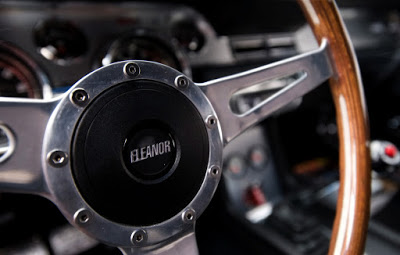
 It’s not as exciting as other automotive components but the good old steering wheel has some history behind it too. To start with, the first automobiles didn’t have steering wheels, they had tillers. Can you imagine that being the case today? In this article, we will look at the history of the steering wheel and you may find that this common automotive part is a little more interesting than you think.
Automobiles started to be built in the late 1800s. At that time, there weren’t many self-propelled machines that people needed to steer. In fact, this category had just example: boats. Carriages didn’t need steering, just a pull on a horse’s bridle was the way you changed direction. Trains certainly didn’t need steering wheels, they went where the rails guided them. Small boats, on the other hand, needed to be steered so tiller handles connected to rudders were used. Being familiar technology to control things that moved, this general technique was used by all the early automobile manufacturers.
Just before the 1900s, European manufacturers, however, started to experiment with steering wheels. In 1894, during the famous Paris-Rouen race, a Panhard driven by Alfred Vacheron was the first automobile to use a steering wheel. This worked out so well that by 1898, all Panhard cars came equipped with steering wheels. By 1899, steering wheel fever expanded to the US, where Packard introduced it on one of its 1901 models. When the first Model T arrived in 1908, steering wheels were standard equipment in all cars made in the United States.
As you might imagine, steering with early steering wheels was not an easy task and required a fair amount of strength. As Coffee Chrysler of Douglas, GA, a Chrysler, Dodge, Jeep, Ram dealer, explained to us, it was just simply the way cars were back then, many were big and cumbersome. It wasn’t until the 1920s when experiments with power steering began. Automotive historians credit Francis W. Davis, an engineer with the Pierce Arrow Motor Car Company, as the first to develop a power steering system for automobiles. In 1936, the Bendix Corporation signed a deal with Davis to build and promote his system. By 1939, ten prototype models of Davis’ hydraulic power system had been built and General Motors bought two systems to fit them into experimental Buicks…then WWII broke out.
As it did in many technical fields of engineering, the war pushed power steering development into high gear. The driving force behind it was the Military who wanted easy controllable war machines. By the end of the war, over 10,000 vehicles equipped with power steering were roaming the battlefields. Power steering technology was now becoming universal.
For decades, the only other role given to the steering wheel, besides controlling the direction of the car, was that of a platform for the horn button. It was only in the 1960s that some carmakers began fitting the cruise control operating switches onto the wheel and pushbuttons for transmissions. That was about it for the steering wheel until early 1990s, when the advancements in in-car gadgetry really took off and buttons to control these “infotainment” devices were placed on the steering wheel. And the future? There’s no telling where the steering wheel will end up but it’s bound to be interesting.