
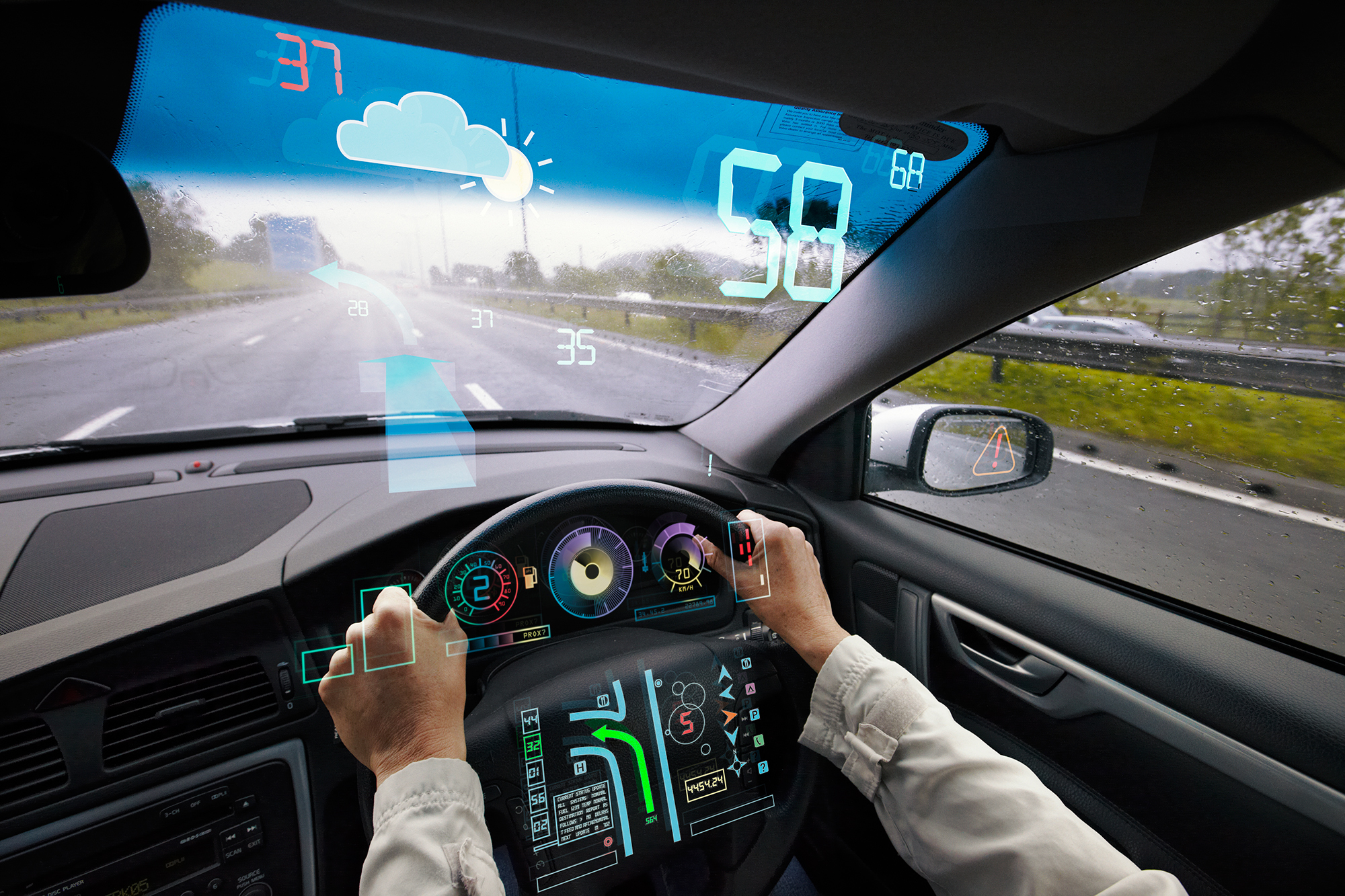
We suspect that augmented reality will change the way we drive our cars. It will make driving vehicles safer and much easier, no doubt making it useful. But, before we get into this story, let’s discuss the difference between Augmented Reality and Virtual Reality. Thank you to www.browningdodge.com out of Norco, CA, for outlining the differences for us!
The Differences
Augmented Reality (AR) is like an overlay that a person sees “over” ordinary reality. A great example of AR is the Pokemon Go game. The term “Virtual Reality” (VR) has been around for years. VR is an artificial (virtual) environment that a computer or gaming console creates. Picture people playing video games, which have been around for around 30 years, and you have the idea of VR.
AR’s Beginnings
The American military’s aircraft unit was the first group to develop AR devices. An issue that needed to be solved for decades was that military pilots got swamped with data throughout flights. This was very true during combat. The answer to this involved AR and a “Heads-up Display, ” which is mounted so images may be projected on the plane’s windshield. Then a plane operator could view data whilst they’re looking ahead. The data could be flight-oriented (speed, altitude, etc.), aircraft-oriented (gas level, engine performance, etc.) or ordinance-oriented (bombing target location, etc.). Heads-up displays were first installed in aircrafts in the 1970s and used CRTs to make the images.
Coming to Passenger Cars
It did not take long before the car industry saw the benefits of drivers seeing certain data on windshields. General Motors was the first to get it into a passenger vehicle, and their 1988 Oldsmobile Cutlass offered a heads-up display. This heads-up display had turn-indicator arrows and a glowing speedometer.
Then, other GM vehicles followed in the Oldsmobile’s footsteps. In the 2000 Cadillac DeVille, General Motors placed in their car a heads-up display that showed an image from a thermal-imaging night-vision camera. The system’s purpose was to “increase a driver’s perception in the darkness or in poor weather.” Jaguar engineers created a “360 Virtual Urban Windscreen” concept that projected a “ghost car” on the windshield’s glass. The position of the ghost car guided a driver to copy lane changes and turns in place of listening to GPS directions. This concept was created in 2014.
Conclusions
The main promise of AR is in the Dynamic Content Systems that FIAT Chrysler is currently developing. These content systems will display relevant driving data in real time. For example, in the heads-up display, the driver could see arrows that point to where to go. You could also receive alerts about speed limits, road closures, and traffic conditions. Plus, the system could display smartphone notifications, and you could react to them while keeping eyes on the road. Augmented Reality is bound to offer serious benefits to the motorist! Stick around because many automobile manufacturers are creating AR systems and we should see the results soon enough.