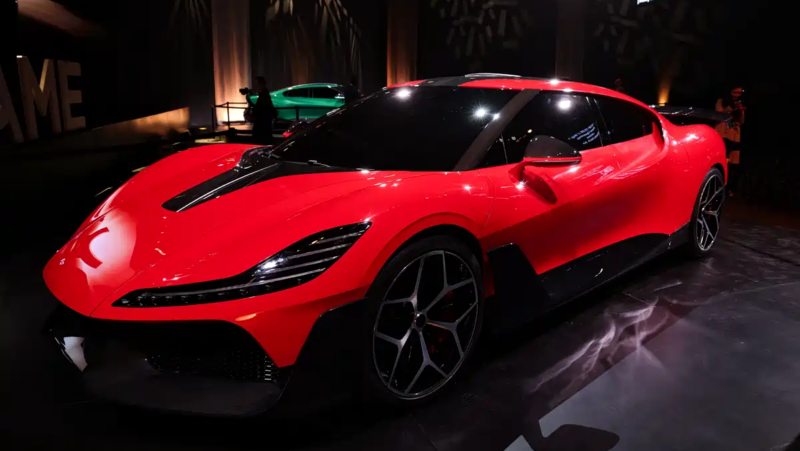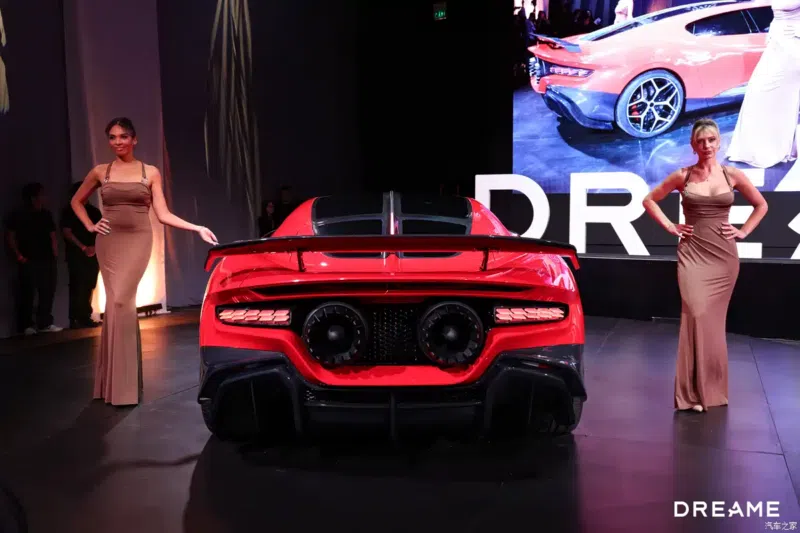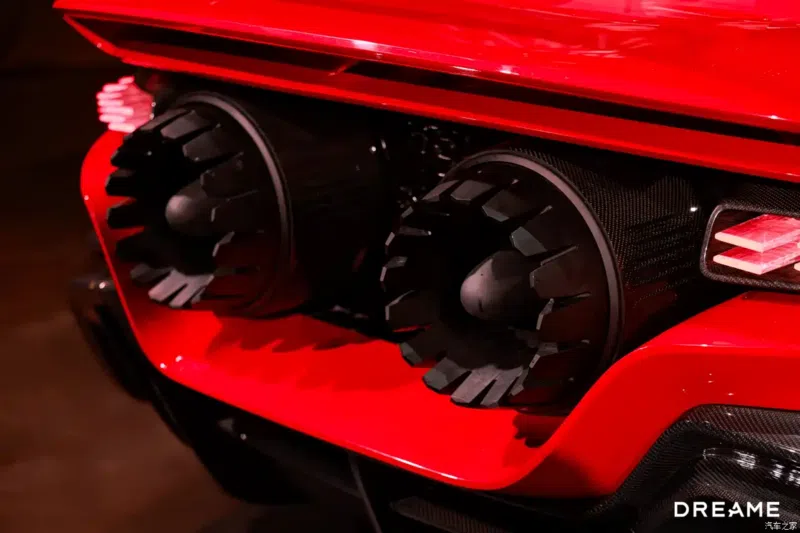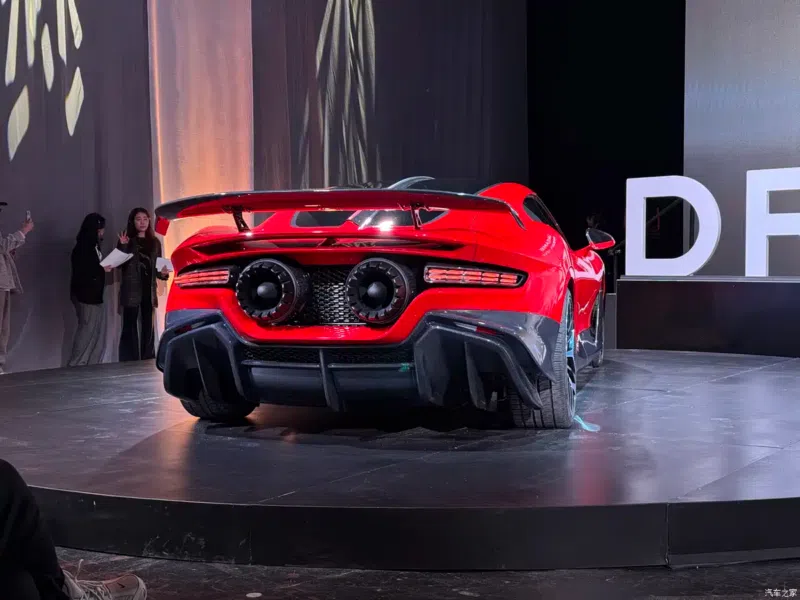
Dreame Technology has stepped into the automotive space with something that feels more like a concept from aerospace than a road car. At its global “Dreame Next” event in Silicon Valley, the company revealed its first vehicle, the Nebula Next 01 Jet Edition, claiming a staggering 0–100 km/h sprint of just 0.9 seconds thanks to a dual solid rocket booster setup.
Founded in 2017, the Chinese brand has built its name in smart home and personal care tech. Last year it made it clear it had bigger ambitions, hinting at a car capable of taking on the likes of the Bugatti Chiron in outright performance.
At the core of the Nebula Next 01 Jet Edition is a bespoke dual solid rocket booster system. Dreame says this setup brings aerospace-style propulsion into a road-going format, with response times as quick as 150 milliseconds and peak thrust rated at 100 kilonewtons. Engineers behind the project claim the system is carefully managed through advanced electronic controls to keep performance usable while maintaining safety.
Energy comes from a sulfide-based all-solid-state battery with a claimed energy density above 450 Wh/kg. Compared to conventional lithium-based packs, this approach is said to deliver greater energy storage and improved safety during charging. Dreame notes the technology is still being readied for large-scale production, with a quoted CLTC driving range exceeding 550 km.
The platform also introduces a full steer-by-wire system capable of 14 degrees of freedom through non-linear cooperative control, reacting in under 1 millisecond. In practice, this allows for unusual manoeuvres such as lateral parking, tight pivot turns, and maintaining stability even in the event of a tyre failure.
On the software side, the car uses a three-layer intelligent driving architecture built around VLA (Vision-Language-Action) models. The system is designed to interpret surroundings, adapt over time, and support human-machine interaction behind the wheel. Testing has already covered challenging conditions including heavy fog, winding mountain routes, and active construction zones.
Its sensing hardware includes the DHX1 LiDAR system, featuring 4,320 lines and full 4K colour capability. Dreame claims a maximum detection range of 600 metres, with the ability to pick up objects at 400 metres even at low reflectivity levels. Smaller obstacles such as traffic cones can reportedly be detected at 300 metres, while animals can be identified at around 280 metres.
Inside, the vehicle leans heavily into connected tech, running large on-device models that enable proactive assistance and coordination with other smart devices. Dreame positions the car as a central hub for a broader ecosystem, linking seamlessly with home robots and connected appliances.
Sebastian Thrun, the Stanford professor widely regarded as one of the pioneers of autonomous driving, was present at the unveiling and pointed to the project as an interesting direction for the industry.
He highlighted the way Dreame blends aerospace engineering, artificial intelligence, and automotive development, suggesting that this kind of cross-industry thinking could shape how future mobility solutions evolve.