
Internal combustion engines have a specification called “compression ratio.” This specification refers to the volume in each engine cylinder when the piston is at the bottom divided by the volume when the piston is at the top. Typical compression ratios are 9:1, 10:1, and higher. The problem is that having one fixed compression ratio, say 10:1, at work in an engine at all times means that compromises need to be made. The holy grail for engine designers would be an engine that can change compression ratios on the fly.
Why multiple compression ratios are better
A high compression ratio means you’re squeezing the air-fuel mixture in the engine’s combustion chambers tightly, which in turn means more power and fuel efficiency. The catch is that engines with superchargers and turbochargers don’t like high compression ratios. Why? Their job is to pull in extra air and jam it into the engine. If the air is already tightly compacted and the turbo forces in even more, then the air-fuel can ignite before it should resulting in damaging engine knock. So engineers are caught in a tug of war. They would like a compression ratio that’s high for the sake of power and efficiency, but not so high that engine knock damages the engine. As we mentioned before, wouldn’t it be nice to be able to change the engine’s compression ratio on the fly?
Infiniti engineers figure it out
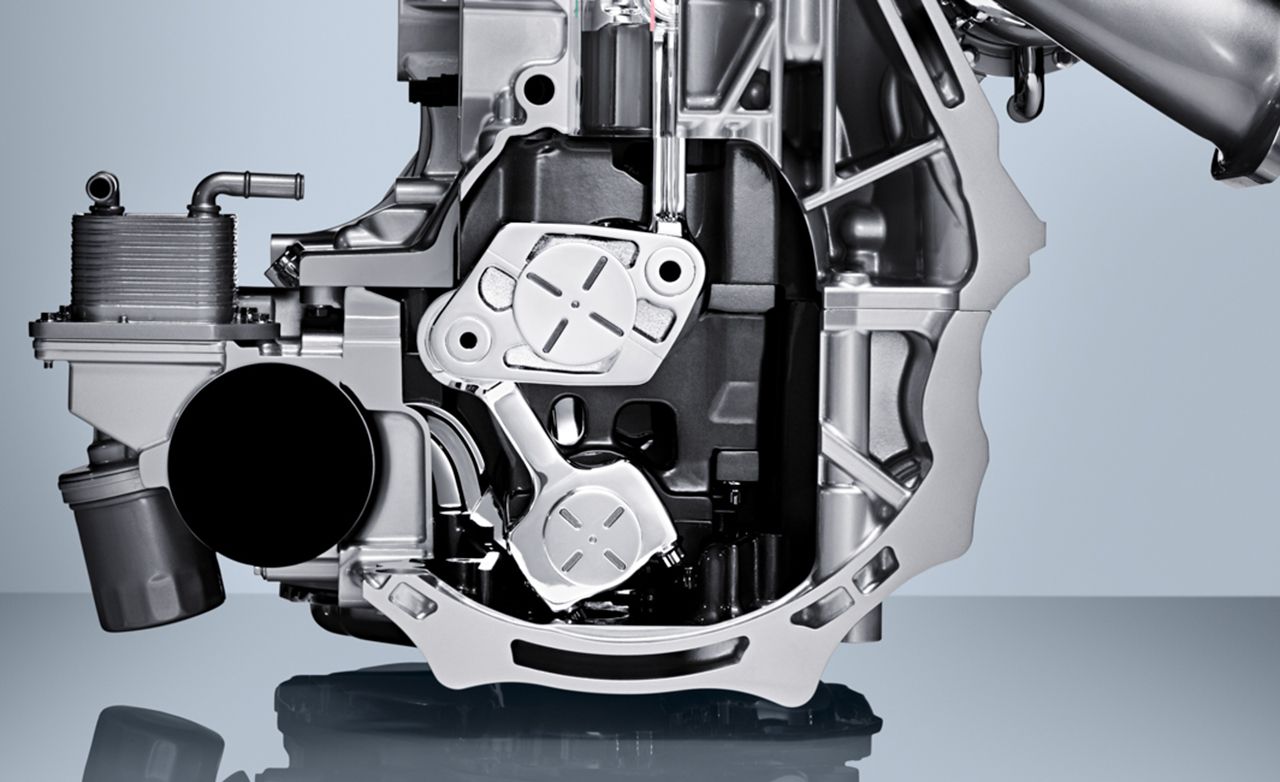
Infiniti was one of the first companies to decide they wanted to perfect variable compression technology. As a result, their engineers have spent the last 20 years working on the technology. In the process, they developed more than 100 engine prototypes and spent more than 30,000 hours on test beds. The fruit of their labor is the VC-Turbo engine.
Infiniti’s VC-Turbo is a turbocharged 2.0-liter inline-four that can operate at very high compression ratios without knocking. During times of high turbo boost, the VC-Turbo’s engine management computer signals an electric motor to lower the compression ratio. When the motor isn’t using the turbocharger as much, the motor lengthens the pistons’ reach, which ups the compression ratio.
Fancy motor mounts too
The engineers wanted variable compression and a smooth running engine too. They accomplished this by ditching the two balance shafts that conventional inline-fours have to balance out vibrations. They accomplished this with another new technology: active motor mounts. Sensors integrated in the upper engine mounts detect vibrations from the VC-Turbo, then creates opposing vibrations to cancel them out. All together, the design knocks nine decibels off the previous engine noise, making their new four-banger almost as quiet as a V6 design.
And Atkinson cycle
The VC-Turbo can also run in Atkinson-cycle to boost gas mileage. Our consultant at Brennan Chrysler, Dodge of Ruston, LA explained that Atkinson cycle engines work by creating a small window of time in which the engine’s intake valves open slightly, drawing extra air into the combustion chambers right as the pistons begin to compress the fuel-air mixture. By reducing the engine’s volume, it lets the engine act like a smaller, more efficient engine. Atkinson-cycle engines are common in hybrid gasoline-electric cars that emphasize fuel efficiency and in which electric motors compensate for the reduced power, but it’s rare on straight-fuel engines.
Times are a changing
Toughening fuel economy and emissions standards are squeezing internal combustion engine engineers. However, car companies expect gas-only motors to stick around for a while. The key to the future is technology that makes smaller engines perform like the big power mills of recent years. Variable ratio compression is one technique that works.