
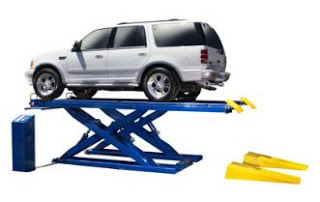
Installing a vehicle lift at your place of business or even on your individual property can prove a blessing when it comes to vehicle repair work. No more lying on the ground or working in pits down in the basement, just stand and do car repairs as needed. Working on a car’s undercarriage with the aid of car lifts can be a healthier, happier experience for the mechanic—if you make sure to keep a few safety tips in mind so that this helpful piece of equipment remains safe for both your employees and customers.

Never let an inexperienced person near the lift operating system or even anywhere in the lift area, to avoid accidentally turning on the switches. Don’t let anyone in your place of business operate the system, either. Designate a few people who can operate the lift and have them review the lift manual or even attend a class on how to safely operate a lift if possible. Then let them practice with a company vehicle before they try it on customers’ vehicles.
If someone is unable to come in to work on a certain day, you do want a handful of people who can operate the lift and do make sure they keep up with their practice. It won’t prove safe if you train three people, don’t let the third person operate the lift for a year and then they have to fill in; they might have forgotten important safety tips by that point.
2. Keep the Area Clear
Before you operate any vehicle lift, you need to make sure the area is clear of both people and things. If it’s a place of business, don’t allow customers in the lift area at all. Have them park their cars away from the lift area and ask a mechanic to drive the customer’s vehicles onto the lift; they’re more likely to get the vehicle aligned correctly. It may go without saying, but it bears repeating: never operate the lift with someone inside the vehicle and that includes pets. Movement inside the vehicle, while elevated, risks injury to the person inside as well as the person below the vehicle.
Every time you press the button, examine the area for stray objects that might not have been cleaned up after the last vehicle was on the lift. You must do this every time, regardless of how recently you used the lift; even a small tool left in the wrong place can fall and cause injury to the operators or damage to the vehicle. A pool of oil or grease can also cause problems, if it clogs the system or causes someone to slip. Also double check before you lower the car in case debris accumulated while you were fixing the vehicle.
3. Inspect Daily
Daily inspections should involve more than simply keeping the area around the lift clear—you ought to be doing that much between every vehicle that you load onto the lift regardless. Every morning, before the lift is operated, the person who uses it should inspect the system, looking for loose bolts, shifted wiring or any other potential hazards that could pose a safety problem.
When in doubt, don’t engage the system. In the event of repairs, only official and original parts should be used. Modified parts could damage the system or cause it to fail while in use.
4. Double Check Capacity
You could run the lift a hundred times without problem, and then load a single vehicle that’s beyond capacity and disaster will strike. One of the things to check before any car is put on the system is whether or not it meets capacity. Pay close attention to larger or heavier vehicles such as vans and trucks, but don’t allow any vehicles on before you’re sure it’s the right size and weight capacity for safe operation.
5. Load and Unload Correctly
Only your trained operators should load and unload a vehicle from the lift; never let a customer do so, even if they claim they know what they’re doing. A trained operator will be able to properly align the vehicle and double check that it’s locked safely onto the lift with lift arms and supports, before they engage the system. A trained operator will also know to check for debris and to reposition the lift arms and supports before they move the car off of the lift after inspection or repair.
If you follow these simple and, often, common sense guidelines, your auto repair business will be safe for your employees as well as your customers. As a result, your business will continue to grow.
Author Bio: Kurt Najera is a contributing blogger and retired mechanic, who loves to restore old Chevys in his spare time. When Kurt is not tinkering with cars in his own garage, he offers his services as a consultant to auto repair shops in the Chicago area.