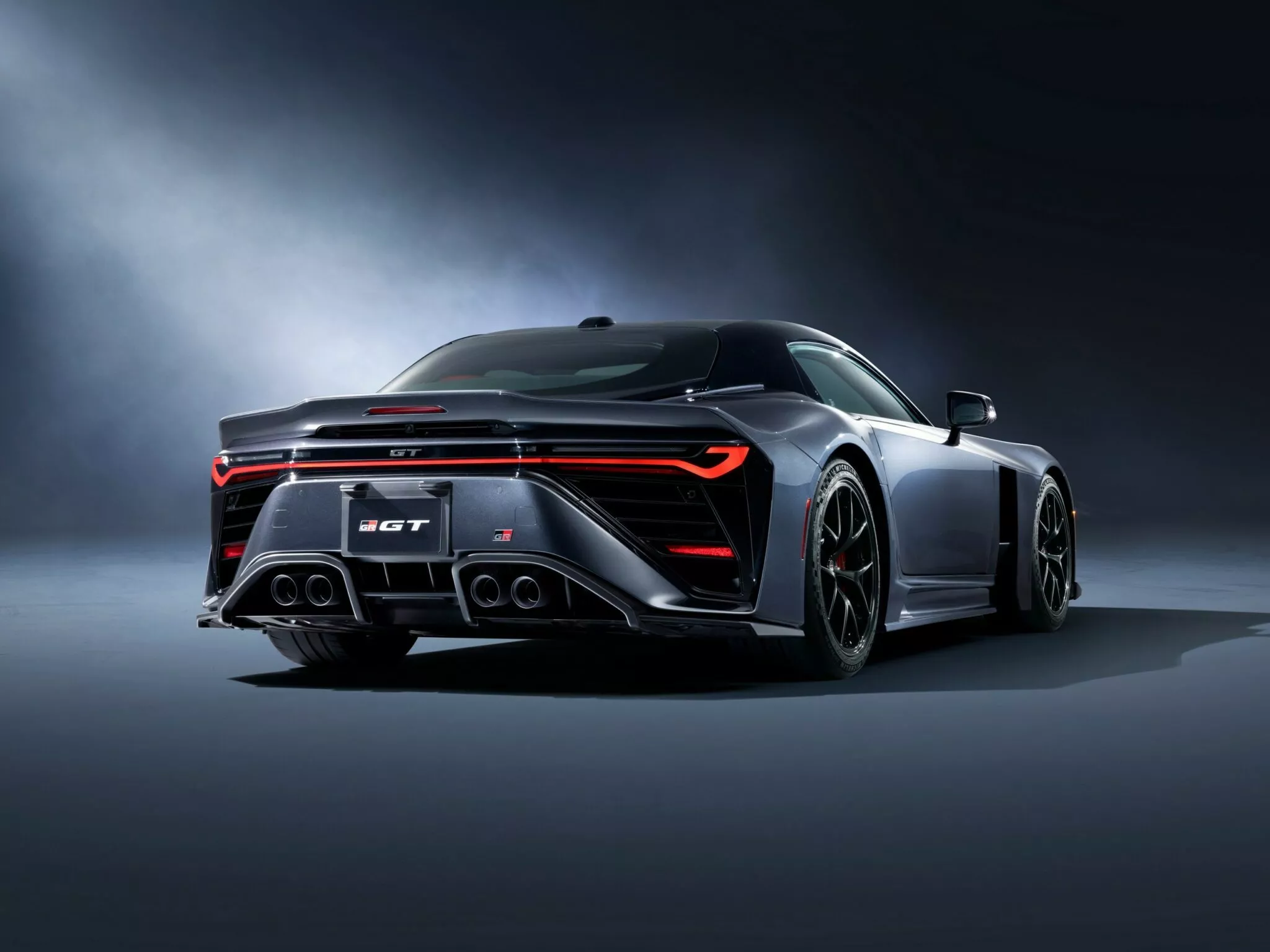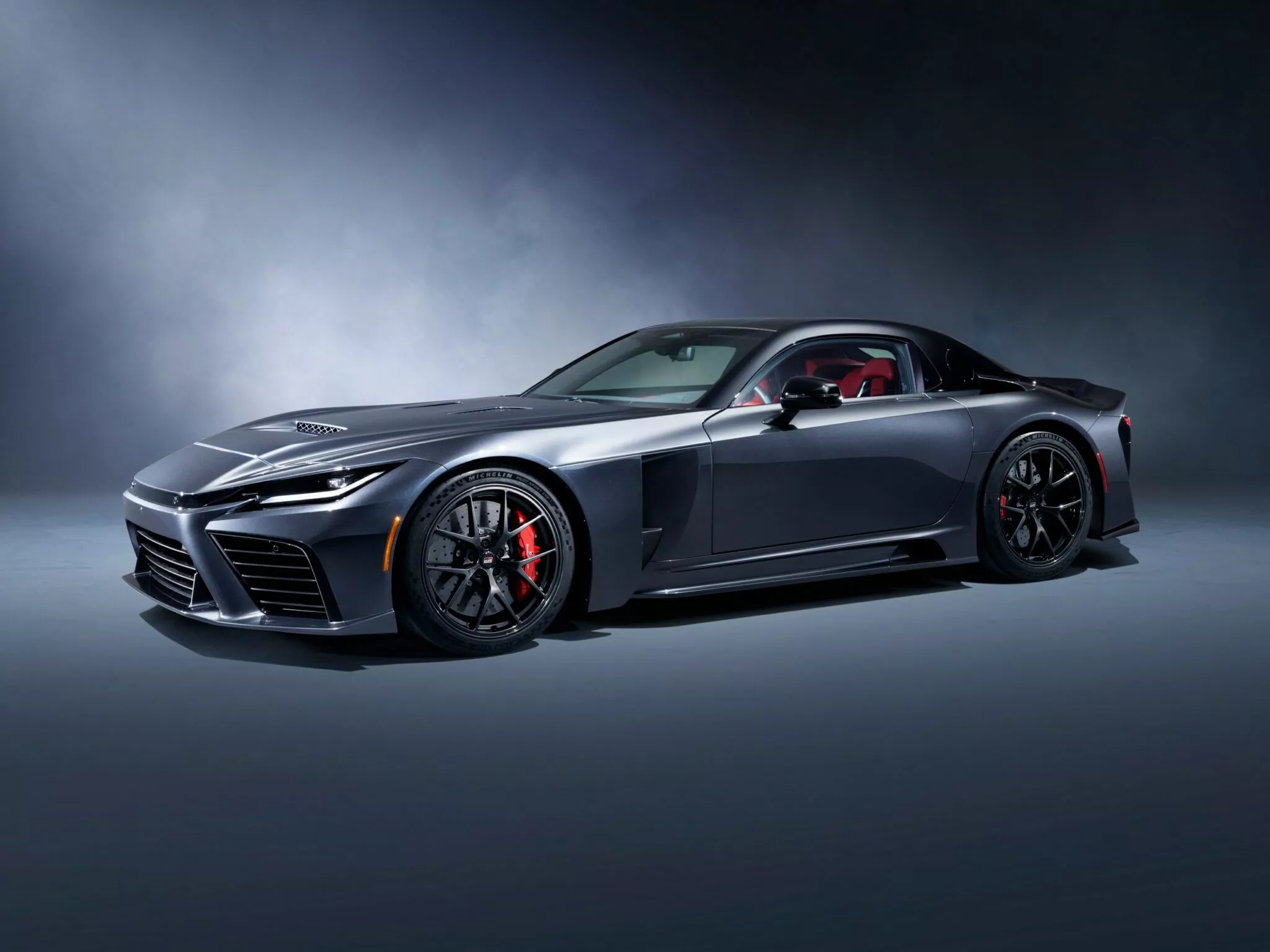
One of the most anticipated reveals of the year has finally arrived, and Toyota has delivered something properly exciting. The new GR GT has been engineered with three core goals in mind: a low centre of gravity, minimal weight with maximum rigidity, and serious aerodynamic capability.
It also has the muscle to back it all up. A dry-sumped twin-turbo V8 pushes out 641 hp (478 kW) and 850 Nm (627 lb-ft), sending power to an eight-speed transaxle mounted on the rear axle. Just ahead of that sits an electric motor designed to fill in torque and reduce lag. Toyota is quoting a top speed of more than 199 mph (320 km/h). Here is the kicker. These numbers are still preliminary. While the basic architecture won’t change, Toyota says power, torque, top speed, and weight could all improve before the production model lands sometime around 2027.
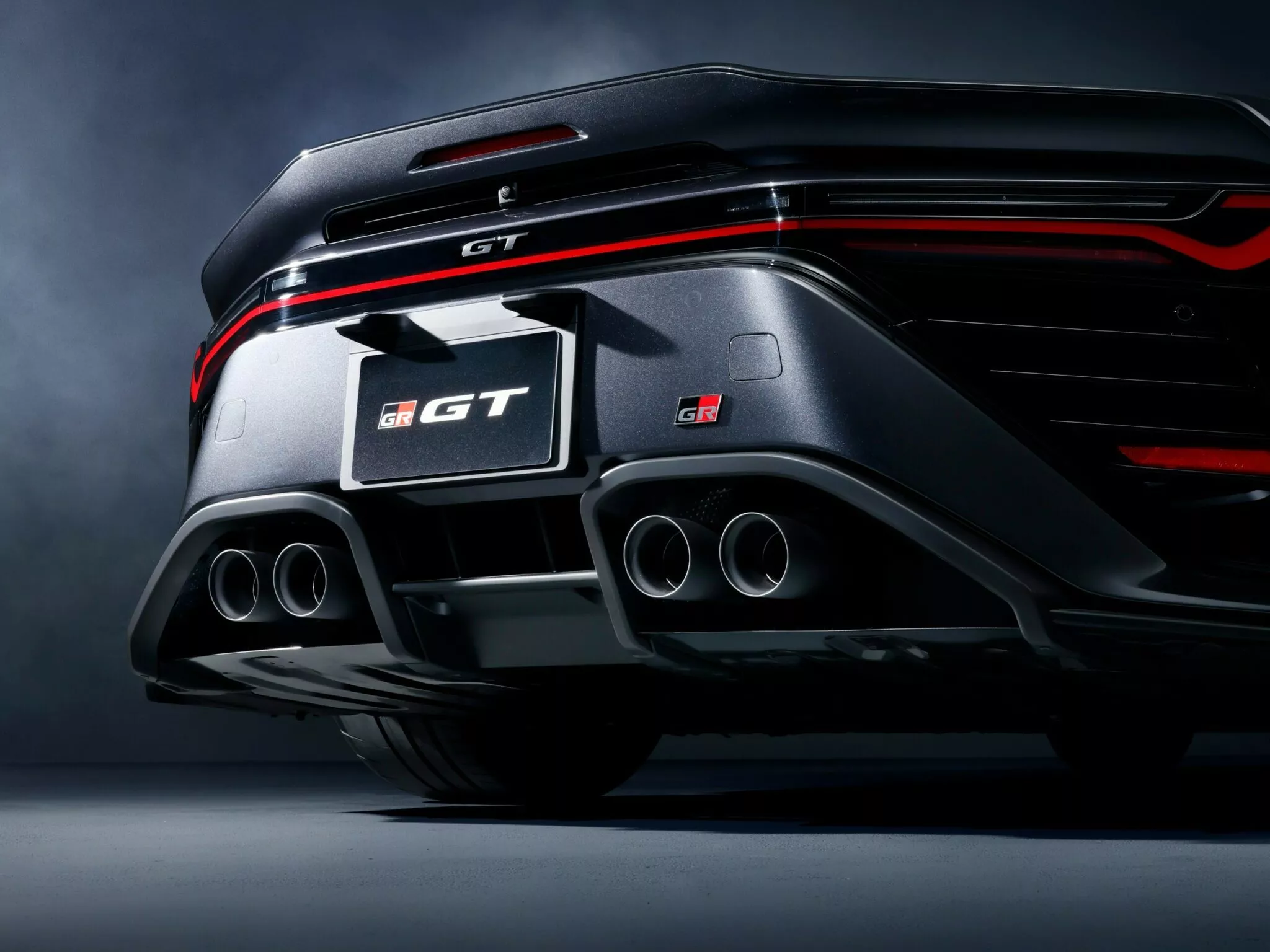
Under that long bonnet sits Toyota’s first hot-vee V8, with the turbochargers tucked between the banks. Drive goes to the rear axle through a carbon fibre torque tube and a mechanical limited-slip differential. The new eight-speed automatic transaxle uses a wet-start clutch instead of a torque converter. There is an electric motor ahead of the gearbox to assist performance, and the hybrid element helps the car meet future emissions rules.
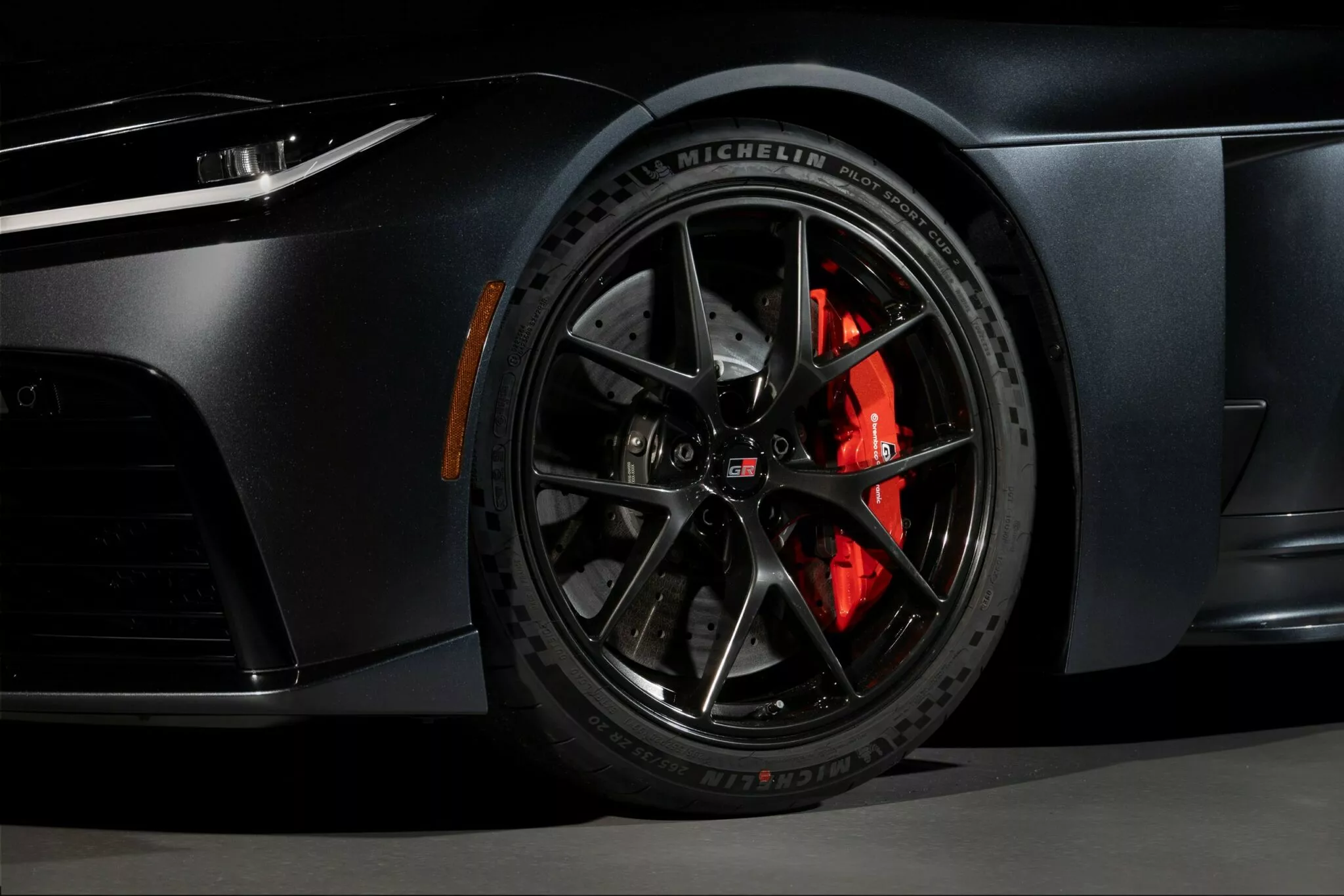
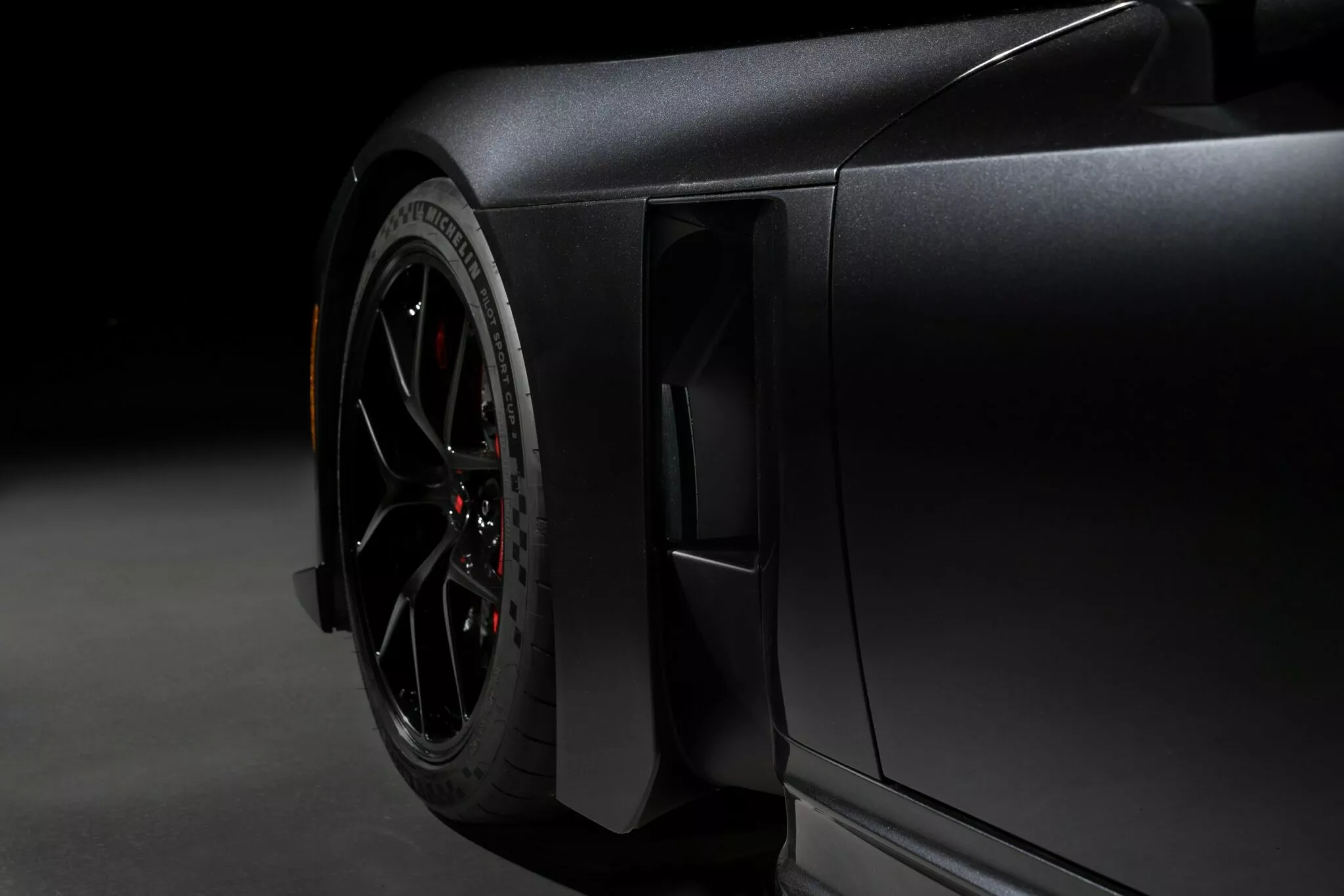
Behind the 20-inch wheels, wrapped in Michelin Pilot Sport Cup 2 tyres, sit Brembo carbon-ceramic brakes that should deliver enormous stopping power again and again. If you are more interested in lighting up those tyres, a multi-stage stability system gives drivers of all skill levels the chance to explore the chassis. Double wishbone suspension at both ends with forged aluminium arms does the hard work underneath.
The design will divide opinion. But before you decide, know this. Instead of sketching something wild and forcing the engineering to fit later, Toyota flipped the script. Aerodynamicists and World Endurance Championship engineers defined the ideal proportions and structure first. The all-aluminium frame and CFRP-and-aluminium body were shaped around performance requirements long before the styling team started sculpting. Simulators backed up the development process. Despite the almost obsessive focus on packaging, Toyota says serviceability was part of the brief as well, with lessons clearly learned from the LFA.
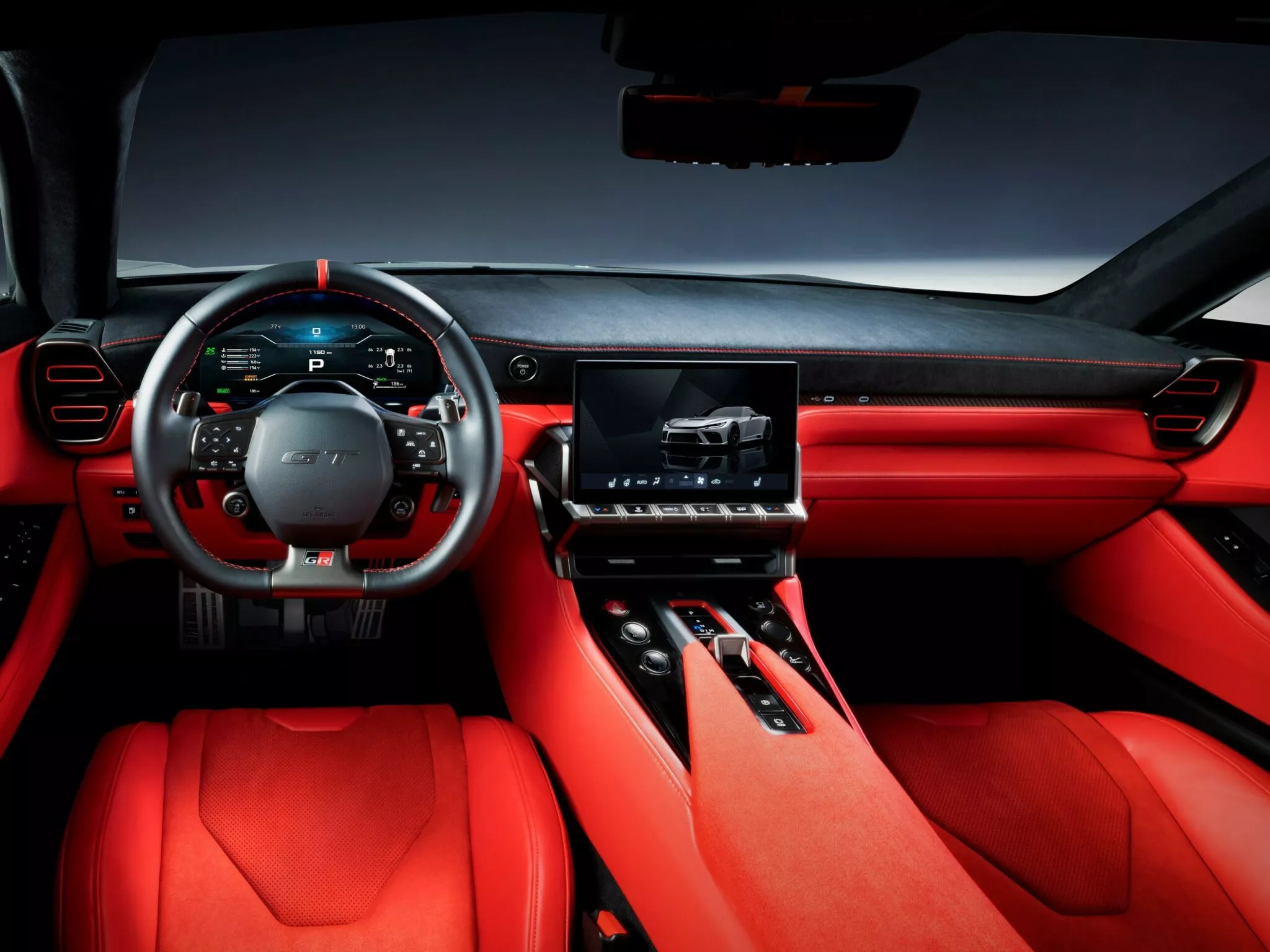
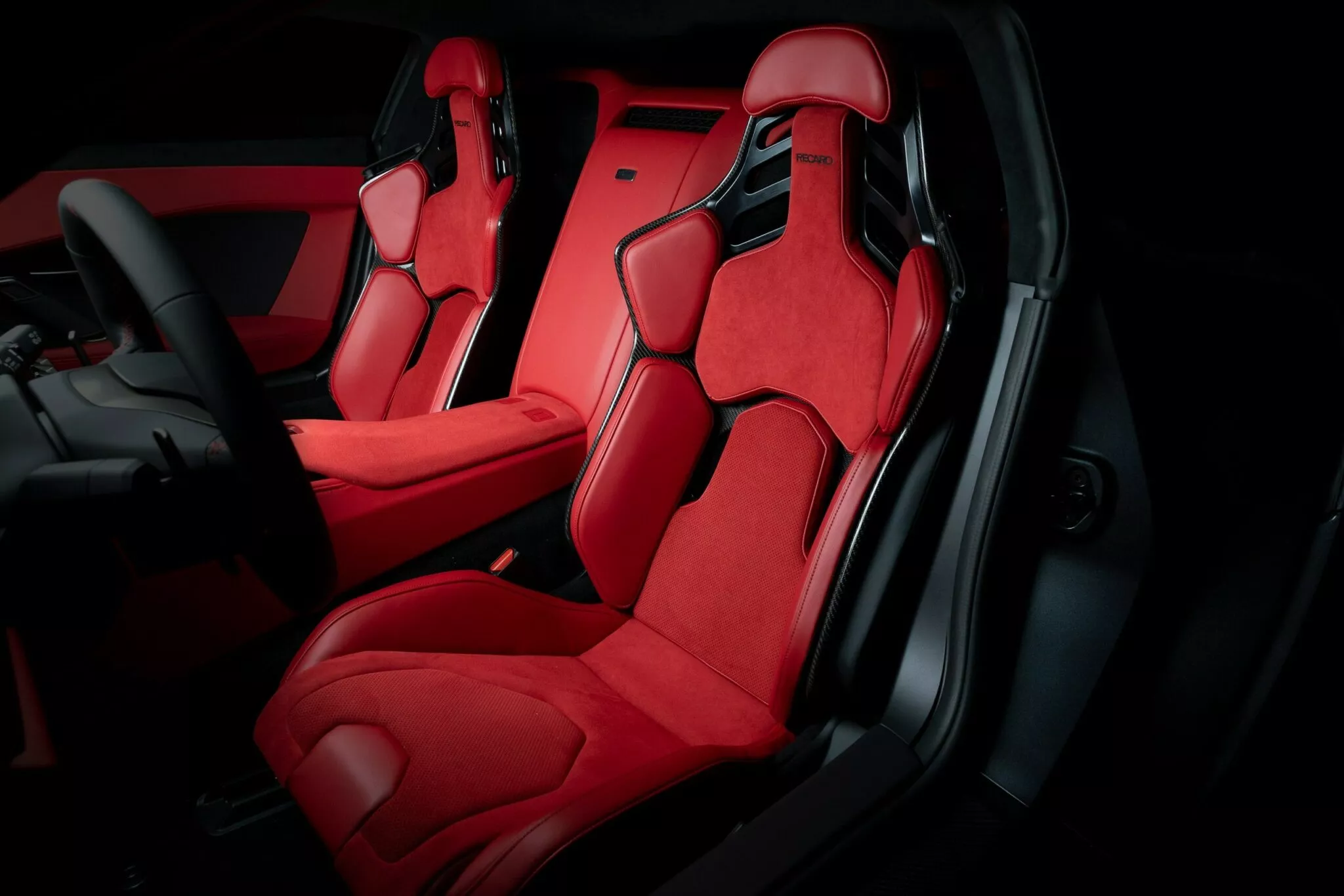
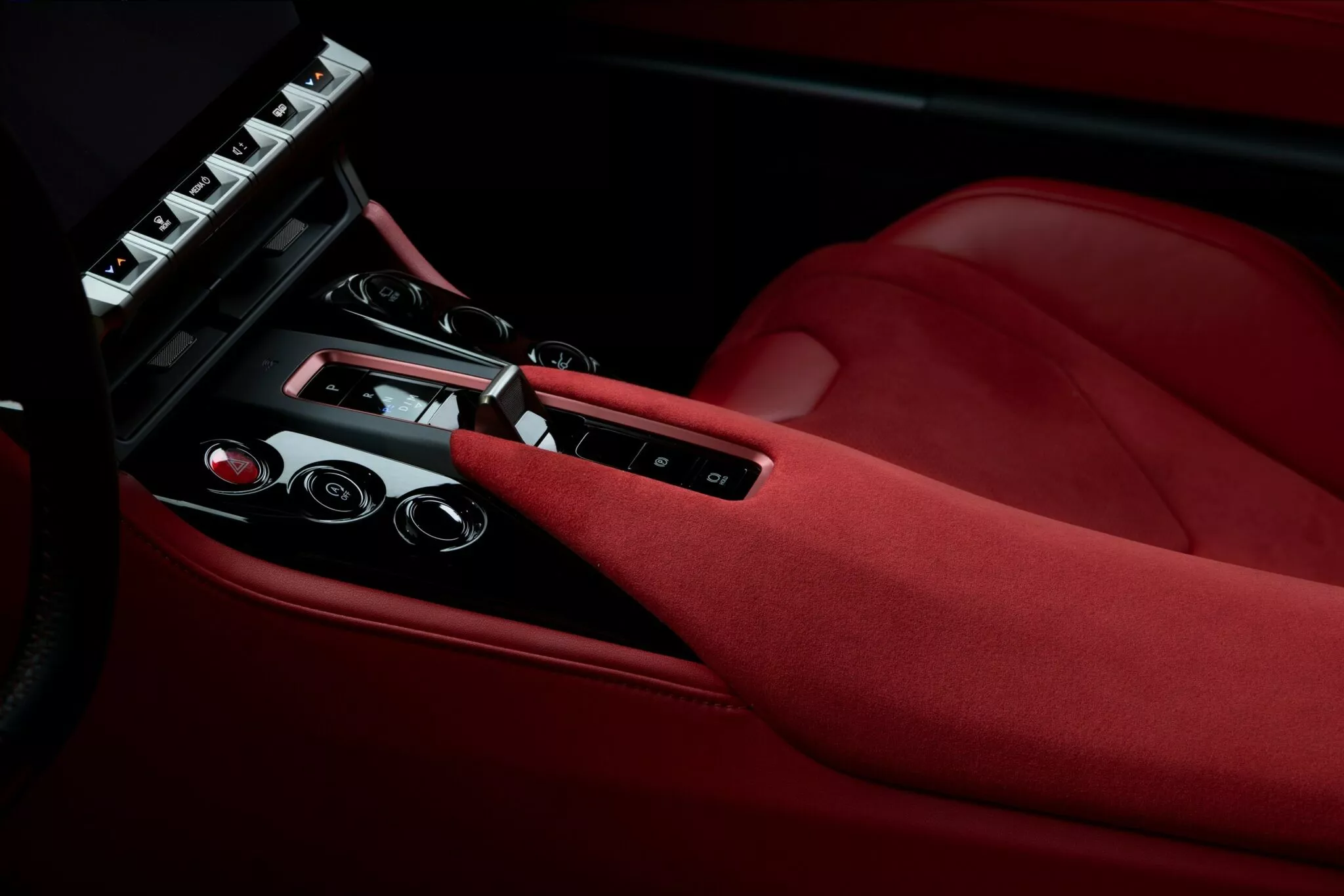
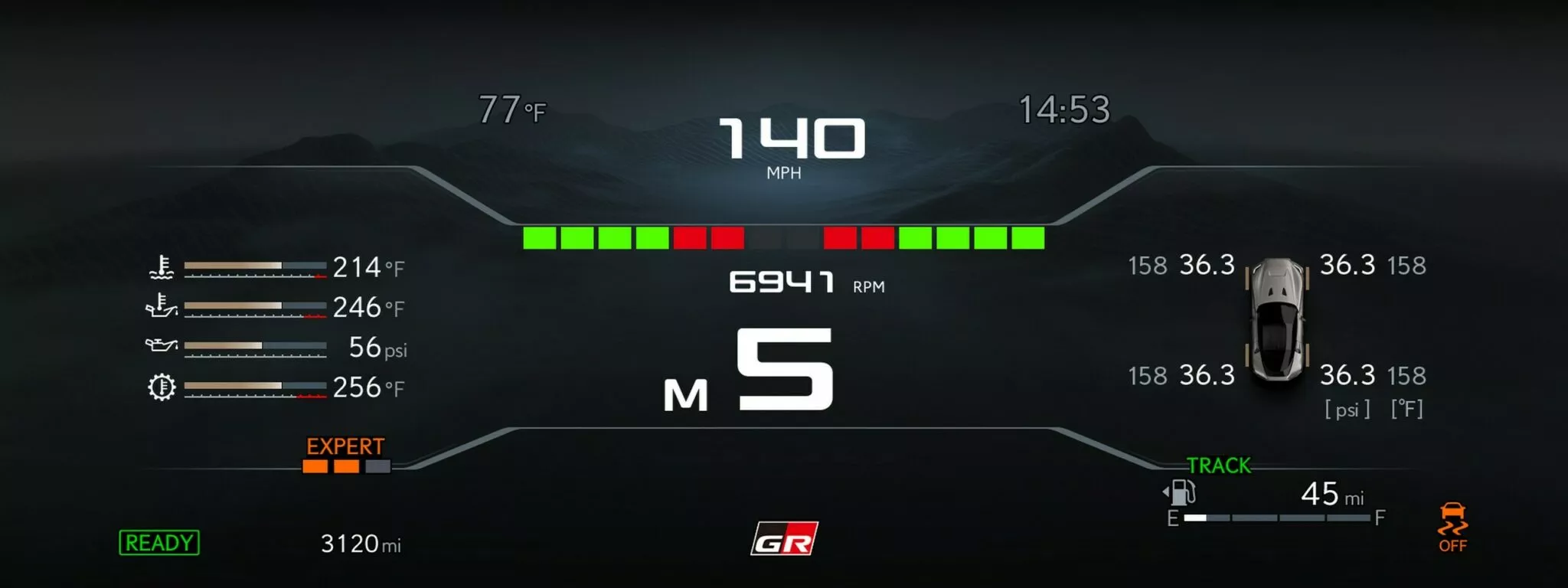
The cabin takes a similar no-nonsense approach with a focus on visibility and driver connection. Toyota fine-tuned instrument sizes and screen placement, including shift and gear indicators, so that nothing distracts from the drive. The seating position is extremely low, placing occupants at nearly the same centre of gravity as the car itself. Everything points to the GR GT and its racing sibling becoming true enthusiast heroes for the brand, much like the legendary 2000GT once did. And because so much development happened virtually from day one, this shouldn’t be another late-stage redesign saga like the LFA. That could make the price somewhat more approachable. Too early to guess numbers, but Toyota clearly wants this to go toe-to-toe with the Porsche 911 on both road and track.