
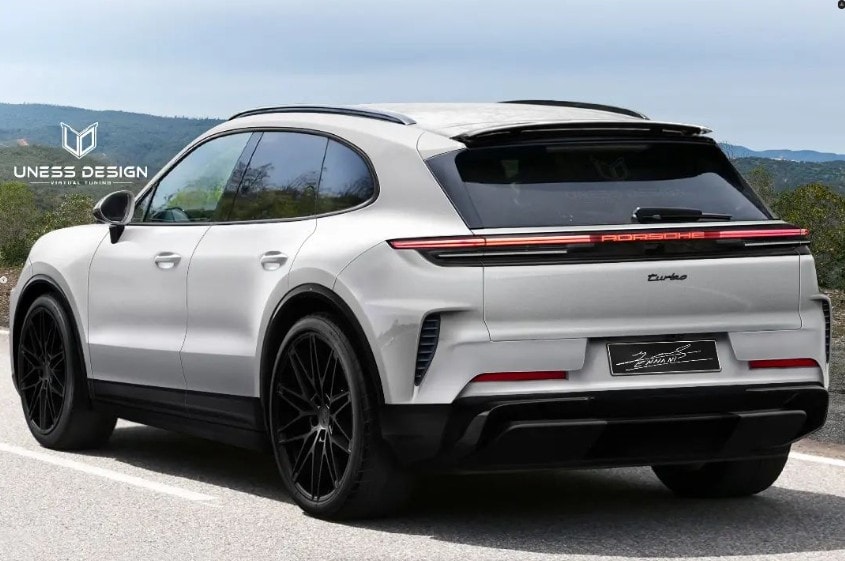
Porsche’s upcoming seven-seat flagship SUV is taking a different path to what was first planned. Rather than debuting as a standalone electric model, the new range-topper will share its foundations with the forthcoming Audi Q9 and arrive with powerful V6 and V8 combustion options.
Internally referred to as K1 and positioned by Porsche as a D-SUV, this model will push the brand into territory it has not previously occupied.
Expect broad configuration choices, with four-, five- and seven-seat layouts all under consideration. In terms of size and positioning, it is being engineered to go straight at established heavyweights such as the BMW X7 and Mercedes-Benz GLS.
Under the skin, the K1 will use Volkswagen Group’s Premium Platform Combustion architecture, the same base set to underpin the Audi Q9. Audi’s large SUV has been conceived primarily with the US, Middle East and China in mind, and Porsche is clearly looking to benefit from shared development costs and scale.
This strategic pivot follows Porsche’s recalibration of its EV ambitions last year amid mounting financial pressure and softer-than-expected electric demand. Sharing core engineering with Audi’s flagship SUV is viewed as a key step in controlling costs while the brand continues investing heavily in electrification elsewhere in the range.
The PPC platform supports six- and eight-cylinder petrol engines as well as a new-generation plug-in hybrid system. Early indications suggest the K1 line-up will revolve around twin-turbocharged 4.0-litre V8 and 3.0-litre V6 powertrains. Output is likely to mirror the spread seen in the current Cayenne family, which ranges from 348 hp (259 kW) to 730 hp (544 kW), placing the new SUV squarely in the upper echelons of the performance luxury segment.
Originally, the K1 was intended to sit on the Volkswagen Group’s Scalable Systems Platform as a pure EV. However, delays in that architecture’s development, particularly on the software side, combined with slowing electric vehicle momentum and a noticeable dip in Taycan demand, prompted Porsche to rethink its approach.
That does not mean the electric version has been scrapped entirely. Porsche has confirmed that a battery-electric K1 remains part of the longer-term plan. For now, the first wave will consist of petrol and plug-in hybrid derivatives, expected to follow roughly a year after the Q9 makes its debut next year.
Production is tipped to take place alongside the Q9 at the Volkswagen Group facility in Bratislava, Slovakia. The Cayenne EV is also assembled there, which leaves the door open for the electric K1 to share the same manufacturing base. The EV variant was initially destined for Porsche’s Leipzig plant, but escalating production costs in Germany have pushed the company to explore more cost-effective alternatives.