
According to News24, Minister of Sport, Arts and Culture Gayton McKenzie has confirmed that his department will soon sit down with Formula 1 executives to discuss the possibility of South Africa joining the championship calendar, as rising tensions in the Middle East place several existing race venues under scrutiny.
Three current destinations on the Formula 1 schedule, Bahrain, Saudi Arabia and Qatar, have all been affected by growing regional instability following military exchanges involving the United States, Israel and Iran. While nothing has been confirmed regarding any cancelled races, speculation is building that F1 could be forced to reshuffle the calendar if the situation fails to stabilise.
South Africa has long been pushing for a return after the sport last raced in the country back in 1993. Last year, McKenzie admitted that the original timeline for a comeback had been overly optimistic, with early ambitions of hosting a race by 2027 pushed back to somewhere between 2028 and 2029 due to the complexity and cost involved in staging a modern Formula 1 event.
The evolving geopolitical situation could, however, create an unexpected opportunity for countries waiting in the wings. Reports suggest that F1 management may consider replacement venues if events in the Middle East become difficult to stage.
Speaking on Wednesday afternoon, McKenzie said discussions with Formula 1 officials are scheduled to take place within the next few weeks, which could shed more light on whether any openings on the calendar might emerge.
“We will only know that in three weeks when we meet with F1 again, maybe the calendar opens up or not,” McKenzie said.
“But we don’t plan on other people’s misfortune. We are sticking to our plan, and we’ll see how it goes.”
Providing an update on South Africa’s bid, McKenzie said one of the most critical hurdles has already been cleared, securing the financial guarantee required.
Typically, host governments carry the financial risk for the race sanctioning fee due to the broader economic benefits associated with hosting a Grand Prix. In South Africa’s case, however, the private sector has stepped forward in a major way.
According to McKenzie, private companies have already pledged more than R1.7 billion towards the project.
“We have secured the most important thing, which is the guarantee, the money. We have secured the money for Formula 1,” he said while speaking at Freedom Park in Pretoria.
He also thanked several major corporate backers who have committed funding towards the potential event, including Betway, Discovery, MTN, Canal+ and SuperSport.
These companies have collectively pledged between R200 million and R300 million each as part of the funding effort to secure a South African Grand Prix.
F1 requires a government-backed guarantee in case the race promoter or sponsors fail to meet the financial obligations attached to hosting the event. In this case, McKenzie confirmed that the government guarantee amounts to R2.1 billion, acting as a safety net if the race were to run at a loss.
“The government guarantee that we have amounts to R2.1 billion, and the sponsors’ money that we have got so far amounts to R1.7 billion,” he explained.
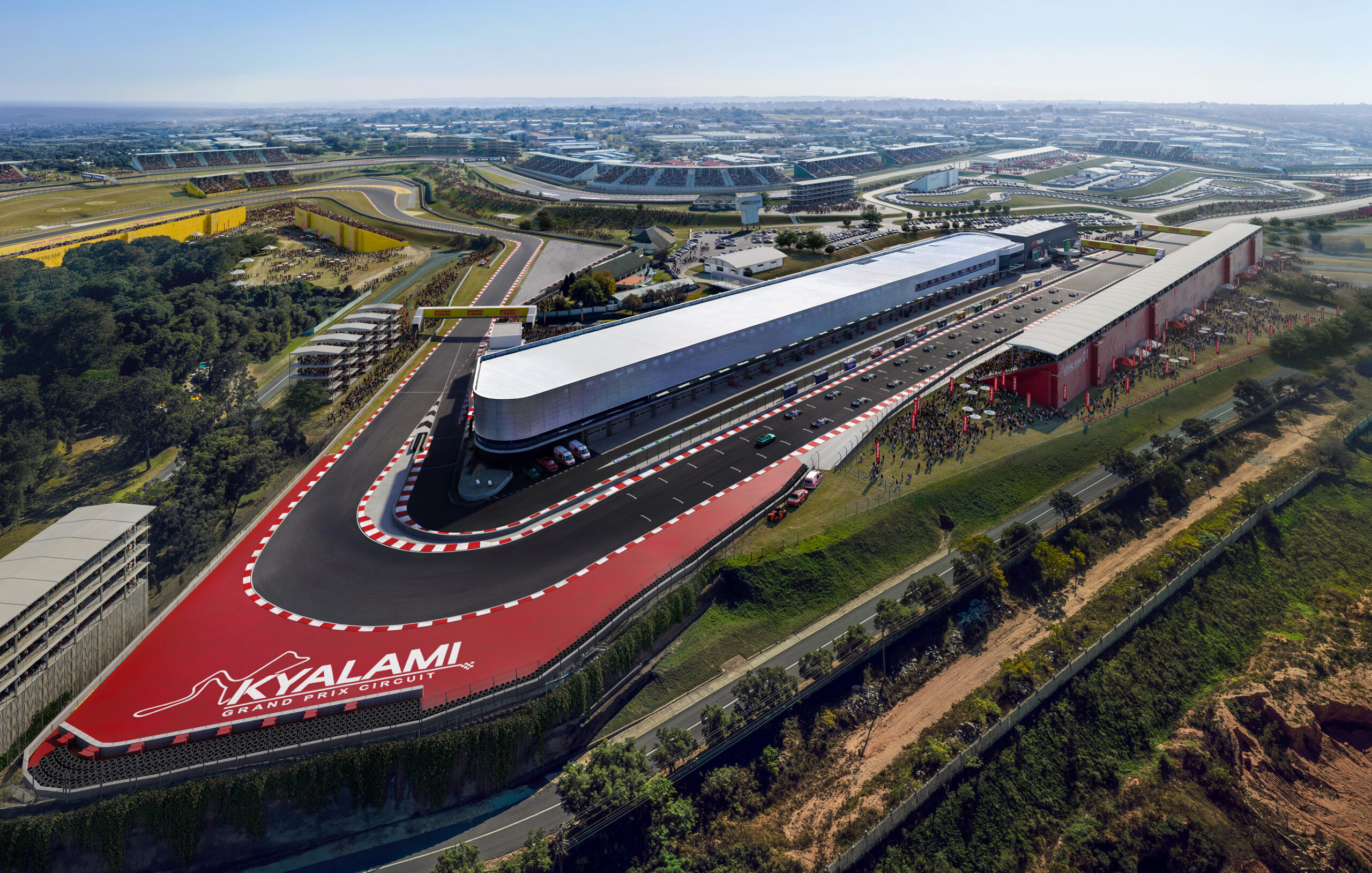
At the same time, the competition to determine where a potential South African Grand Prix would take place is intensifying. Two major proposals are currently under consideration, one centred around the historic Kyalami Grand Prix Circuit in Gauteng and another ambitious street race concept in Cape Town.
For a long time it appeared that Kyalami held a clear advantage given its existing circuit infrastructure and rich Formula 1 heritage. However, McKenzie indicated that Cape Town’s proposal has gained serious momentum.
“Cape Town has really come with a strong bid to host F1; it would be unfair for me to just ignore that,” he said.
“We are looking at the Cape Town bid and Kyalami bid, and we are talking to Formula 1 about the bids we are getting.”
McKenzie added that previous proposals had not met the required standard, but the latest submissions have been far more compelling.
“Previously we got very weak bids, to be honest, but the bid we got from Cape Town is very strong. Kyalami’s bid is strong, and another strong bid came.”
To ensure the final decision is handled properly, a dedicated Formula 1 Local Organising Committee will soon be established to evaluate the proposals and determine which bid moves forward.
“We have now decided that we are going to announce the Formula 1 Local Organising Committee in a few weeks to make that decision,” he said.