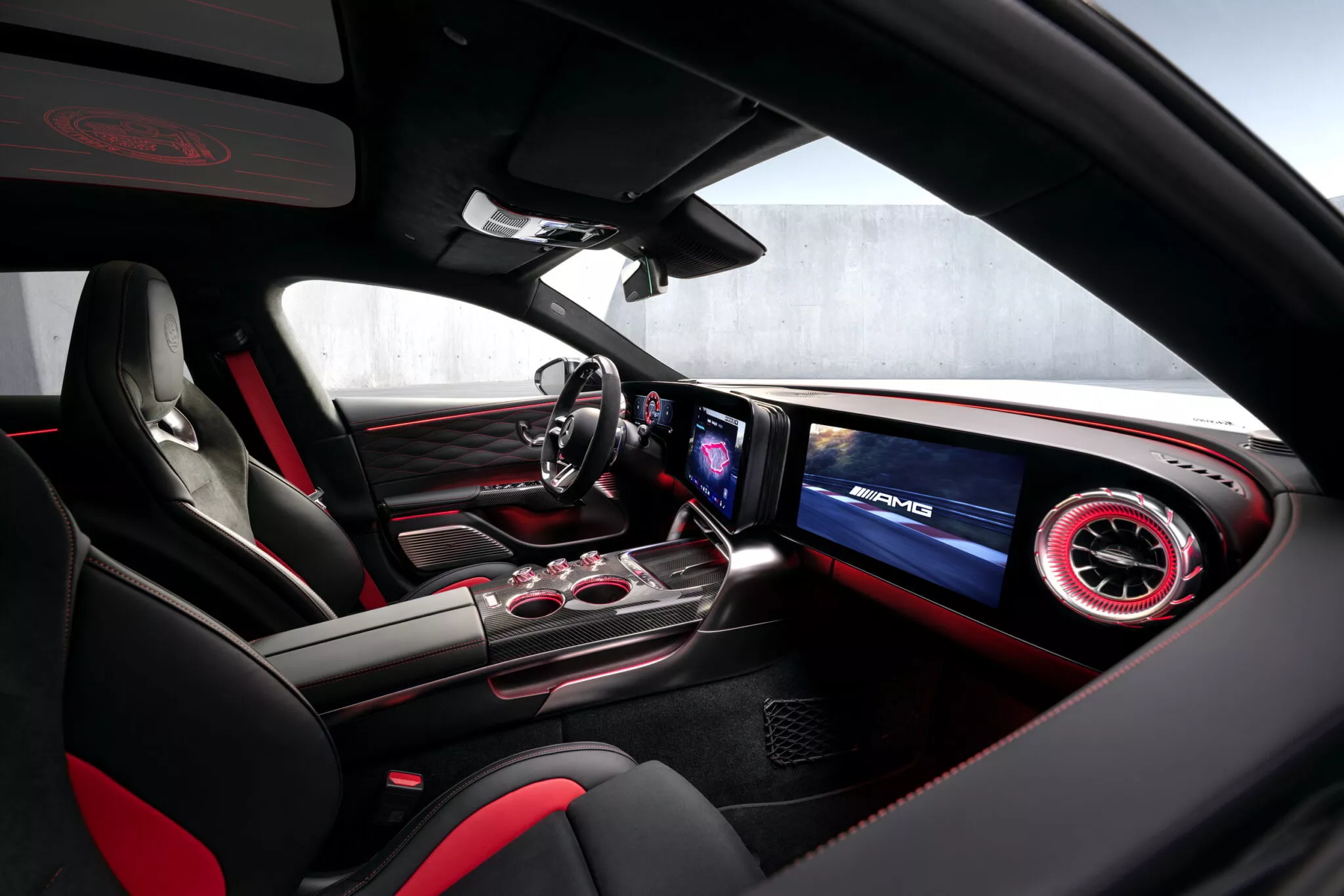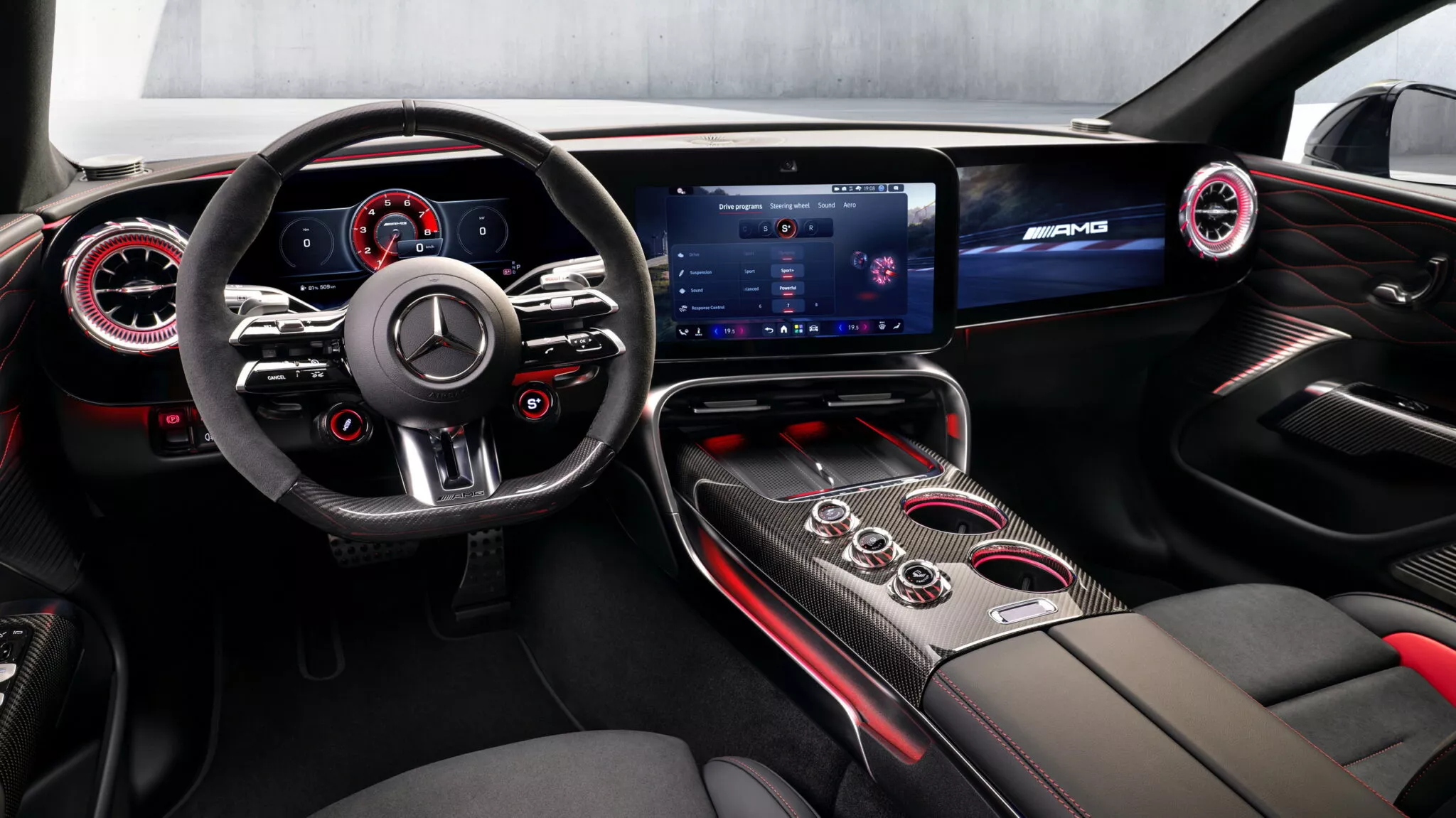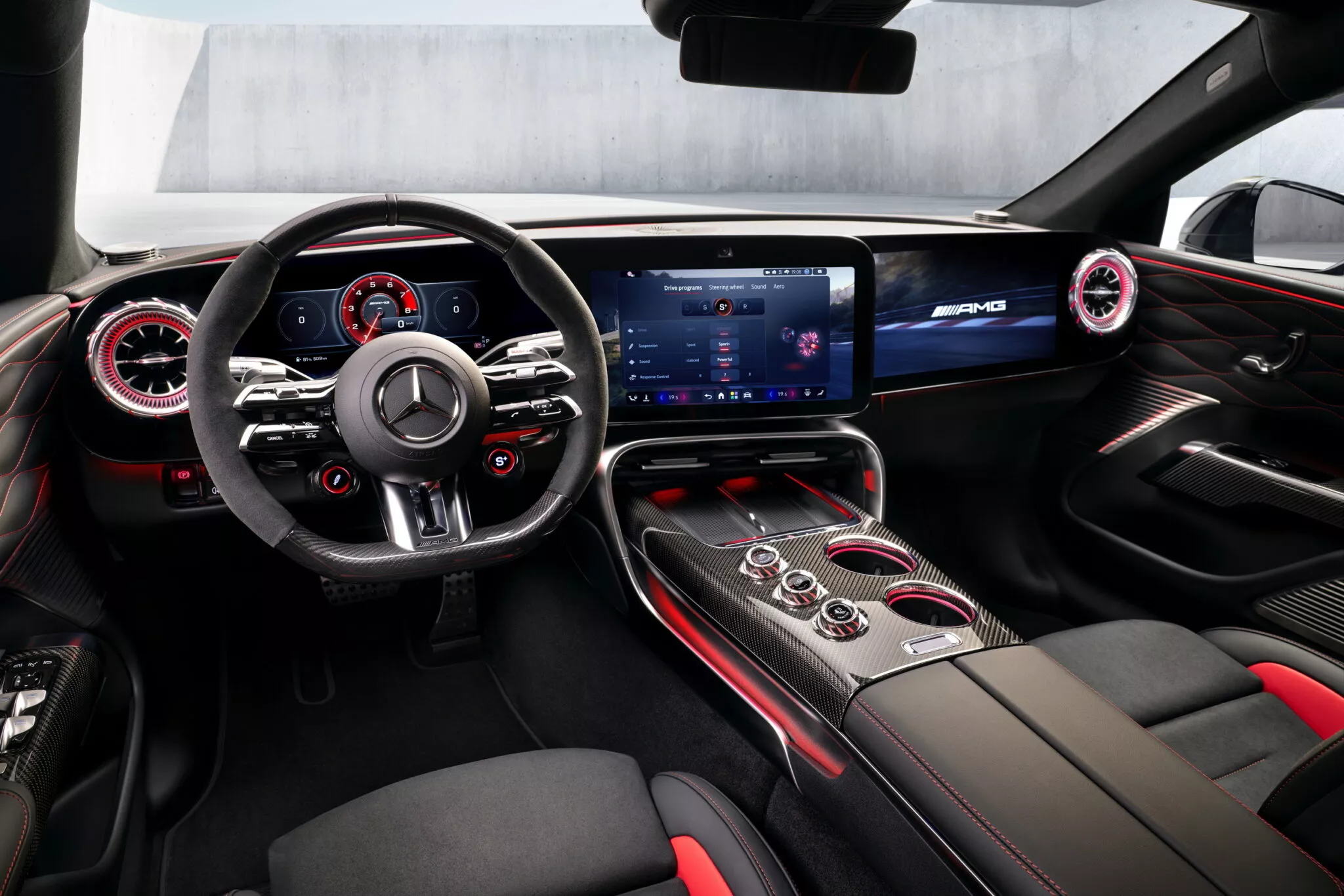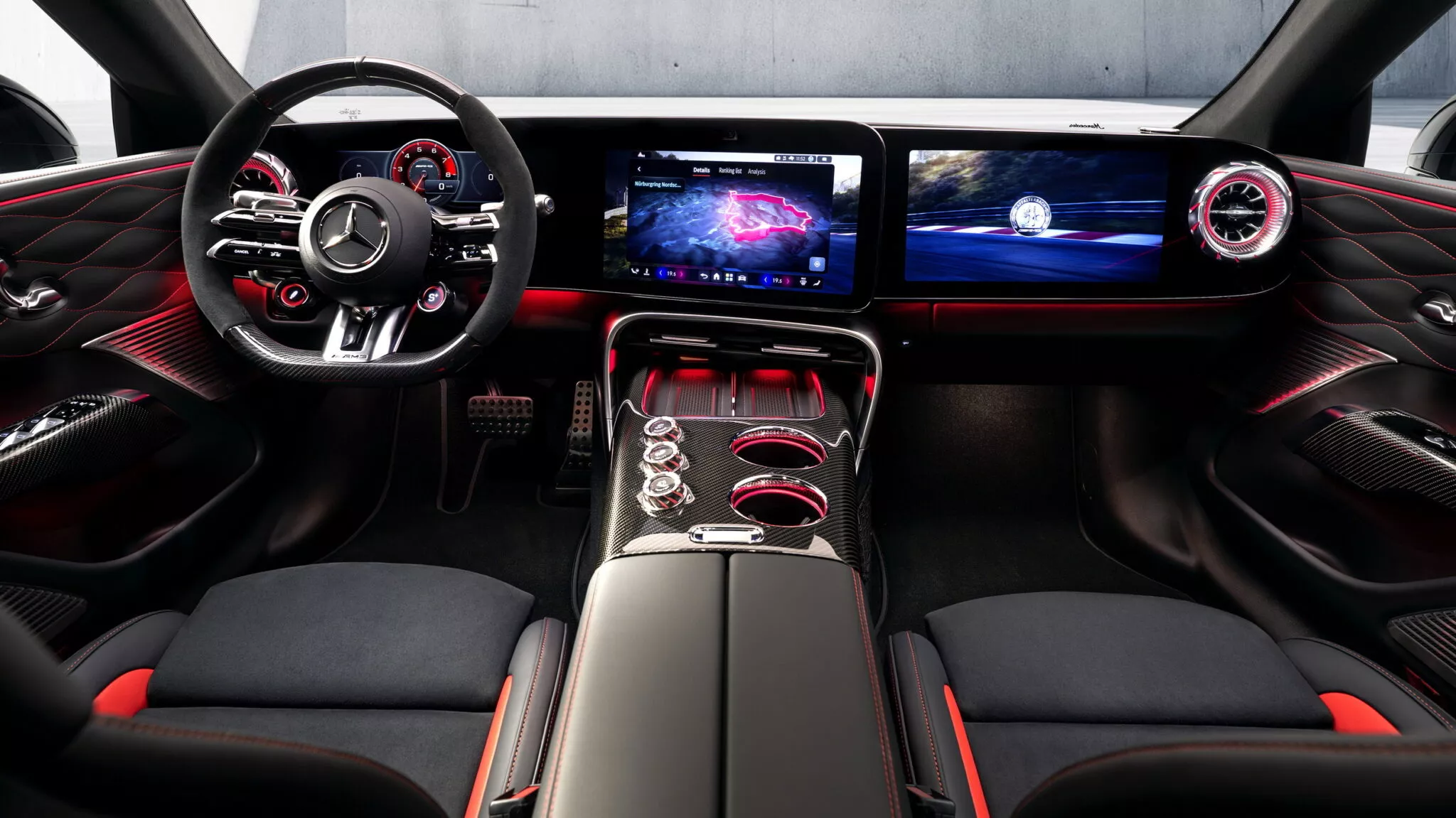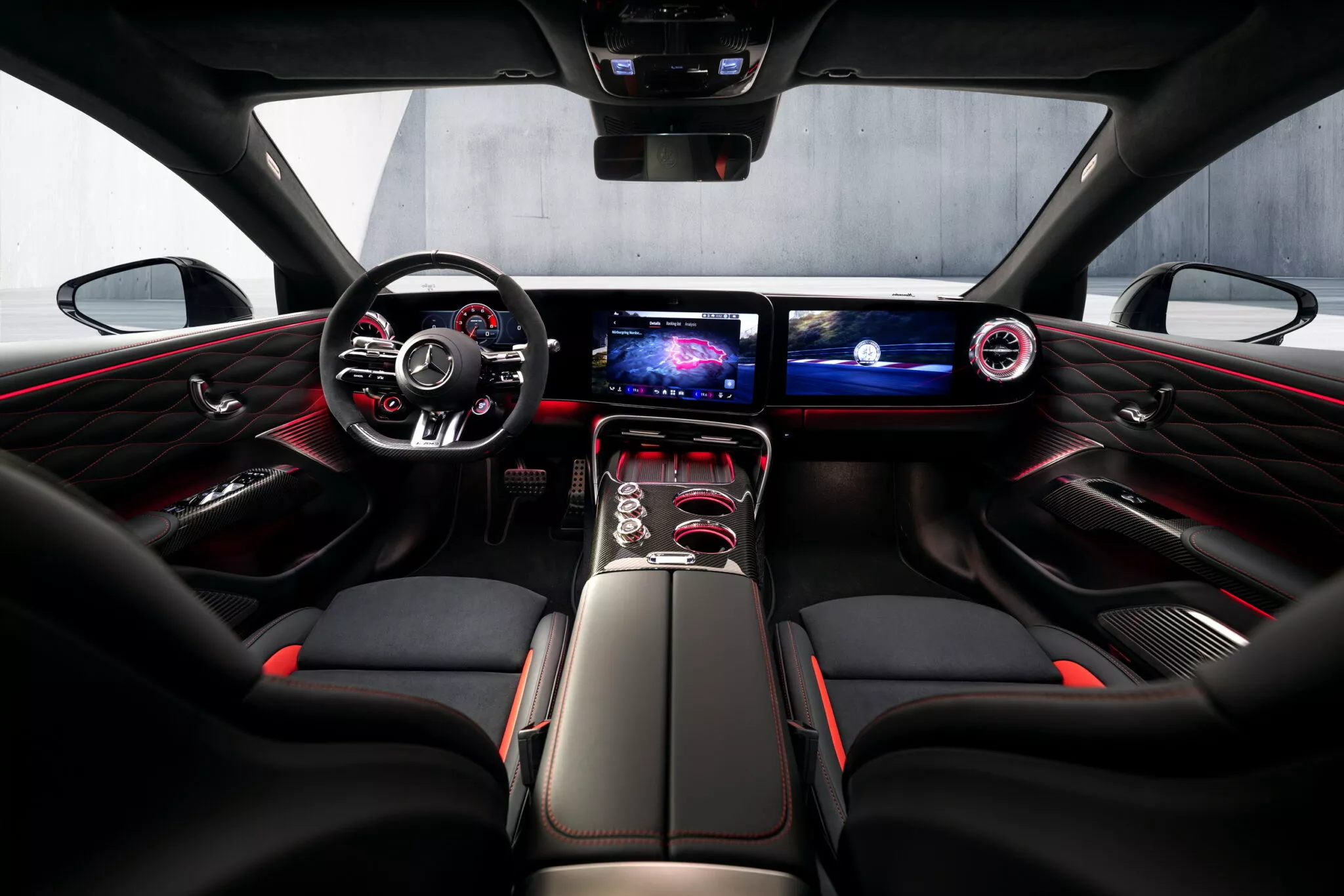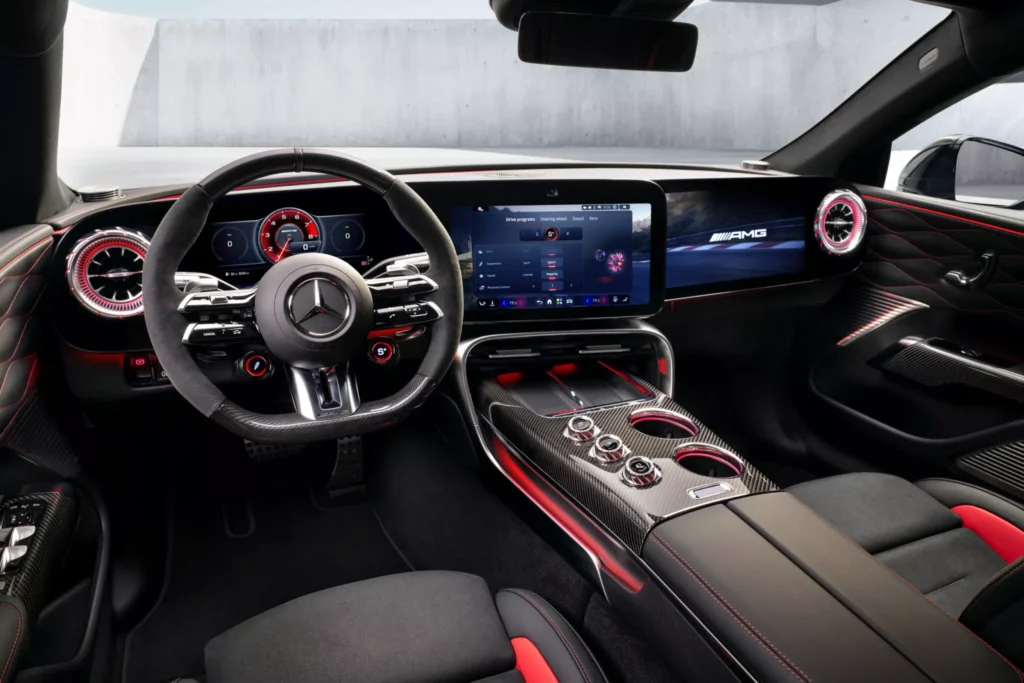
Mercedes-AMG has revealed the cabin of its upcoming electric performance saloon, offering the clearest look yet at what the brand’s next-generation four-door flagship will feel like from behind the wheel. The next-generation AMG GT 4-Door Coupe is effectively the production version of last year’s AMG GT XX concept, positioning it squarely against rivals like the Porsche Taycan and a growing group of electric performance sedans aiming to redefine speed in the EV era.
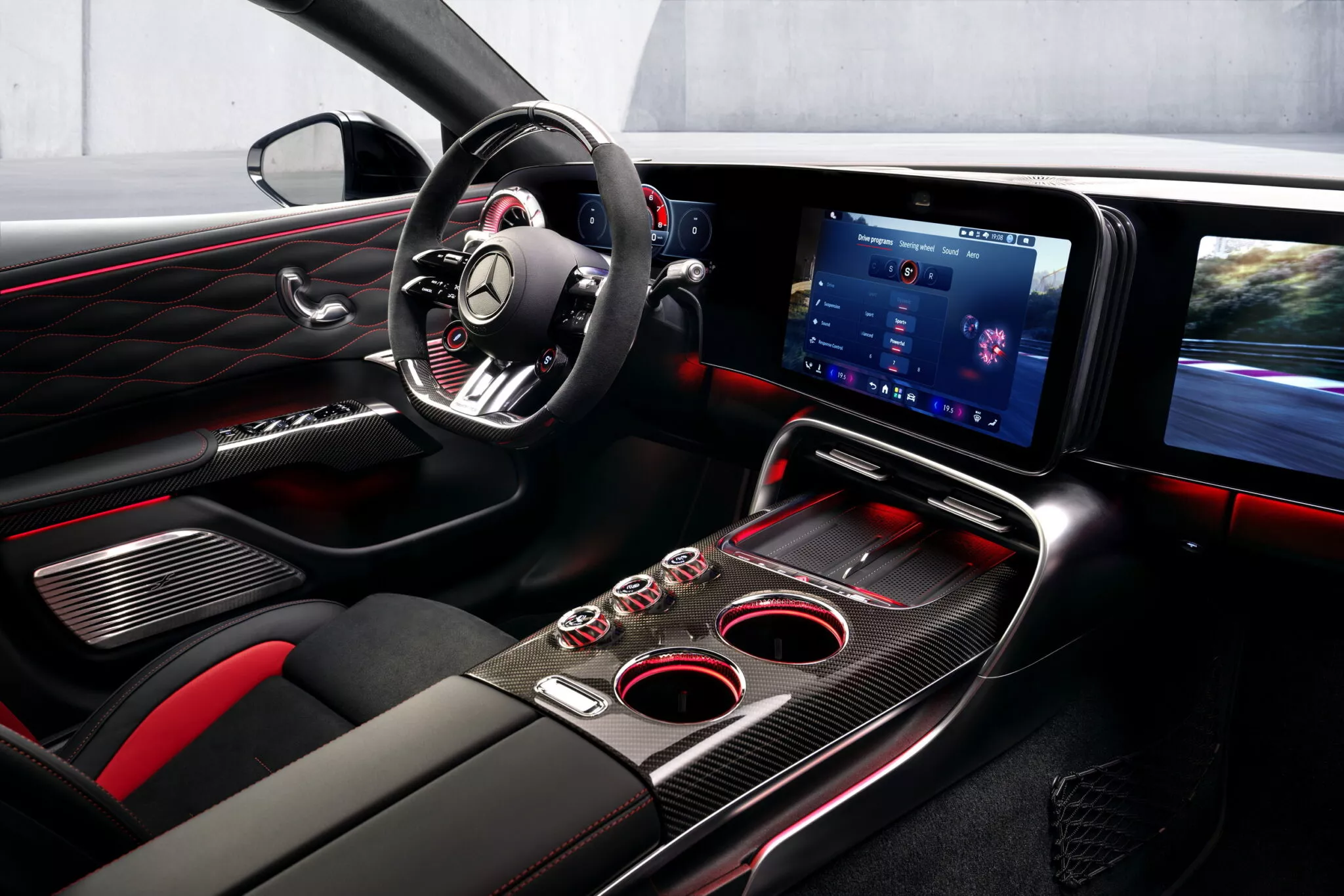
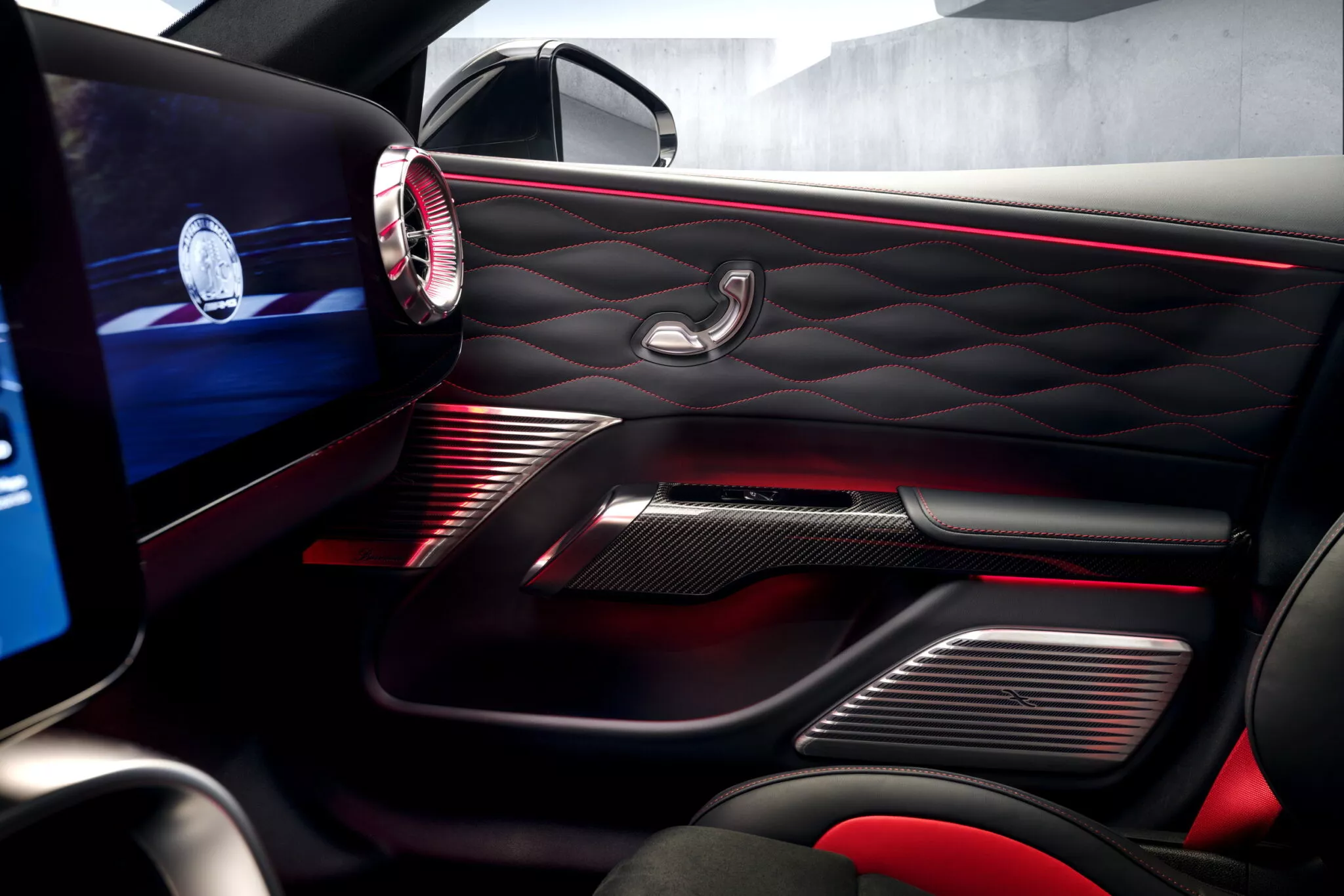
Step inside and the layout immediately signals that this is an AMG product rather than another member of the EQ family. Instead of the symmetrical hyperscreen arrangement used across Mercedes’ broader EV lineup and even the latest S-Class, the centre console here is deliberately angled toward the driver. The focal point is a 14-inch infotainment display that leans slightly toward the person behind the wheel, reinforcing the car’s performance-first personality. That main screen is paired with a 10.2-inch digital instrument cluster, while a second 14-inch display can be specified for the front passenger.
Mercedes describes the control system as a balanced mix of interaction methods, combining haptic buttons, touchscreen inputs and voice commands. Even so, AMG hasn’t gone all-in on the recent industry shift back toward physical switches. One clear example is the climate control system, which still lives inside the MBUX infotainment menus rather than being accessed through dedicated buttons.
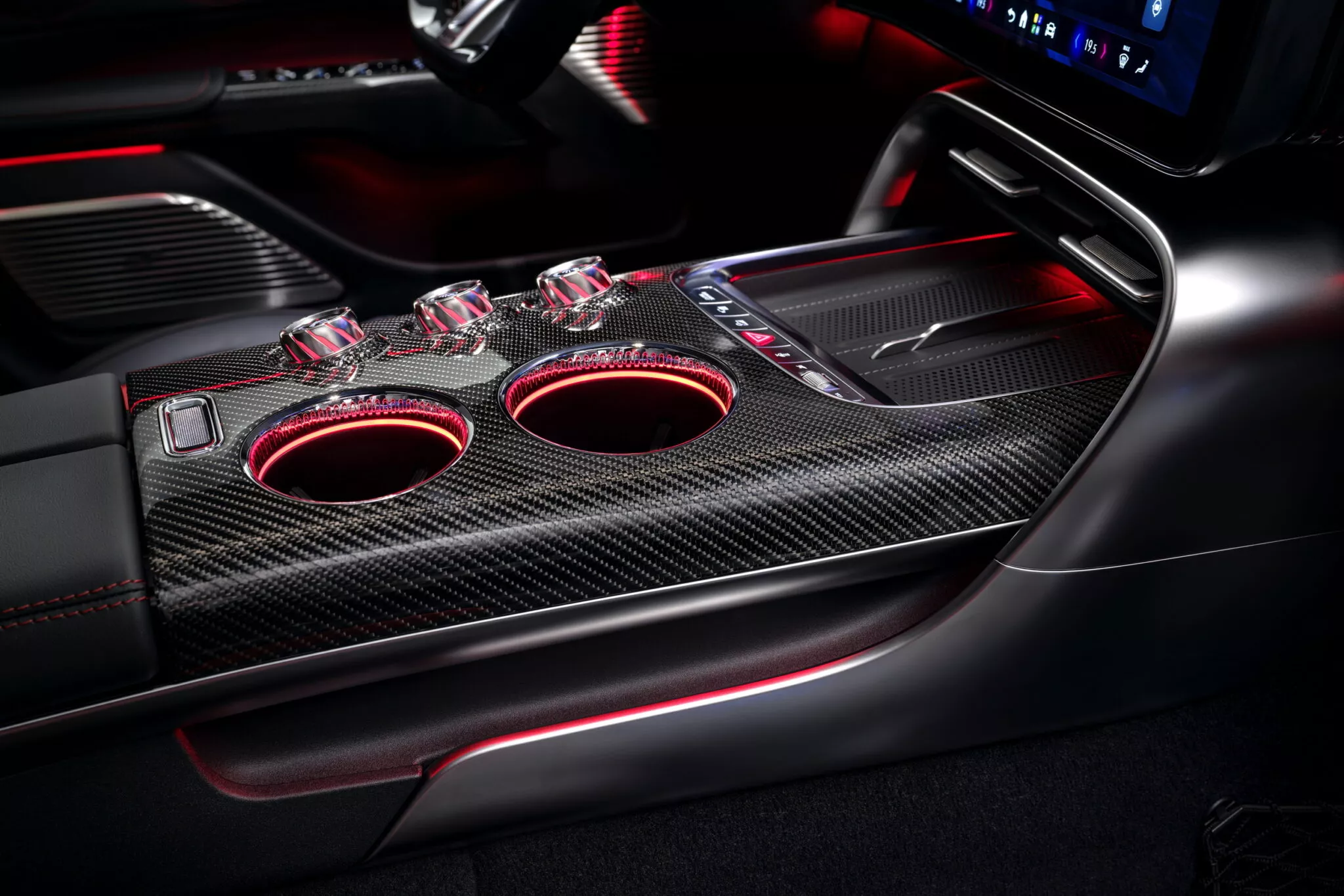
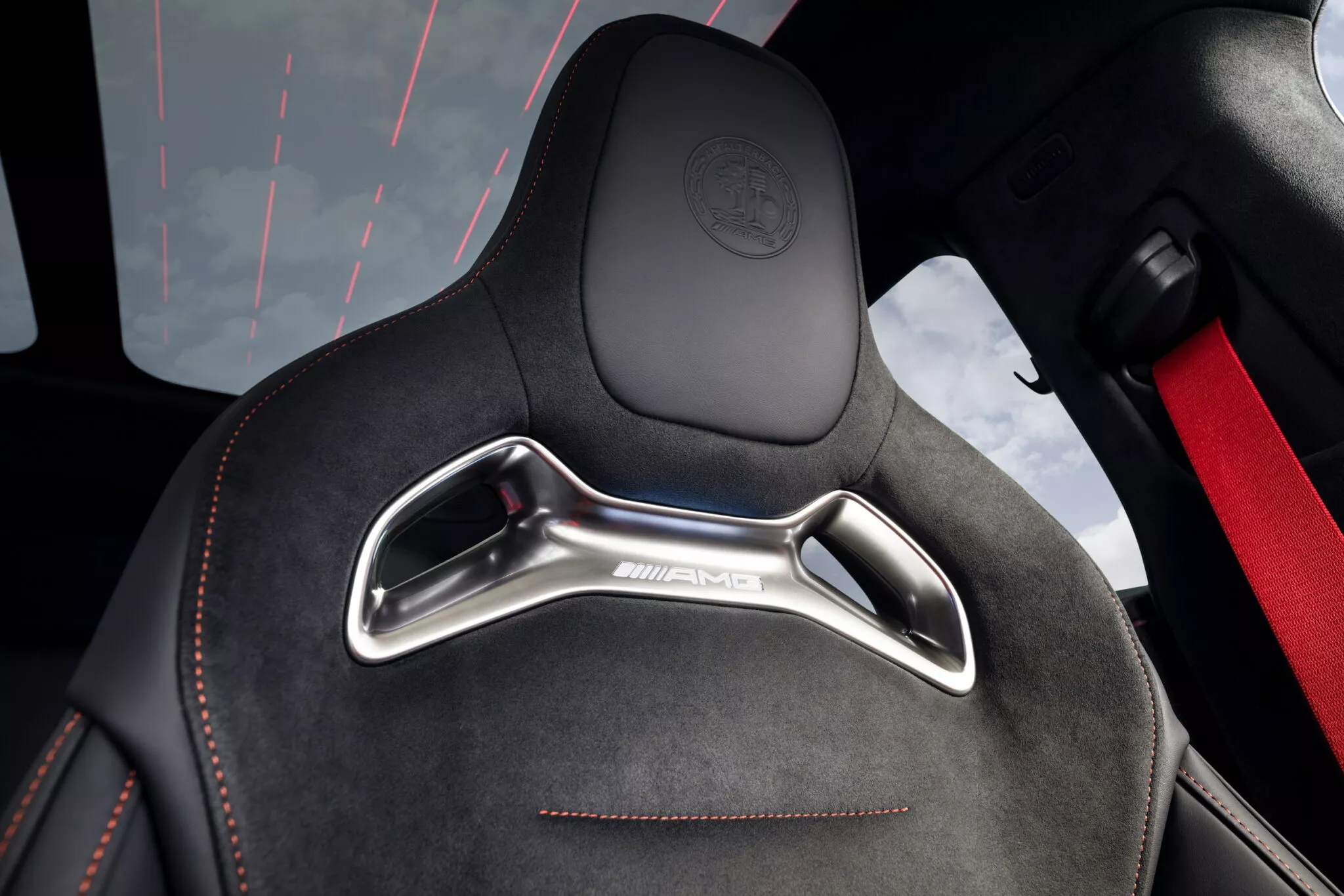
The interior carries several design details unique to AMG models. The air vents are illuminated and shaped to resemble jet turbines, while the flat-bottom steering wheel features carbon accents and integrated haptic controls. Buyers will also be able to specify AMG Performance seats, and a distinctive wing-shaped metal element stretches across the centre console to tie the design together.
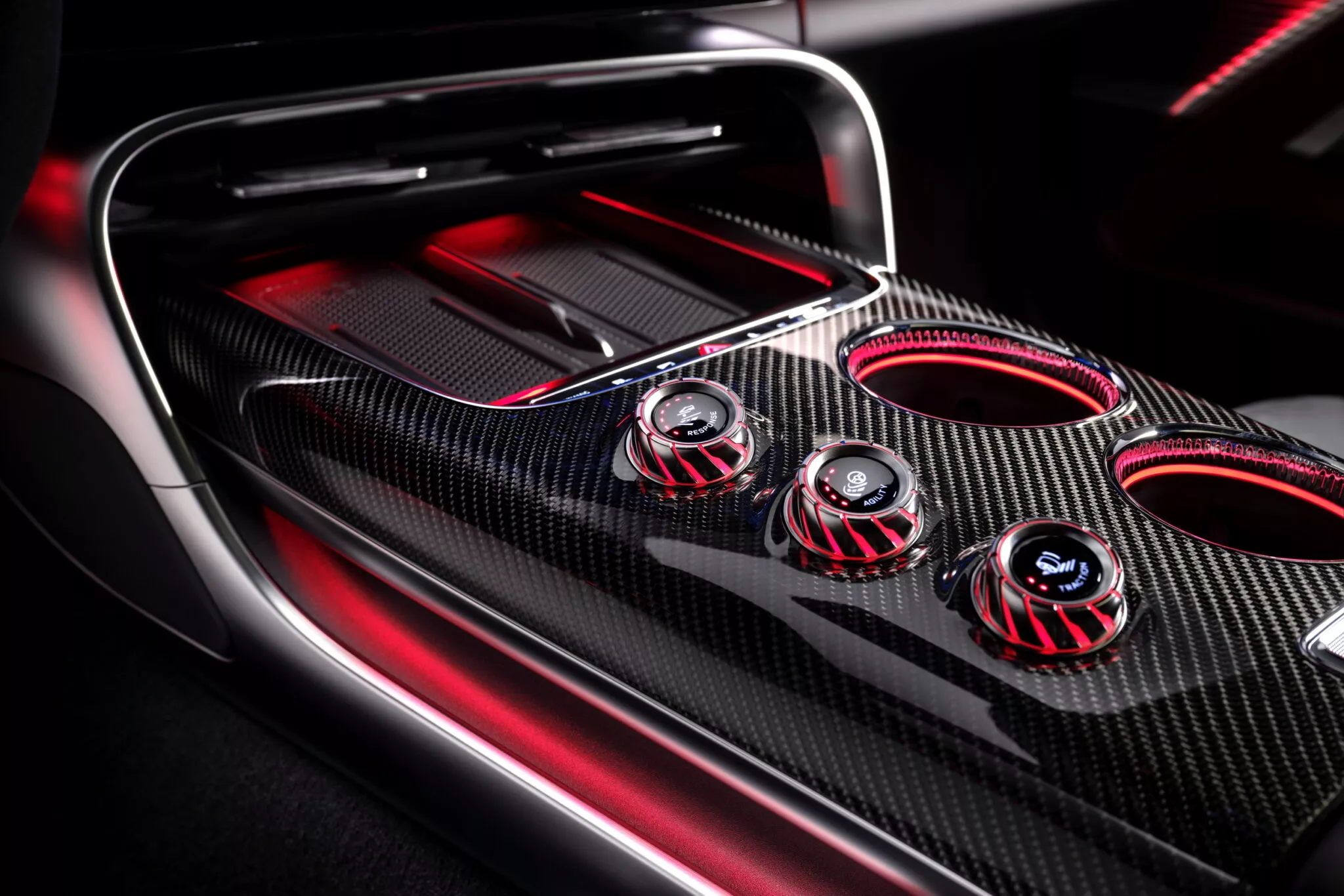
One feature that stands out immediately is the trio of large rotary controllers positioned along the centre tunnel. Even in a fully electric era, AMG clearly believes that drivers should have tactile controls within reach. Each dial connects directly to the car’s driving characteristics. Response Control alters the behaviour of the electric motors and throttle mapping, Agility Control fine-tunes how the chassis responds in corners, and Traction Control offers nine levels of adjustment through the new AMG Race Engineer system. The steering wheel also carries two shortcut buttons with their own small LCD displays, allowing quick access to key performance settings.
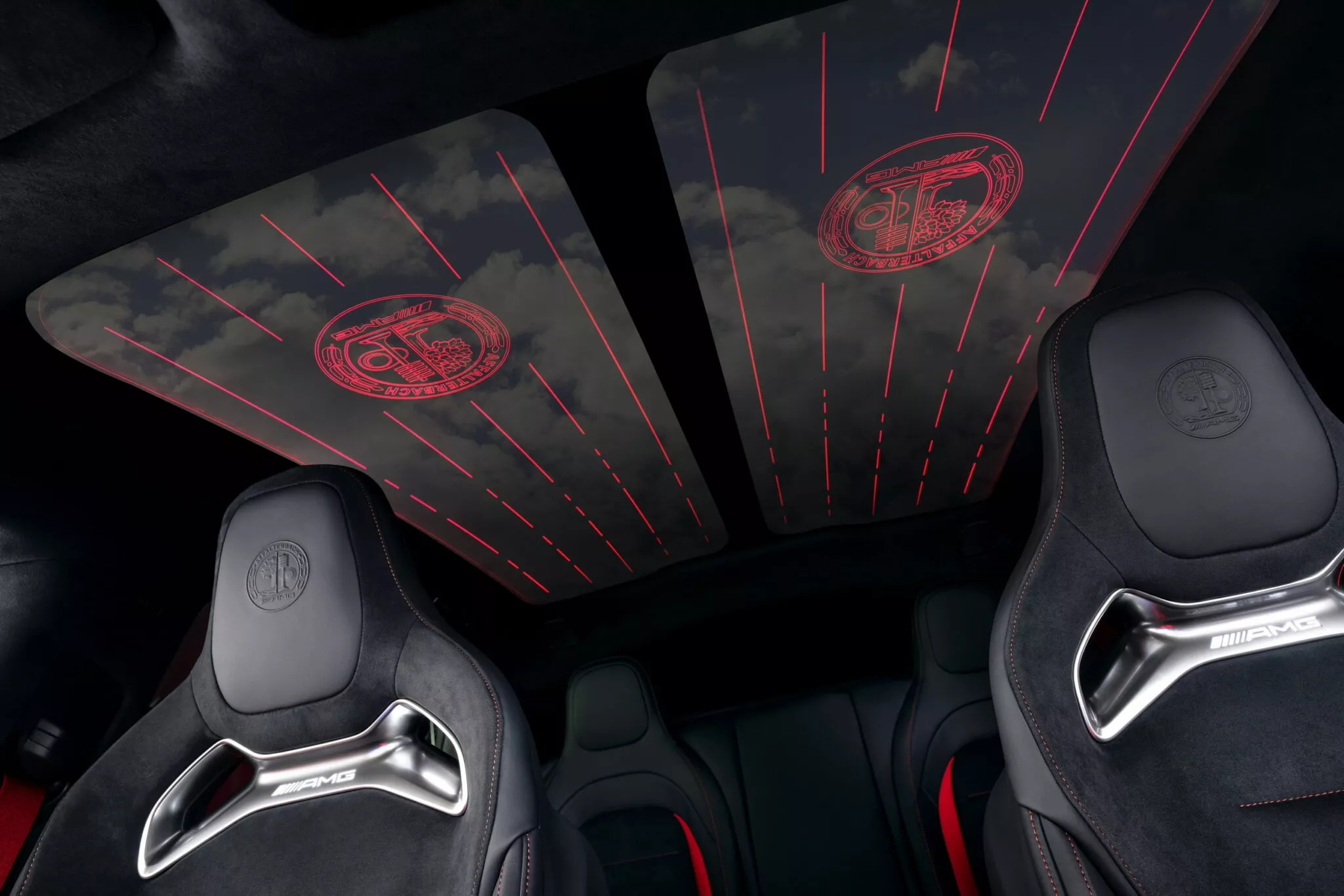
Another eye-catching piece of technology is the Sky Control panoramic roof. The glass panel can switch between transparent and opaque modes at the touch of a button, but it also brings a bit of theatre after dark. When ambient lighting is active, the roof can project AMG logos or racing stripe patterns across the glass surface, adding a visual flourish to the cabin.
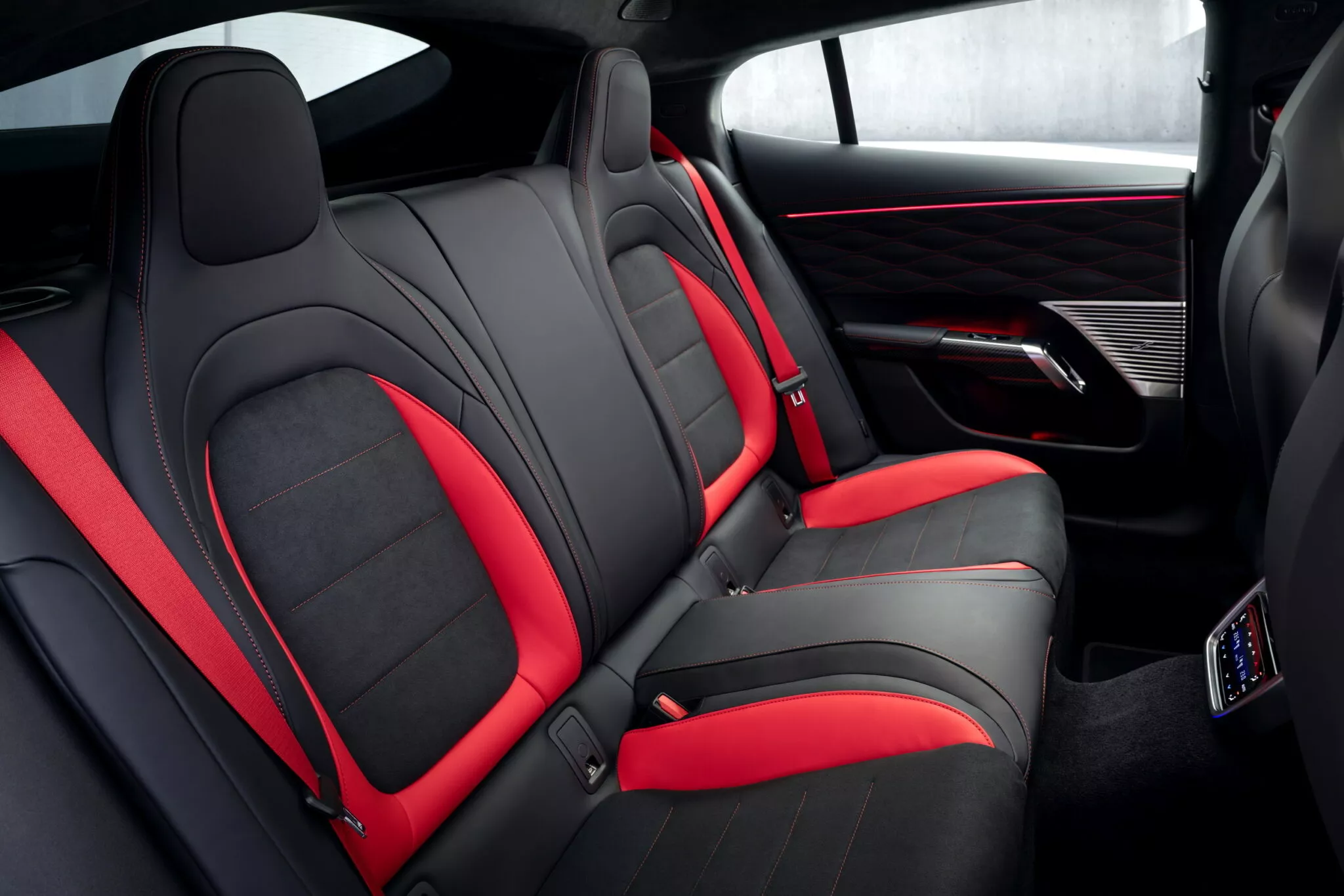
Practicality hasn’t been ignored either. Up front, the car includes illuminated cup holders and two wireless charging pads for smartphones. Passengers in the rear benefit from what Mercedes describes as generous legroom, comfortable headroom and a relaxed seating position designed for longer journeys. The standard configuration is a four-seat layout, though buyers will also have the option of ordering a five-seat arrangement.
The complete reveal of the new AMG GT 4-Door Coupe is expected later this year, with customer deliveries planned before the end of the year. The model will also mark an important milestone for the brand, becoming the first production vehicle built on Mercedes-AMG’s dedicated AMG.EA architecture, a platform developed specifically for future high-performance electric models.
If the numbers from the concept version carry over in any form, performance could be serious. The AMG GT XX concept used three axial-flux electric motors delivering a combined 1,341 hp (1,000 kW). It also featured a synthetic V8 soundtrack and an advanced battery pack using Formula 1-inspired cooling technology. Ultra-fast charging capability was another highlight, with the system capable of adding roughly 400 km (249 miles) of driving range in just five minutes.