
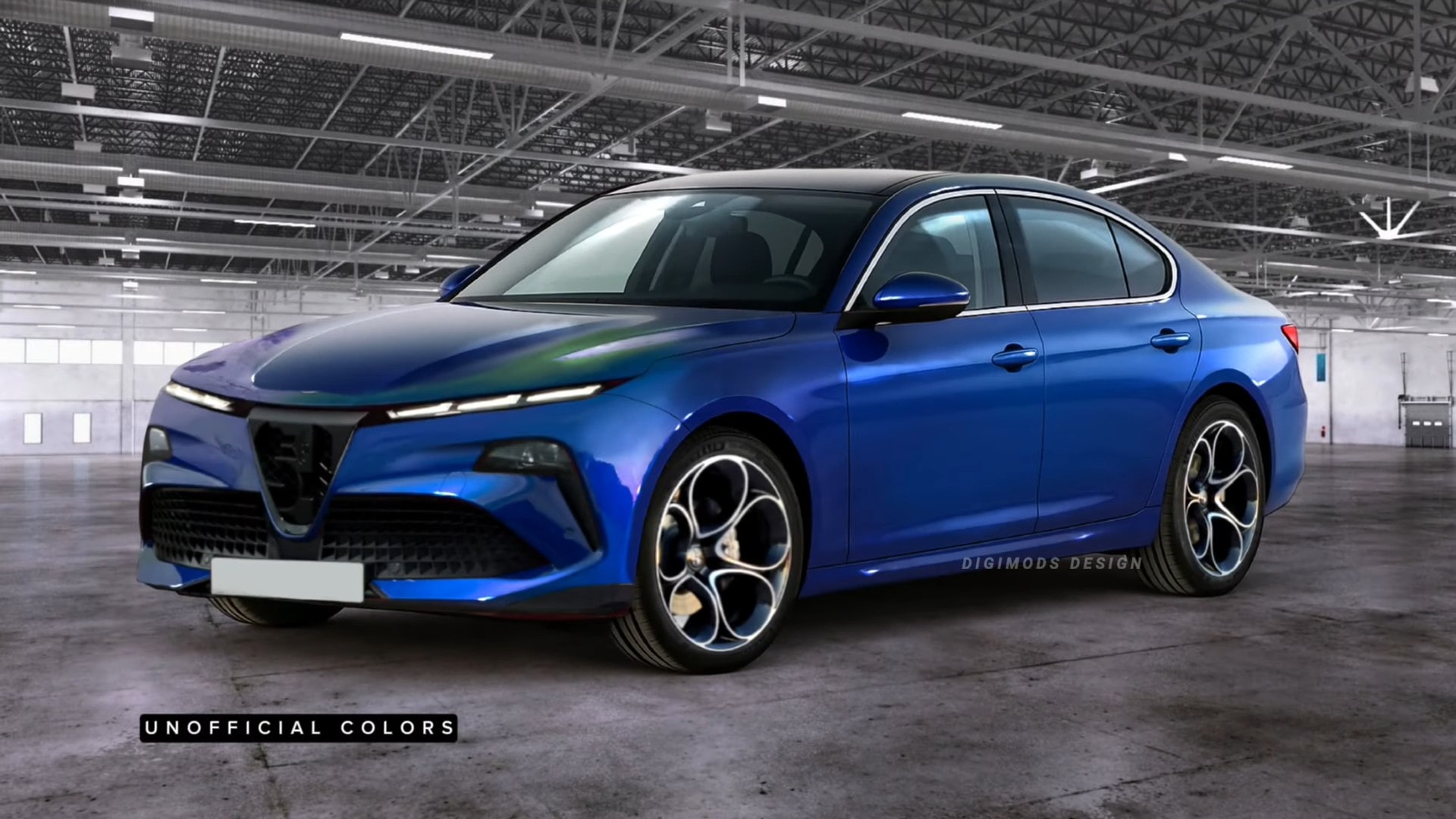
Alfa Romeo’s next chapter for the Giulia is taking longer than expected, but it’s shaping up to be a much broader rethink than originally planned. The next-generation Giulia is now set to land in 2028 alongside a new Stelvio SUV, and importantly, the range-topping Quadrifoglio will return with both electric and combustion options to take the fight straight back to rivals like the BMW M3.
Initial plans had both models going fully electric much sooner, but shifting global demand has forced a rethink. Parent company Stellantis has adjusted course, acknowledging that EV adoption is still inconsistent across key markets. As a result, Alfa Romeo is no longer locking itself into a single direction and will instead offer a mix of powertrains moving forward.
Current Giulia and Stelvio models will remain available for a bit longer before the replacements arrive. When they do, both cars will switch to Stellantis’s STLA Large platform, which was designed primarily for electric vehicles but can also support hybrid and combustion setups. That flexibility didn’t come easily. Engineers reportedly had to revisit parts of the body design to improve cooling for combustion engines, including opening up the front end for better airflow.
The move to this new platform also means both models will grow in size. Expect sleeker, more aerodynamic shapes aimed at improving efficiency, especially for the electric versions. Visually, they will follow Alfa’s latest design direction first seen on the Alfa Romeo Junior, with split lighting up front, distinctive arrow-style rear lights and a subtle ducktail spoiler. The traditional Alfa grille remains, but numberplates will now sit centrally beneath it due to updated European regulations.
Inside, Alfa is sticking to a relatively clean approach. A single central display will handle most functions, while the brand’s signature instrument cluster stays, likely in fully digital form this time around.
Under the skin is where things get interesting. Entry-level models are expected to use turbocharged four-cylinder petrol engines with mild-hybrid assistance. Plug-in hybrids are also part of the plan, potentially based on a system similar to the one already used within the Stellantis group. That configuration pairs a 1.6-litre turbo petrol engine with an electric motor and a 21 kWh battery, offering an electric-only range of around 82 km (51 miles).
Fully electric versions will benefit from battery packs ranging between 85 kWh and 118 kWh. In the most efficient configurations, Alfa is targeting over 644 km (400 miles) of range, which is crucial if it wants to stay competitive with newer rivals like the upcoming BMW i3.
Performance remains a core focus, especially for the Quadrifoglio models. Electric variants built on this platform are claimed to hit 100 km/h (62 mph) in roughly 2.0 seconds, a huge leap over the current V6-powered Giulia QV and Stelvio QV. For context, the platform already underpins the Dodge Charger Daytona EV, which produces up to 670 hp (500 kW) in dual-motor form.
There has been talk of even more extreme outputs, potentially approaching 1000 hp (746 kW) from a tri-motor setup, which would put it in the same conversation as cars like the Porsche Taycan Turbo GT.
For those not ready to give up combustion engines, Alfa isn’t walking away just yet. The familiar 2.9-litre twin-turbo V6, currently producing 513 hp (382 kW), is expected to continue in updated form, having already been adapted to meet stricter emissions standards. There’s also speculation around alternative engines, including a 550 hp (410 kW) straight-six, although availability could vary depending on market regulations.