
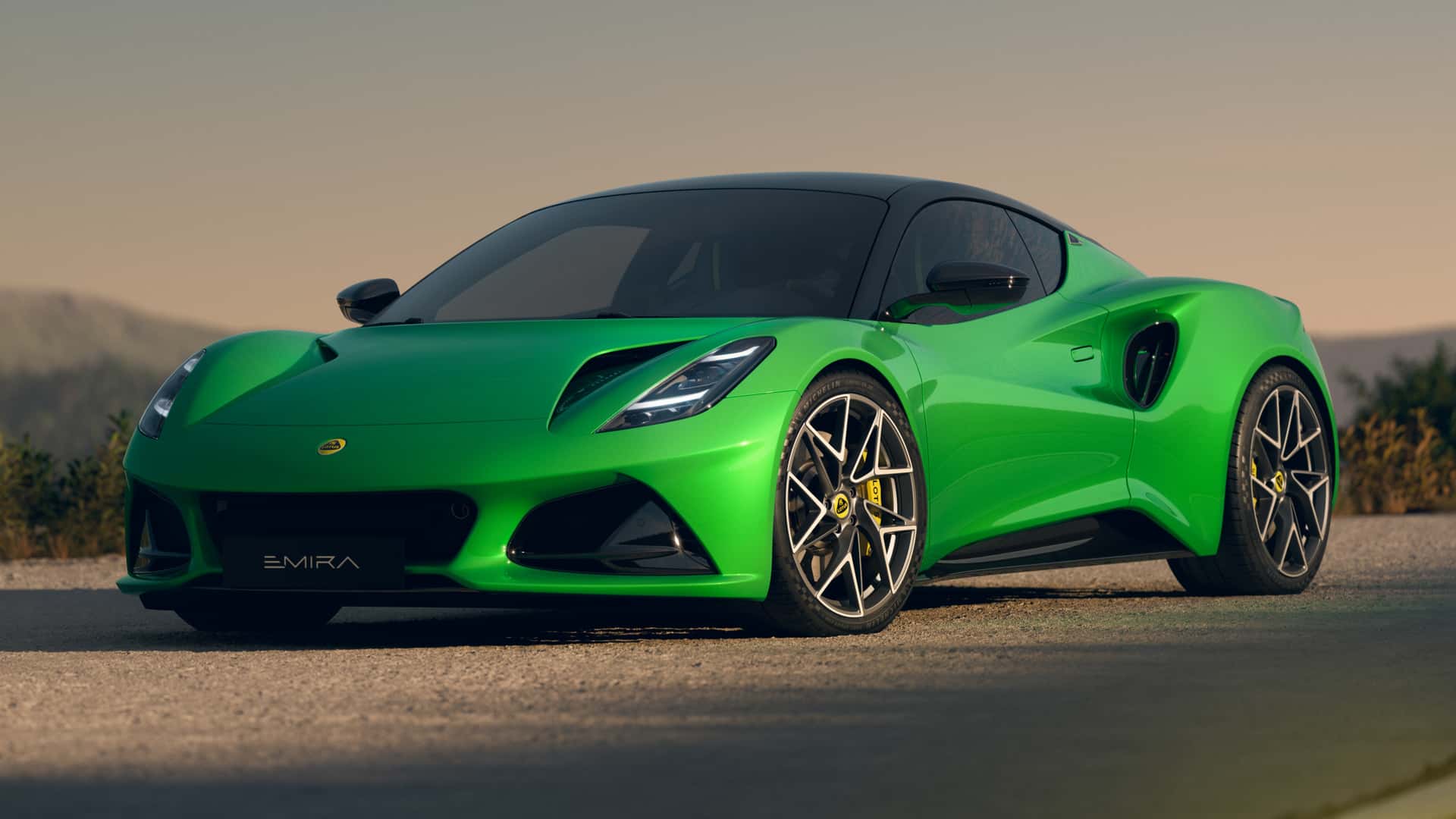
Lotus is preparing a major update for the Emira, and one of the biggest changes will sit behind the seats. The refreshed sports car, expected to arrive in 2028, will debut a brand-new 3.0-litre turbocharged hybrid V6 developed by Horse, the Geely and Renault-backed powertrain company.
The updated Emira forms part of Lotus’ broader shift back toward combustion-powered performance cars, with the upcoming V8 hybrid supercar, widely expected to revive the Esprit name, leading the next chapter for the British brand.
Lotus CEO Feng Qingfeng confirmed that the new Horse-developed V6 will become the sole engine option in the Emira lineup, replacing both the Toyota-sourced V6 and the AMG-derived four-cylinder currently offered.
Horse says the new V6 is capable of producing as much as 536 hp (400 kW) and 700 Nm (516 lb-ft) while weighing only 160 kg. According to Horse CEO Matias Giannini, that makes it roughly 10 kg lighter than any comparable V6 currently available and only slightly heavier than several modern 2.0-litre four-cylinder engines.
The powertrain is paired with a four-speed automatic transmission featuring an integrated electric motor. Along with improving efficiency and emissions, the hybrid setup also provides an added performance boost for the Emira.
Lotus originally intended to replace the Emira with a fully electric sports car that was being jointly developed with Alpine. That project was ultimately abandoned after the company concluded there was not enough demand for an EV replacement.
Part of the reason Lotus decided to keep a six-cylinder sports car alive came down to feedback from the United States. The Toyota V6-powered Emira has proven especially popular there. Feng explained that American buyers made it clear they still wanted a V6-powered Lotus, adding that the six-cylinder version remains the brand’s strongest seller in that market.
The continuation of the Emira is also positive news for Lotus’ historic Hethel production facility near Norwich. The plant will not only continue building the Emira but will also assemble the new V8 hybrid supercar from 2028 onward.
Production volumes at Hethel dropped to around 2,000 units last year after the United States introduced a 25% tariff on imported vehicles in March 2025. Following negotiations involving the UK government, that tariff was later reduced to 10%, making exports from the UK viable again.
Feng noted that the revised tariff structure makes continued production at Hethel financially sensible, saying it remains more cost-effective than building a completely new factory elsewhere.
First launched in 2021, the Emira rides on a heavily revised version of the Evora platform and has since become Lotus’ best-selling sports car on an annual basis.
The outgoing Toyota V6 was always facing an uncertain future due to tightening European emissions regulations, which pushed Lotus and Horse toward developing an entirely new engine solution.
Giannini believes the new motor raises the benchmark for the segment, highlighting its compact dimensions and low weight as major advantages. He explained that the V6’s architecture is based on a smaller engine platform, helping keep packaging tight and overall mass low. According to him, there is currently no other hybrid V6 on the market that offers the same compact footprint.
The 3.0-litre engine was officially revealed during the Beijing motor show last month and has been designed for both mild-hybrid and full-hybrid applications.
Interestingly, Giannini admitted the V6 was never part of Horse’s original product roadmap. Instead, the project evolved organically thanks to enthusiasm from engineers and staff within the company.
He explained that while the initial focus was on smaller three- and four-cylinder engines up to 2.0 litres, many within the business kept pushing for a proper six-cylinder performance engine. Eventually, they convinced management by demonstrating that the V6 could be efficiently developed using the same modular engineering principles as the company’s existing four-cylinder technology.
That modular approach has also paved the way for a brand-new V8 derived from the V6 architecture, which will power Lotus’ upcoming flagship supercar.