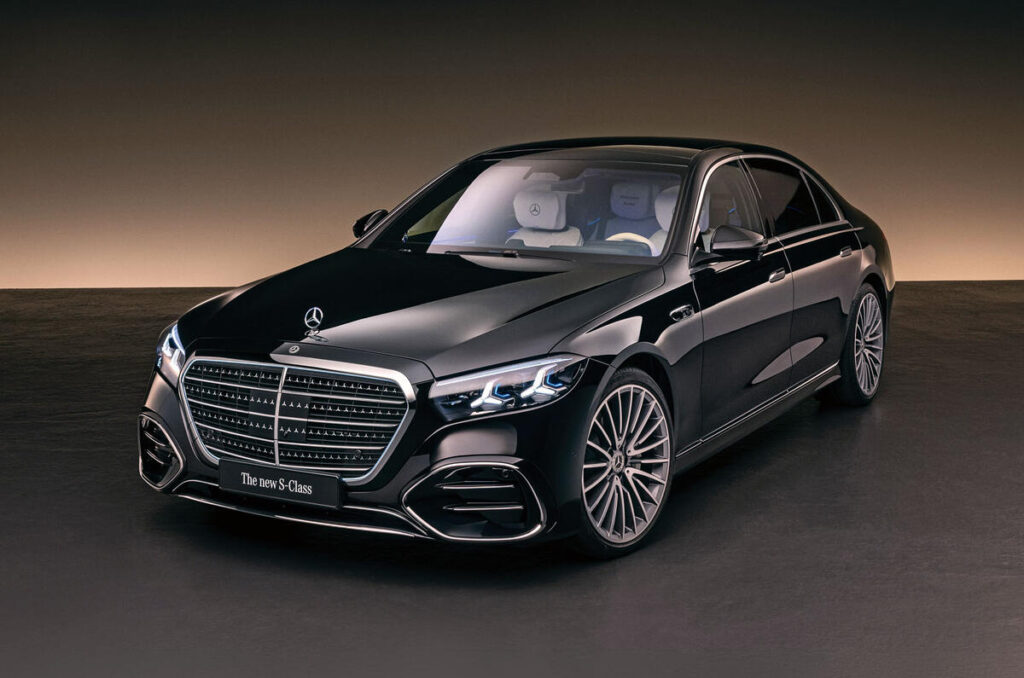
Mercedes-Benz has given its flagship S-Class limousine a deep and deliberate rethink, targeting gains in performance, refinement and technical depth for a car that has long set the pace in the luxury segment.
The updated S-Class arrives as the brand reflects on 140 years since Carl Benz patented his three-wheeled vehicle with gas-engine drive, a machine that would evolve into the Benz Patent-Motorwagen and become widely regarded as the world’s first automobile.
While today’s S-Class shares little more than a name with that early invention, Mercedes says its latest limousine continues a lineage of excellence that stretches back to that 0.66 bhp ancestor. In that sense, the S-Class once again serves as the spearhead for what the company calls the most ambitious product rollout in its history.
As with every generation before it, the new S-Class acts as a halo model, debuting technologies, design ideas and engineering concepts that will gradually filter through the wider Mercedes range. By the end of 2027, that line-up is expected to grow by around 40 new models.
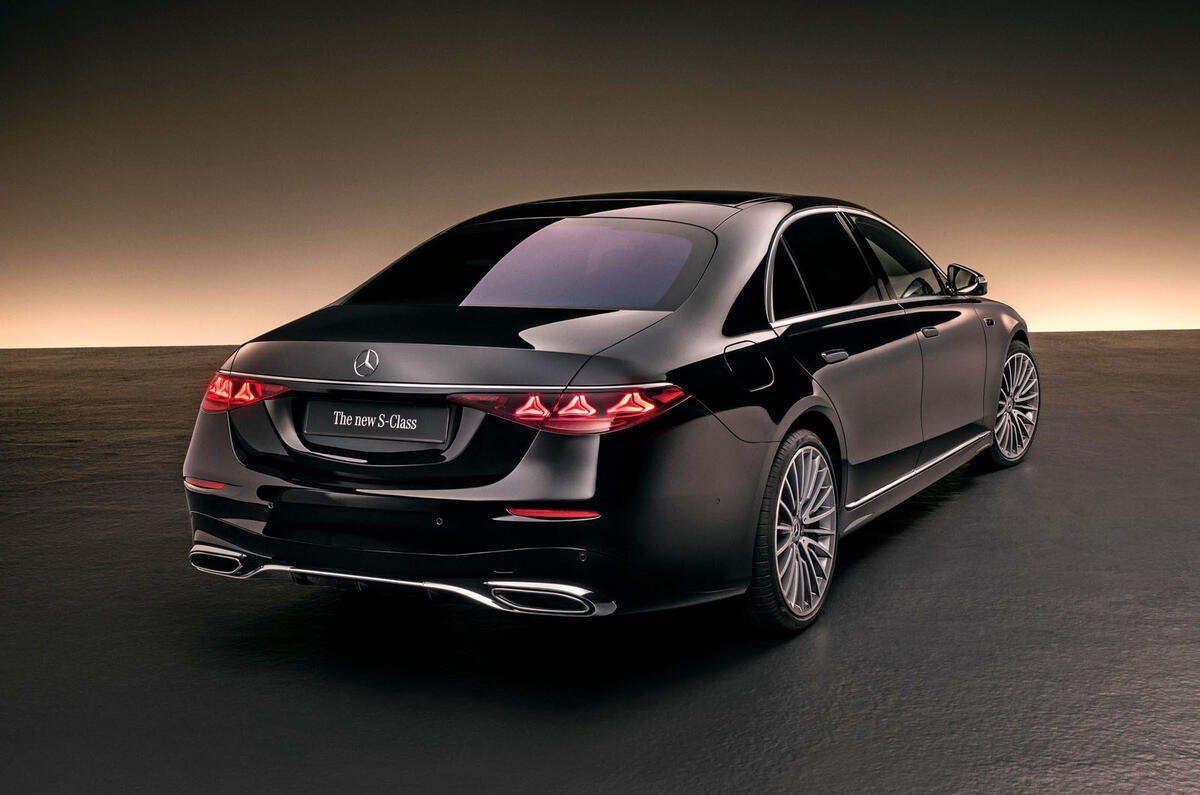
Although the exterior styling evolves rather than reinvents, Mercedes describes this as the most comprehensive update the S-Class has received within a single generation. More than half of the car’s components, roughly 2,700 parts, have been revised or replaced.
Taken together, the extensive upgrades to technology, equipment, design, chassis and powertrains form a significantly refreshed package aimed at reinforcing the S-Class’s position in an increasingly competitive luxury saloon market. This iteration is intended to carry the model through to the end of the decade, ahead of an eighth-generation replacement that is expected to offer a pure-electric option and effectively succeed today’s EQS limousine.
Leading the mechanical changes for 2026 is a new-generation V8 engine. It marks a notable shift from a traditional cross-plane crankshaft to a flat-plane layout, a move designed to reduce emissions while improving refinement and power delivery.
The 4.0-litre twin-turbo M177 Evo V8, an evolution of Mercedes’ existing eight-cylinder, will initially be paired with 48V mild-hybrid technology in the S580 4Matic. In this form, it produces 530 hp (395 kW) and 750 Nm (553 lb-ft), enabling a 100 km/h (62 mph) sprint in around 4.0 seconds.
Beyond the new crankshaft, the V8 benefits from revised injectors, intake hardware, an updated intake camshaft and upgraded turbochargers. Mercedes says these changes improve throttle response, efficiency and smoothness across the rev range.
The S580 will be the first model to receive this updated V8, with the engine expected to appear in other Mercedes V8 applications in due course.
The S500’s straight-six petrol engine continues with 443 hp (330 kW), but its peak torque has been increased to 640 Nm (472 lb-ft), alongside further refinements aimed at improving smoothness. The six-cylinder diesel, meanwhile, introduces an electrically heated catalytic converter, the first of its kind in a series-production car, to enhance emissions performance from cold start.
All three engines now feature mild-hybrid assistance as standard. The petrol six-cylinder also underpins the plug-in hybrid S580e, which offers an electric-only range of 100 km (62 miles) and now delivers a combined output of 577 hp (430 kW) and 723 Nm (533 lb-ft). That makes it more powerful on paper than the V8-powered S580.
For many years, the S-Class faced only a small group of direct rivals, including the Audi A8, BMW 7 Series and Lexus LS. The luxury landscape has since shifted dramatically, and the latest S-Class must now contend with challengers from a far broader range of brands and body styles.
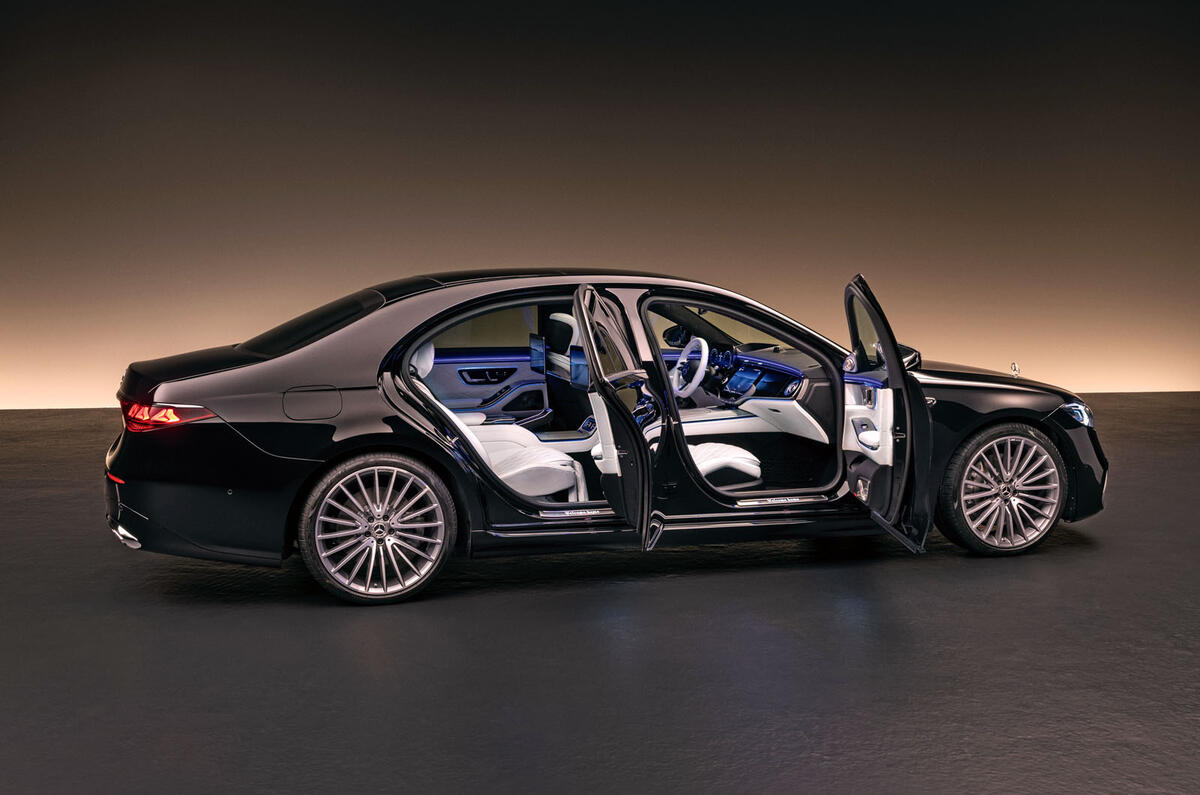
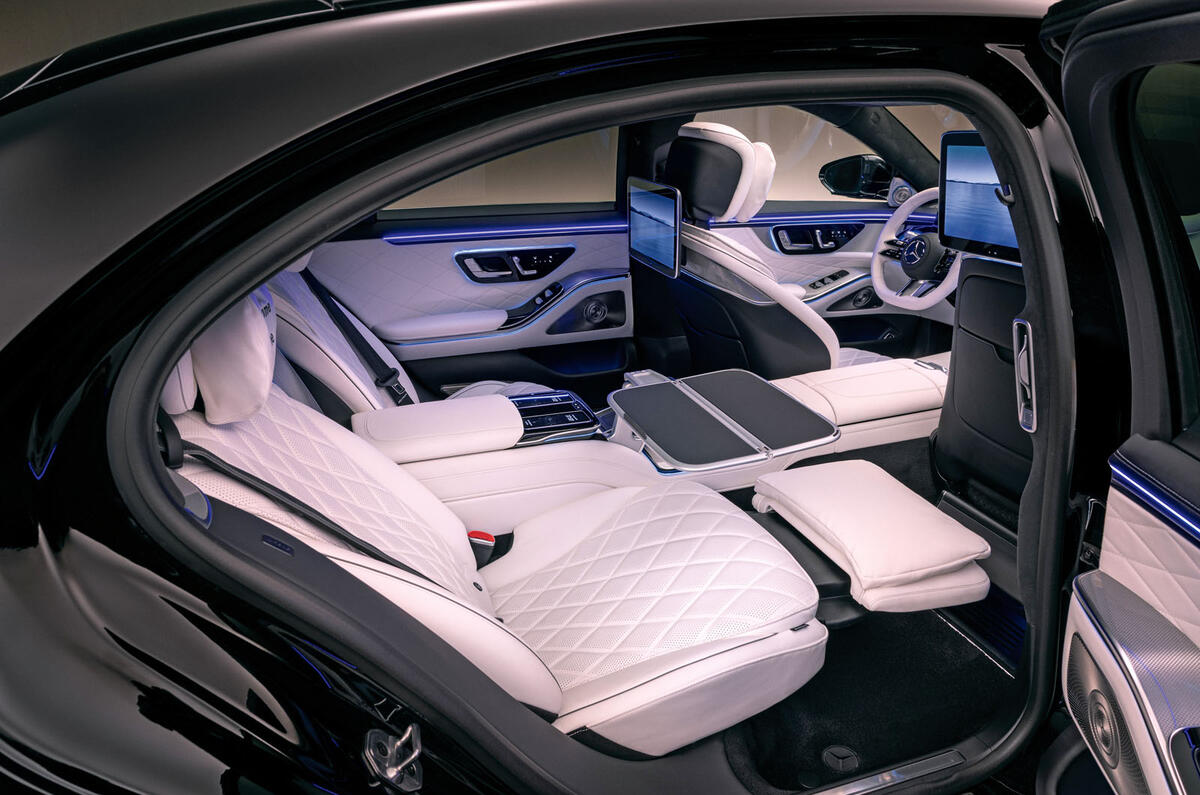
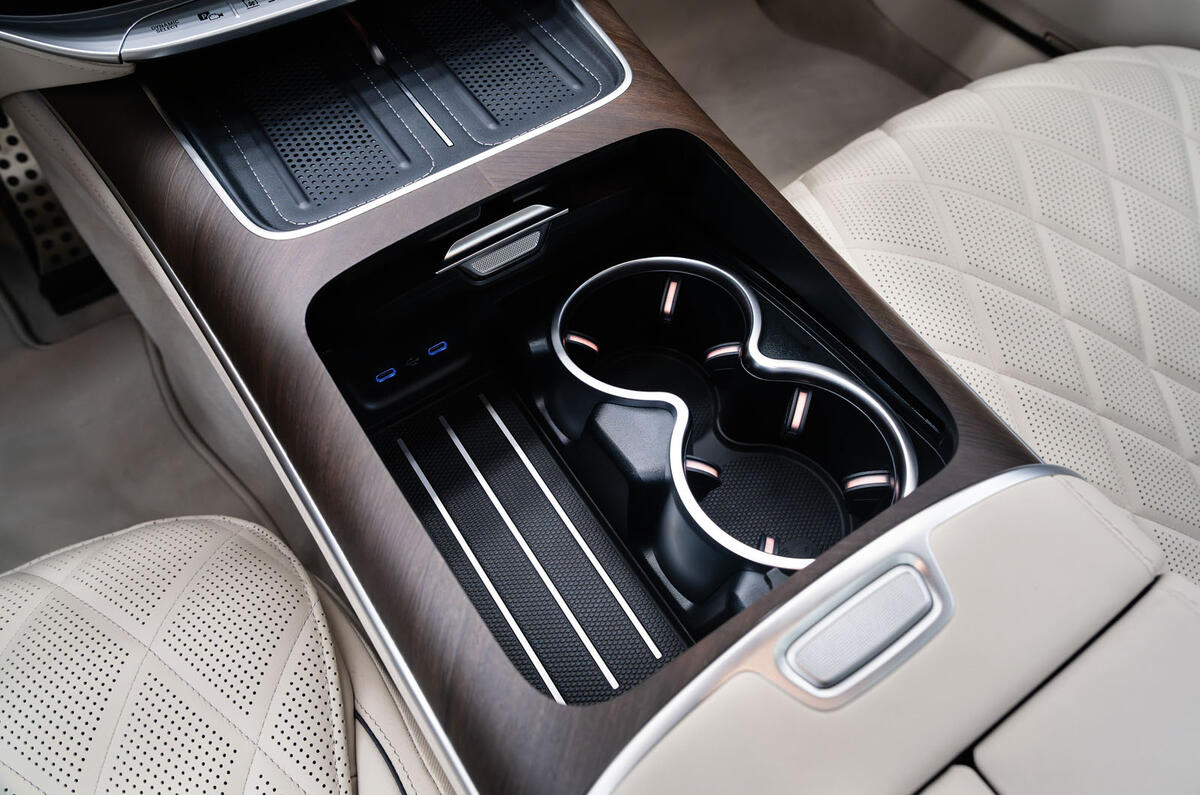
Inside, Mercedes says the rear cabin can now function as a true boardroom on wheels. Rear passengers gain smartphone-style remote controls for the 13.1-inch displays, faster wireless charging, a refrigerator, temperature-controlled cupholders and the ability to join Zoom or Teams meetings via new HD webcams. Two fold-out tables, inspired by business class seating, complete the workspace.
New suspension hardware, fitted to cars with both standard air suspension and the optional active system, uses cloud-based road data collected from other Mercedes vehicles. This allows the dampers to prepare in advance for long speed bumps. Rear-wheel steering now comes as standard with up to 4.5 degrees of movement, or up to 10 degrees as an option, cutting the turning circle of the 5.3-metre long-wheelbase S-Class by two metres.
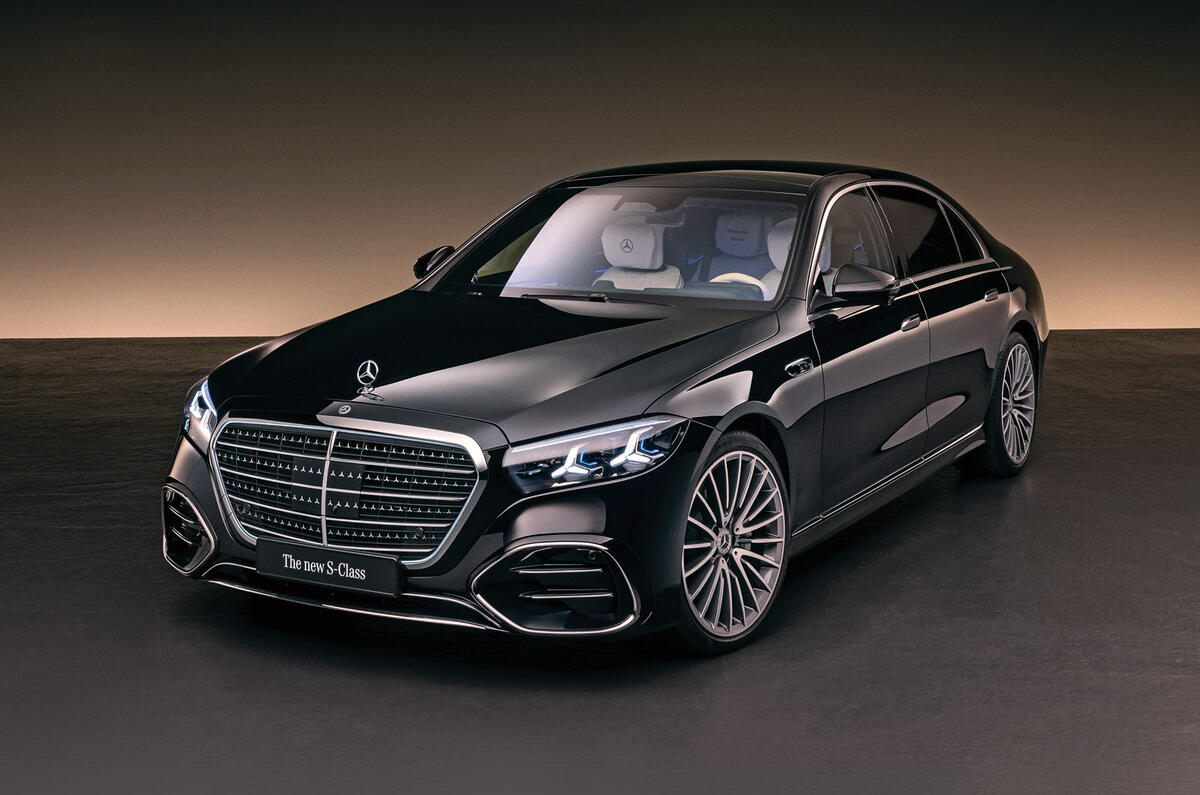
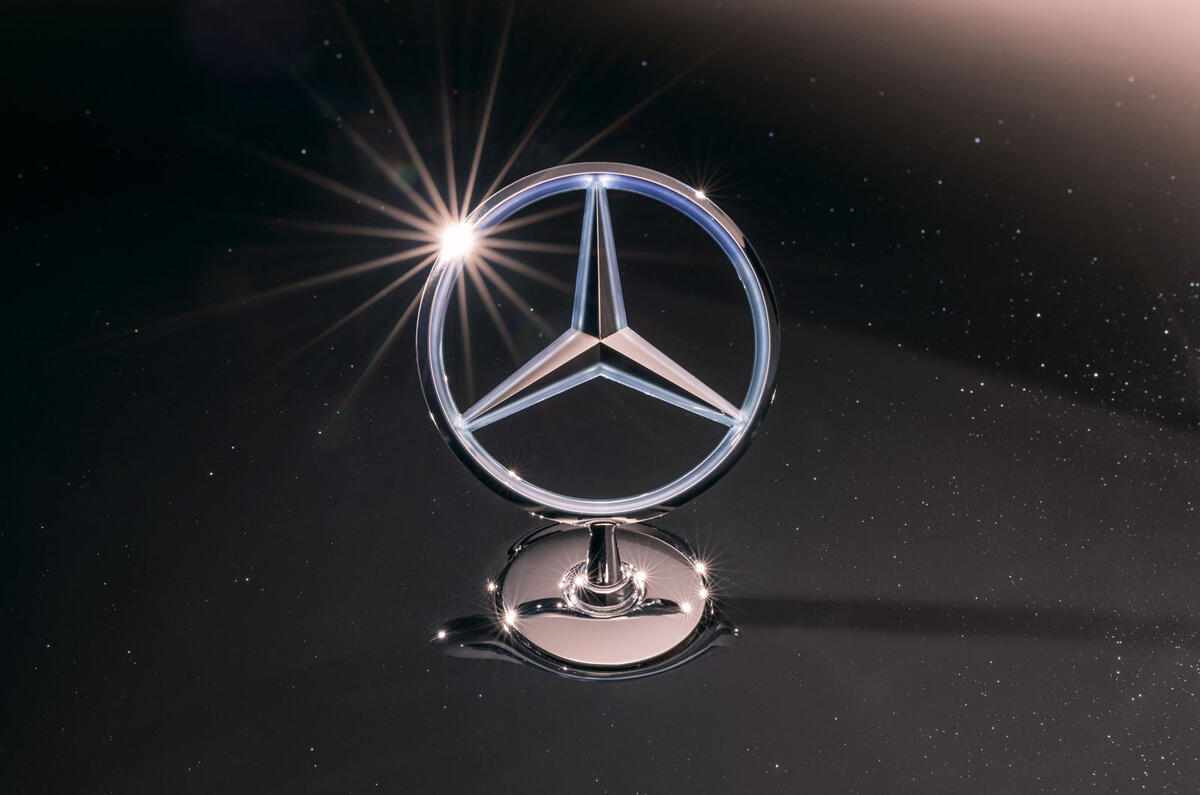
Design-wise, the refreshed S-Class reflects Mercedes’ renewed focus on respect as a core principle. The grille is 20 percent larger and features illuminated three-dimensional stars, while the traditional bonnet-mounted emblem now lights up for the first time. Star motifs also appear within the headlights, which use new microLED technology to illuminate 40 percent more of the road ahead. An upgraded ultra-range high-beam function extends visibility to up to 600 metres.
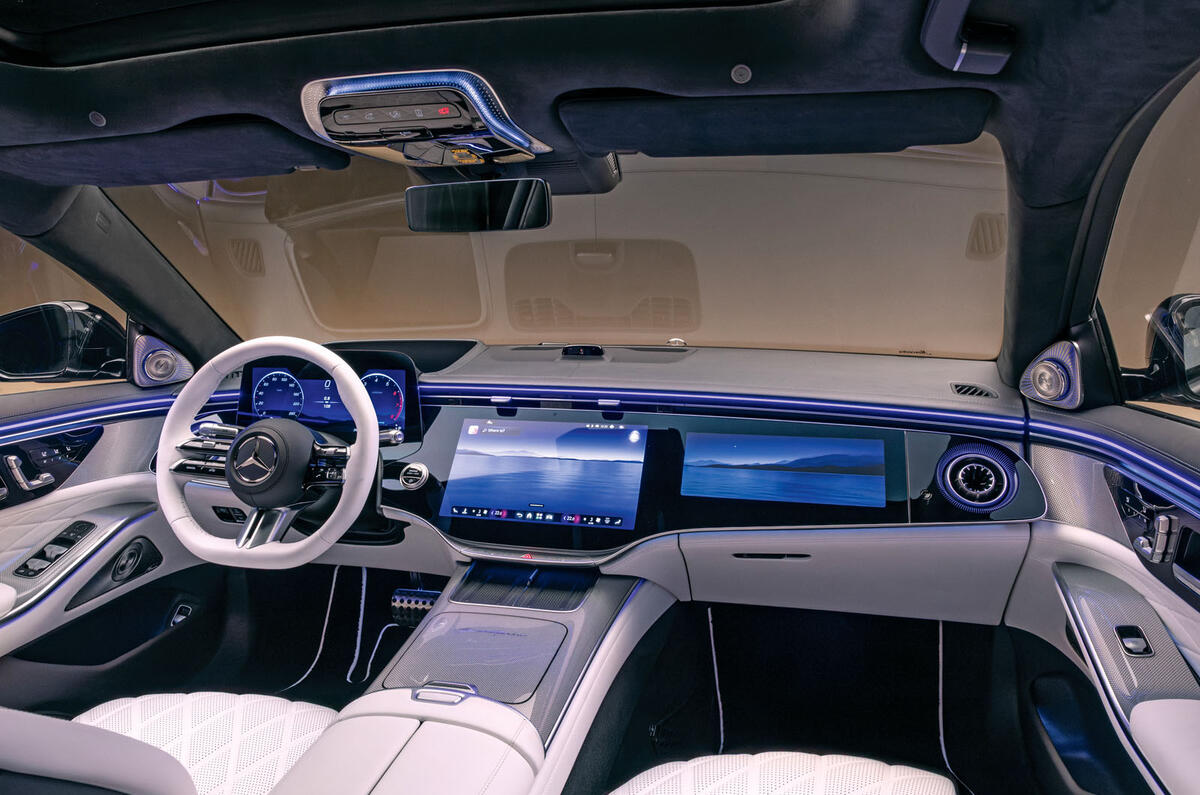
The S-Class also debuts the fourth generation of Mercedes’ MBUX infotainment system. It integrates AI technology from both Microsoft Bing and Google Gemini, with the aim of transforming how occupants interact with the car from every seat. The Hey Mercedes voice assistant now features short-term memory and supports more natural, multi-step conversations.
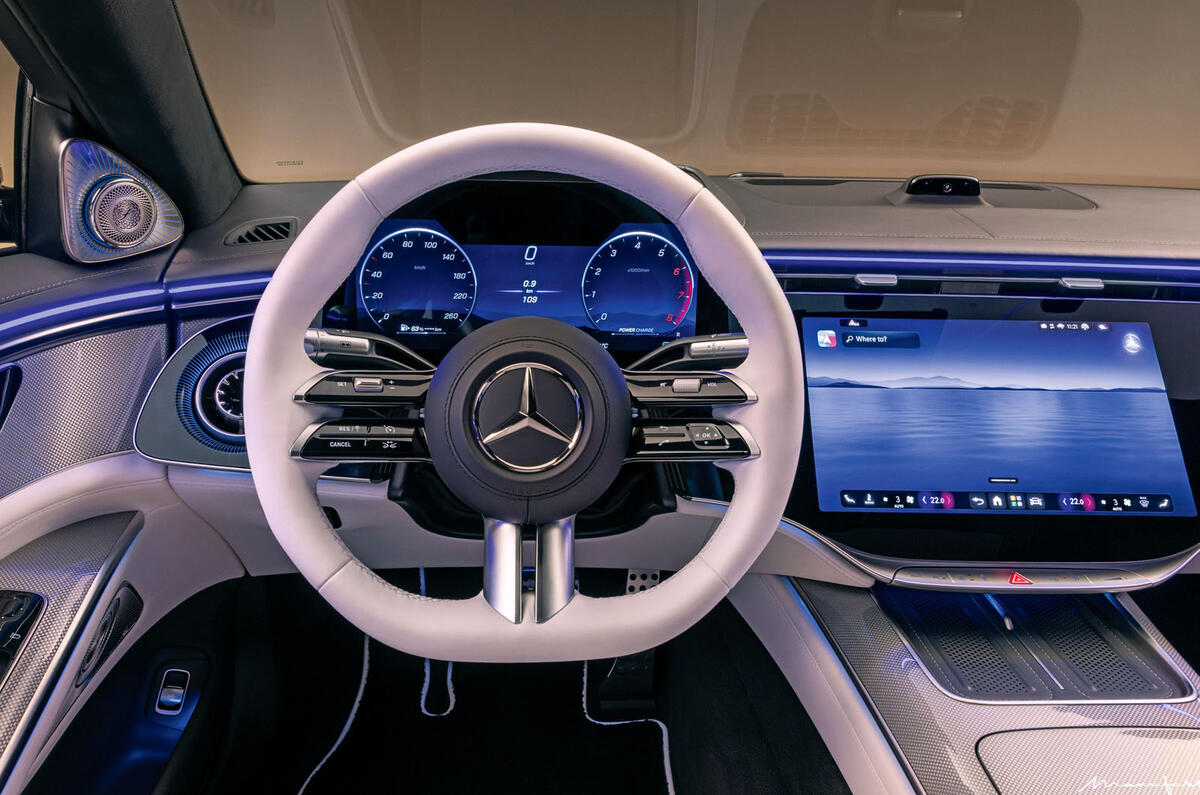
The multifunction steering wheel receives subtle revisions, but one change stands out. In response to customer feedback, Mercedes has brought back physical controls. Cruise control and the speed limiter are once again operated via a small rocker switch, while volume adjustment returns to traditional rollers.