
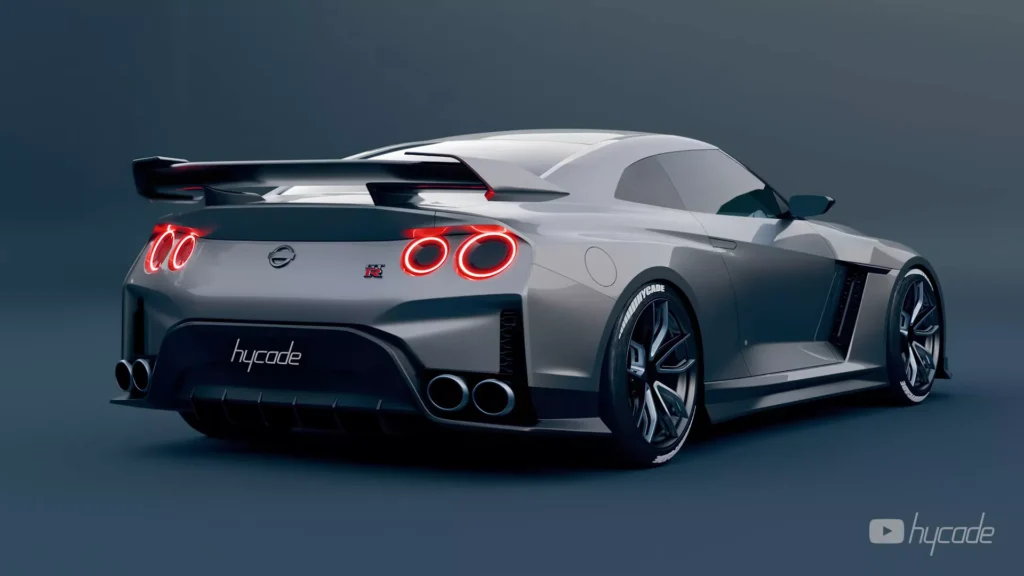
Godzilla isn’t going anywhere, it’s simply taking a breather while the next chapter gets reworked around electrification.
Speaking at the 2026 New York Auto Show, Nissan North America’s senior leadership hinted that the wait for the next GT-R won’t drag on forever. According to Ponz Pandikuthira, meaningful updates should surface around 2028, with the R36 GT-R expected to arrive before the decade closes out.
Behind the scenes, there’s already a dedicated group within Nissan in Japan focused on bringing the next-generation GT-R to life. This isn’t a mild update either. The R36 is being positioned as a completely fresh machine, built on an entirely new platform.
While the architecture will be all-new, the powertrain direction is a bit more nuanced. Pandikuthira made it clear that most of the drivetrain will be reworked, but not necessarily from a clean slate. The current VR38 engine, which powered the R35 GT-R, still has strong fundamentals. Instead of discarding it entirely, Nissan appears to be considering a heavily revised version, potentially retaining the core block while reengineering key components like the cylinder heads and internal hardware.
The reason for this shift is straightforward. The outgoing R35’s setup no longer aligns with tightening global emissions standards, especially with Euro 7 regulations on the horizon. Nissan wants the next GT-R to be a truly global product, which means it has to meet stricter requirements across multiple markets.
Electrification is therefore unavoidable. The next GT-R will incorporate some level of hybrid assistance, though it’s unlikely to go fully electric. The goal seems to be finding a balance that keeps performance at the forefront while ensuring compliance with future emissions rules.
Despite the changes under the skin, the philosophy remains unchanged. Development will still revolve around performance benchmarks like the Nürburgring, just as it did with the R35, which was famously honed on the German circuit.
Earlier indications pointed toward an electric successor, but the direction has clearly evolved. What’s now taking shape looks more like a twin-turbo V6 hybrid that builds on the legacy of the VR38, an engine already known for handling significantly more power than it ever produced in standard form.