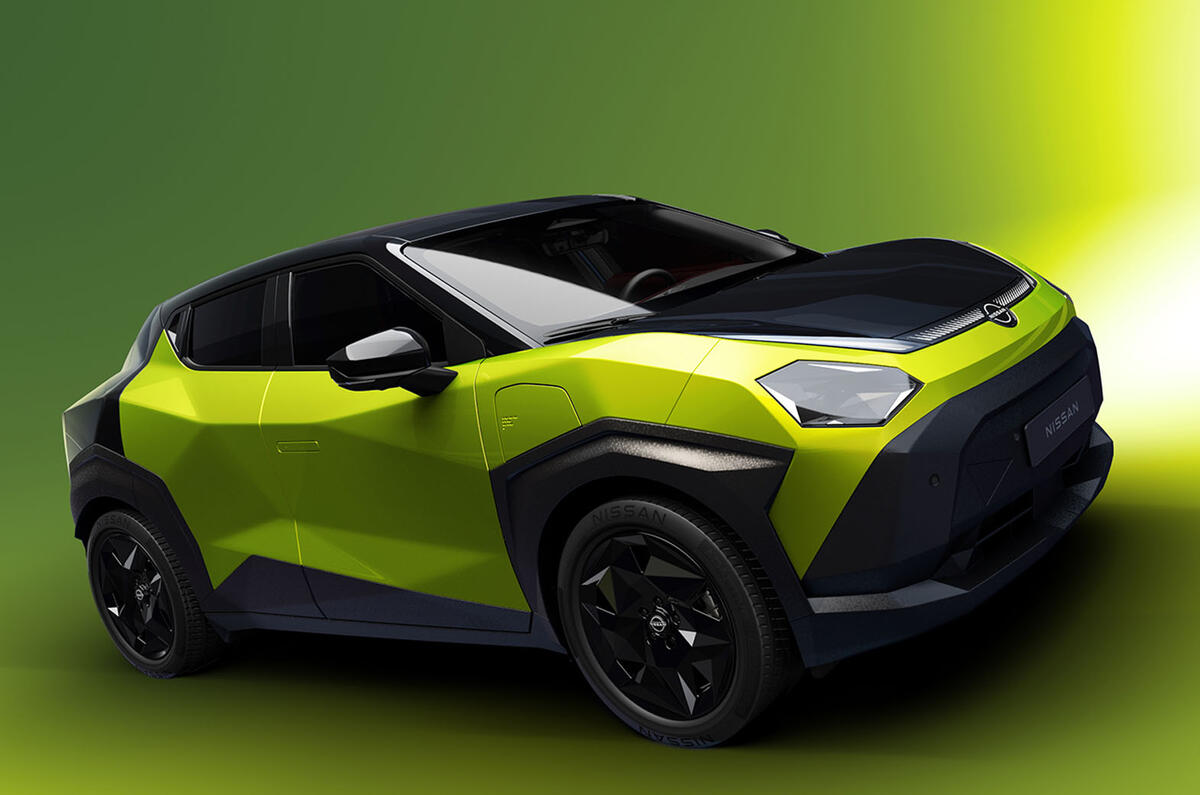
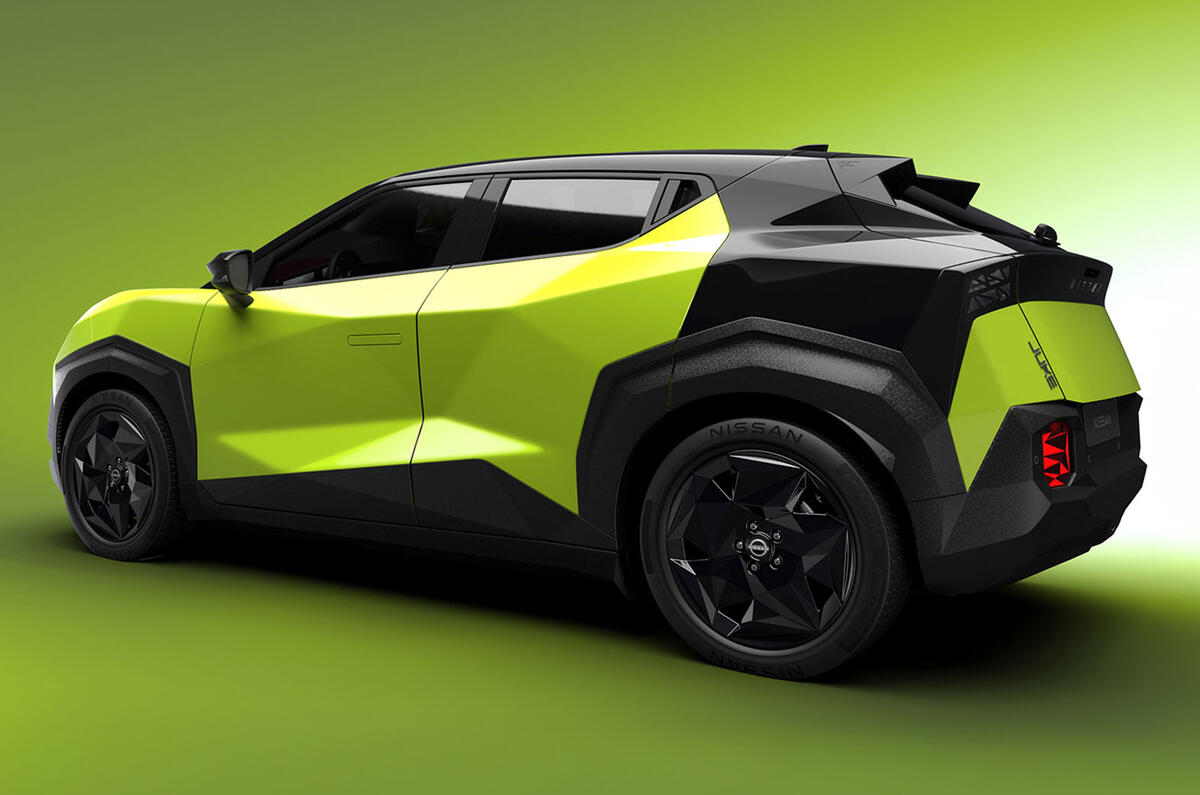
Nissan has pulled the covers off an all-new Juke, marking its third fully electric model and a clear play to bring fresh buyers into the brand through a much bolder design direction.
The compact crossover has long been a strong performer for Nissan in Europe, sitting just behind the Nissan Qashqai in the sales charts, with over 1.5 million units finding homes since the original arrived back in 2010.
Revealed during a forward-looking showcase in Japan, the third-generation Nissan Juke moves onto the CMF-EV architecture, meaning it ditches combustion entirely in favour of a pure electric setup.
Production will take place alongside the next-generation Nissan Leaf at the brand’s Sunderland facility in the UK, with both models expected to share key structural and technical elements.
Positioned as a rival to cars like the Ford Puma Gen-E and Kia EV3, the latest Juke leans heavily into its unconventional styling roots. The design evolves the dramatic look previewed by the Hyper Punk concept, complete with a distinct lighting signature front and rear.
Nissan says the new model continues the same design philosophy that made earlier versions stand out, aiming to appeal to buyers who want something different in the growing EV space.
Interestingly, the brand isn’t abandoning combustion power just yet. The new electric Juke will be sold alongside an updated version of the current second-generation hybrid model. The original plan was to replace it outright, but slower EV adoption forced a rethink.
From Nissan’s perspective, offering both options keeps the door open for a wider range of buyers while still pushing toward a zero-emissions future.
The updated second-gen model is expected to receive visual tweaks to bring it closer in line with the new car, along with much-needed tech upgrades given its age.
Exact specifications for the electric Juke are still under wraps, but expectations point toward a similar setup to the Leaf. That includes battery options around 52 kWh and 75 kWh, with a claimed range of up to 621 km (386 miles). Power is likely to peak at around 215 hp (160 kW), with drive sent to the front wheels only.
There’s also talk of a unique chassis tune for the Juke to give it a sharper, more engaging feel compared to the Leaf, even though the two will share much of their hardware. That distinction matters more now that the Leaf has shifted into crossover territory itself.
Despite the overlap on paper, Nissan insists the two cars won’t compete directly, pointing out that they target very different buyers.
Development of the new Juke has been spread across the UK, Spain and Germany, highlighting the brand’s continued investment in Europe as both an engineering and production base.
Pre-production work at Sunderland is set to kick off soon, with full-scale manufacturing planned for early 2027. Customer deliveries are expected to follow shortly after in the spring.