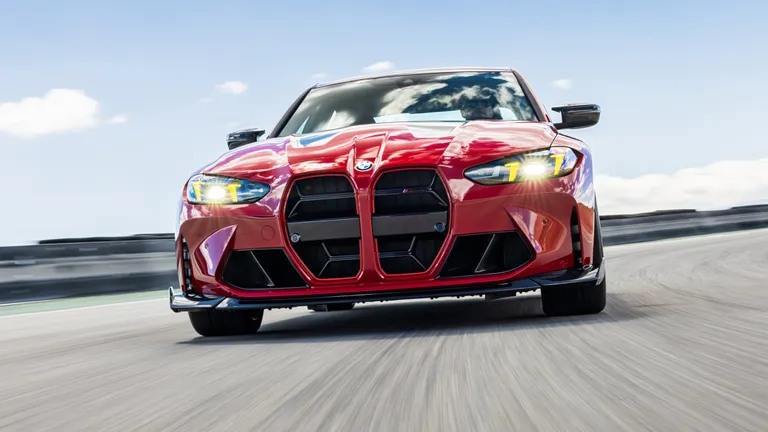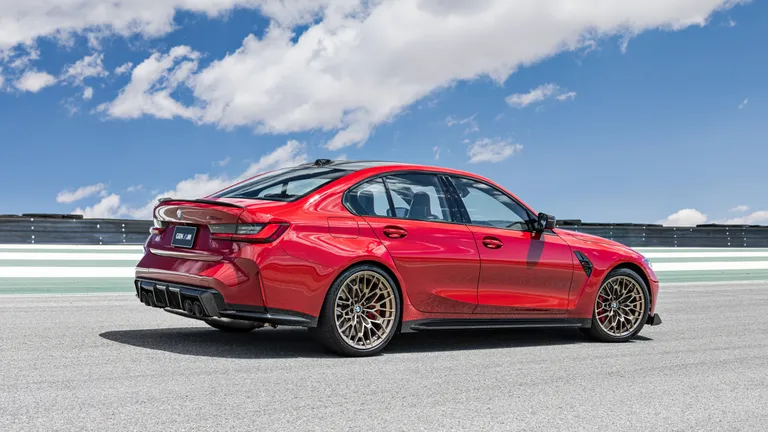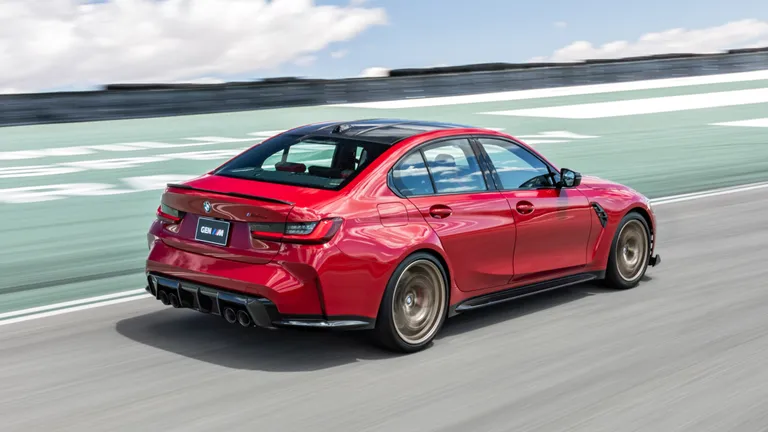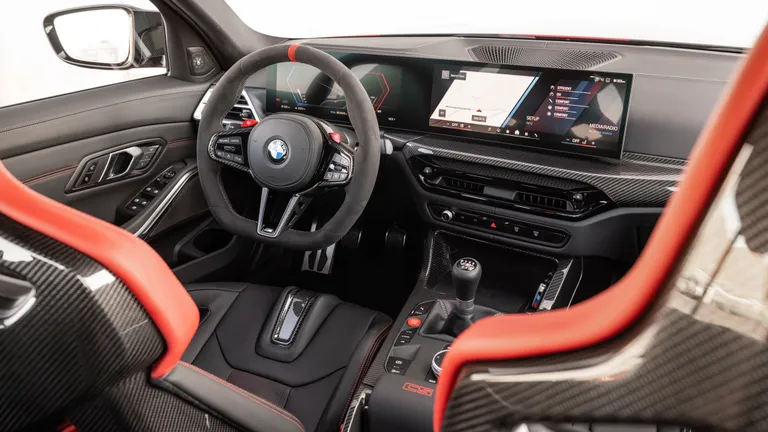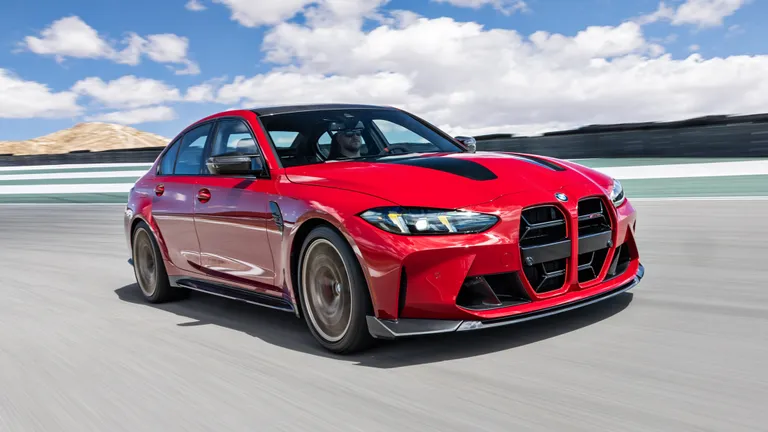
American car enthusiasts often get painted with the same lazy stereotype, but the reality is quite different. If anything, the continued survival of the manual gearbox in modern performance cars is proof that there is still strong demand from drivers who actually enjoy being involved behind the wheel. BMW has clearly taken note, because the new 2027 BMW M3 CS Handschalter arrives as a lightweight, hardcore M3 CS that swaps paddles for a proper six-speed manual transmission.
The name “Handschalter” roughly translates to “manual shifter” in German, and interestingly, this is the very first time BMW has paired the CS treatment with a manual gearbox. The model will only be sold in North America, making it one of the more unusual region-specific M cars in recent memory.
Under the bonnet sits BMW’s familiar 3.0-litre twin-turbocharged straight-six, delivering 473 hp (353 kW) and 550 Nm (406 lb-ft) exclusively to the rear wheels through a six-speed manual gearbox and electronically controlled limited-slip differential.
If you are wondering why BMW did not use the more powerful 550 hp (410 kW) engine from the regular M3 CS, the answer is fairly simple. According to BMW, the manual transmission is already operating near its limits with the lower output setup. Even so, performance should still be properly rapid. BMW claims the car will sprint from 0 to 96 km/h (60 mph) in 3.8 seconds, or 4.1 seconds without rollout included in the timing.
The recipe combines components pulled from several different modern M products. The weight-saving programme mirrors other CS models with extensive use of carbon fibre throughout the car, including the roof, front splitter, boot lid, seat backs and centre console. It also borrows engine mounts from the BMW M4 CSL, suspension springs from the BMW M2 CS, and the titanium exhaust setup and dampers from the standard M3 CS.
Although some suspension hardware is shared, BMW says the Handschalter receives its own bespoke chassis calibration. Removing the all-wheel-drive hardware allowed engineers to lower the ride height by nearly 6 mm, helping reduce the centre of gravity and sharpen the handling characteristics further. Revised camber settings, unique electronic damper tuning and specific rear differential calibration are also part of the package.
Buyers will still be able to spec a few additional extras, including carbon ceramic brakes, a front strut brace and track-focused tyres. At the same time, BMW has not stripped away every comfort feature, with options such as a head-up display and powered tailgate still available.
Initial impressions from those who have already sampled the car around Willow Springs suggest the manual gearbox retains BMW’s familiar long clutch travel and mechanical, slightly notchy shift action. That combination has become something of a trademark for modern BMW manuals, even if opinions remain divided on whether it is charming or old-school.
Pricing in the United States starts at $108,450 and BMW will reportedly build fewer than 1,000 examples. Production has already started in Germany, with the first deliveries expected in North America later this year.