
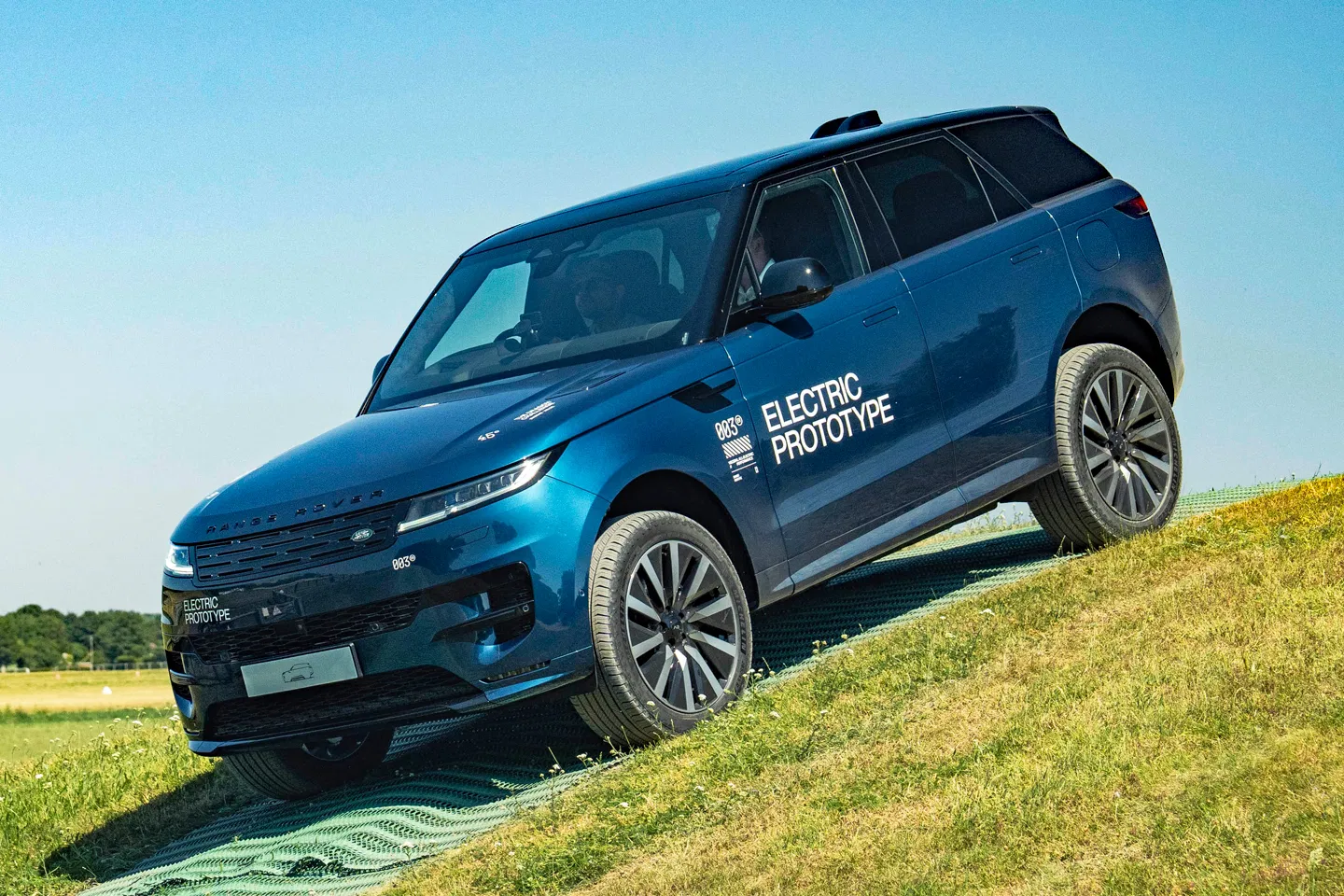
Land Rover is preparing to introduce the all-electric Range Rover Sport, and rather than reinventing its design, the British marque has chosen a familiar path. The upcoming luxury electric SUV closely mirrors the existing combustion-powered model, with only subtle visual tweaks distinguishing it from its petrol and diesel siblings.
Familiar Styling With an Electric Twist
Unlike several rivals that have embraced futuristic styling for their electric vehicles, the Range Rover Sport Electric remains instantly recognisable. Expect the same elegant silhouette as the current model, complemented by a sealed front grille and the absence of traditional exhaust outlets.
The restrained approach means buyers will enjoy the timeless Range Rover Sport design without the bold styling compromises often associated with modern EVs.
MLA Platform Underpins the Electric SUV
The new Range Rover Sport Electric is built on Land Rover’s Modular Longitudinal Architecture (MLA), the same flexible platform used by the conventionally powered Range Rover Sport and full-size Range Rover.
Designed from the outset to accommodate internal combustion engines, plug-in hybrid systems and fully electric powertrains, the MLA architecture allows Land Rover to offer multiple drivetrain options without creating a dedicated EV platform.
Dual-Motor Power and Strong Performance
Power comes from a pair of electric motors delivering either 444 hp (331 kW) or 542 hp (404 kW), depending on the chosen variant.
Torque is particularly impressive at 850 Nm (627 lb-ft), providing instant acceleration and effortless performance. With identical motors mounted at both axles, power distribution is expected to remain evenly balanced between the front and rear wheels.
Energy is supplied by a substantial 118.5 kWh battery pack, although it is still smaller than the recently revealed BMW iX5’s 141 kWh battery.
Estimated Driving Range and Rapid Charging
Land Rover is targeting an EPA driving range of approximately 531 km (330 miles) on a full charge, while the official WLTP figure is expected to be even higher once certified.
For comparison, BMW estimates the upcoming iX5 will travel around 700 km (435 miles) on the EPA cycle and up to 845 km (525 miles) under WLTP testing.
The Range Rover Sport Electric uses AESC’s double-stacked cylindrical battery cells and features an 800-volt electrical architecture, enabling 350 kW DC fast charging for significantly reduced charging times.
Luxury and Off-Road Ability Remain Priorities
Despite switching to electric power, Land Rover says the Range Rover Sport will retain the off-road capability expected from the badge.
Standard air suspension promises a refined ride, while rear-wheel steering improves low-speed manoeuvrability and high-speed stability.
The SUV also introduces a one-pedal driving mode that can be used off-road, allowing drivers to control speed more precisely over challenging terrain using only the accelerator pedal.
Cabin Expected to Remain Largely Unchanged
Inside, the electric model is expected to share much of its interior with the current Range Rover Sport.
That means buyers can look forward to premium materials and impressive craftsmanship, although the heavily screen-based infotainment system is likely to divide opinion. The continued use of gloss black trim across the centre console may also prove less popular with some owners.
Official Reveal Coming Soon
Land Rover is expected to fully unveil the Range Rover Sport Electric before the end of the year, revealing final specifications, pricing and availability. With familiar styling, serious performance and premium refinement, it aims to offer existing Range Rover owners an easy transition into the electric era.