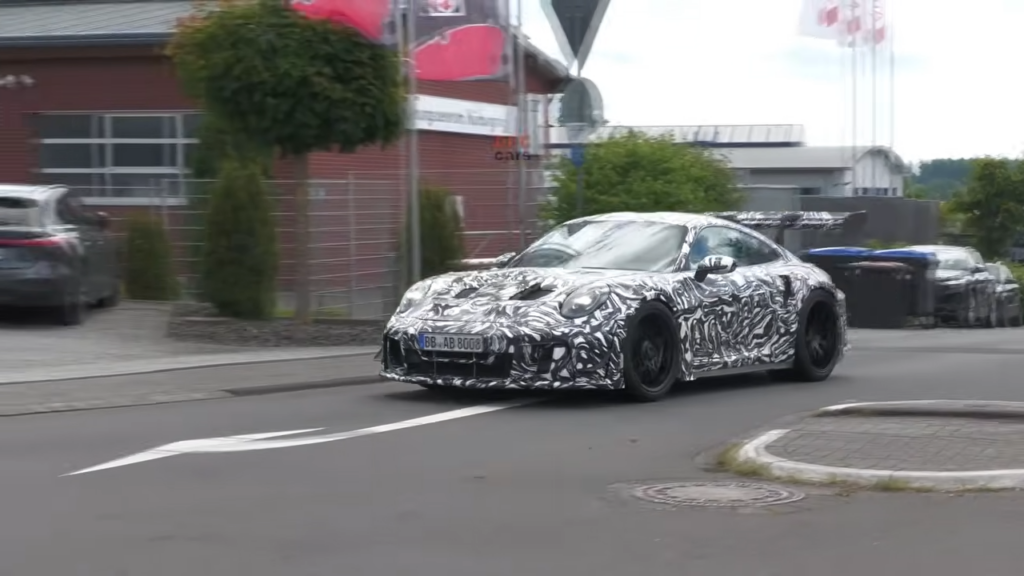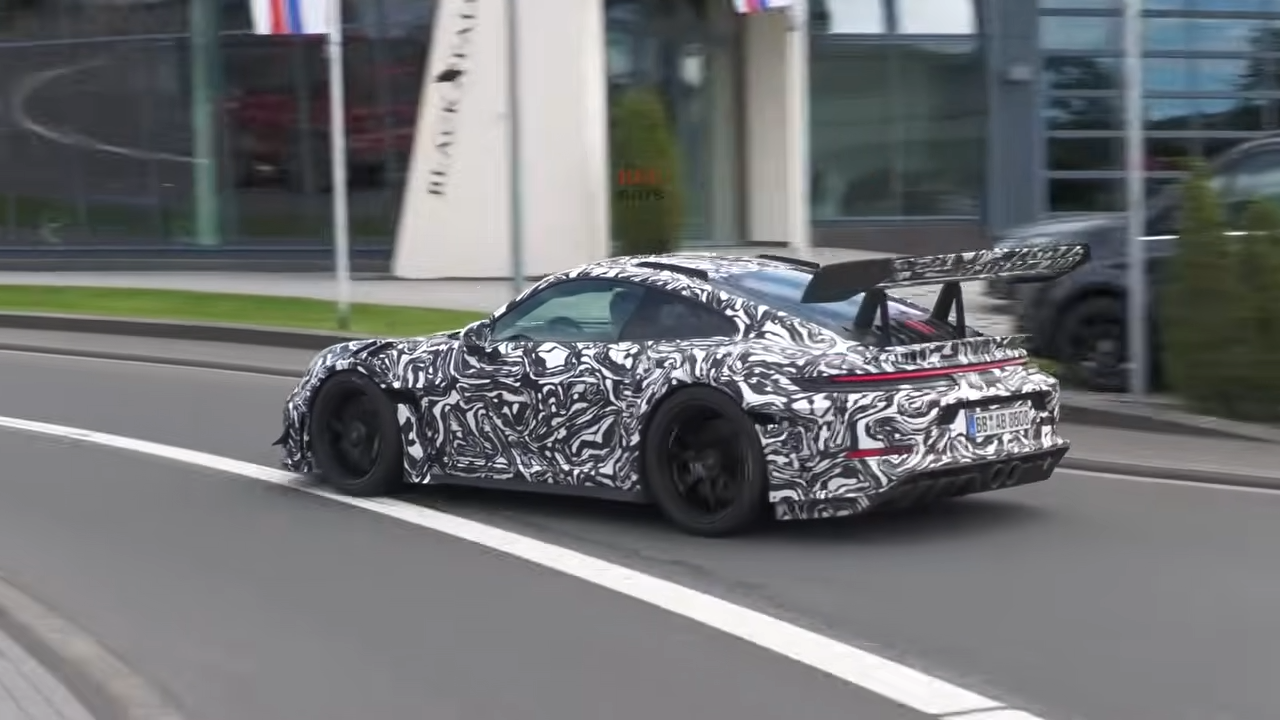
The next evolution of Porsche’s most hardcore naturally aspirated track weapon is edging closer to production. Fresh spy shots from the Nürburgring reveal the facelifted 992.2-generation Porsche 911 GT3 RS undergoing final development, with a public debut expected before the end of the year.
While some enthusiasts have begun speculating about forced induction, there is currently little evidence to suggest Porsche will abandon the GT3 RS formula that has made the model such a benchmark among track-focused sports cars.
Familiar Shape, Sharper Details
At first glance, distinguishing the updated GT3 RS from the outgoing model is no easy task. Porsche has built a reputation for evolving the 911 through subtle design changes rather than dramatic overhauls, and the latest GT3 RS follows that tradition.
A closer inspection reveals a number of key updates. The front bumper has been redesigned and now features a revised central section with vertical aero elements replacing the previous large central opening. Additional aerodynamic revisions can be seen lower down in the bumper, while the side air intakes appear significantly more aggressive than before.
The vents integrated into the front fenders also appear to have been reshaped and reduced in size compared to the current car.
Although heavy camouflage covers parts of the bonnet, there are indications that Porsche may have revised its shape to further optimise airflow and cooling performance.
Aerodynamic Tweaks Continue at the Rear
Along the sides, the overall silhouette remains largely unchanged, preserving the unmistakable GT3 RS profile. However, redesigned rear air intakes suggest Porsche’s engineers have continued refining airflow management around the vehicle.
At the rear, subtle but important changes are visible. The enormous swan-neck rear wing appears to have received updates, while the rear bumper now incorporates a new central vent positioned beneath the taillight assembly.
The diffuser has also been revised and now features additional vertical fins, while retaining the central opening for the twin exhaust outlets. Porsche is also expected to introduce updated taillight graphics in line with other facelifted 992.2 models.
Will Porsche Keep It Naturally Aspirated?
The biggest question surrounding the updated GT3 RS isn’t its styling but what sits behind the rear axle.
The current model is powered by a naturally aspirated 4.0-litre flat-six engine producing 518 hp (386 kW) and 465 Nm (343 lb-ft) of torque. Power is sent exclusively to the rear wheels through Porsche’s seven-speed PDK transmission.
Rumours suggesting a turbocharged powertrain have surfaced online, but Porsche purists will be hoping the brand retains the naturally aspirated character that has become a defining feature of the GT3 RS lineage.
Nürburgring Testing Continues
Given the advanced state of development, the facelifted 911 GT3 RS is expected to make its official debut within the coming months before arriving in global markets during 2027.
Whether Porsche sticks with atmospheric power or surprises the world with a new performance formula remains one of the most intriguing questions surrounding the upcoming model.