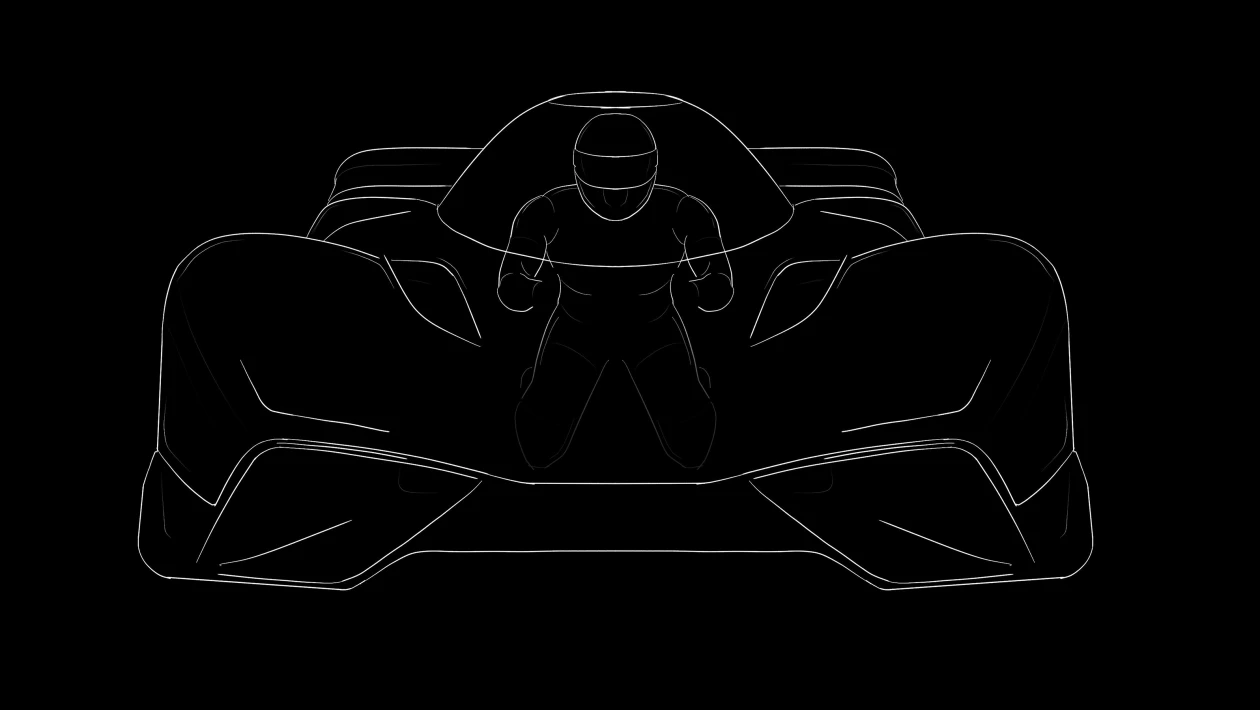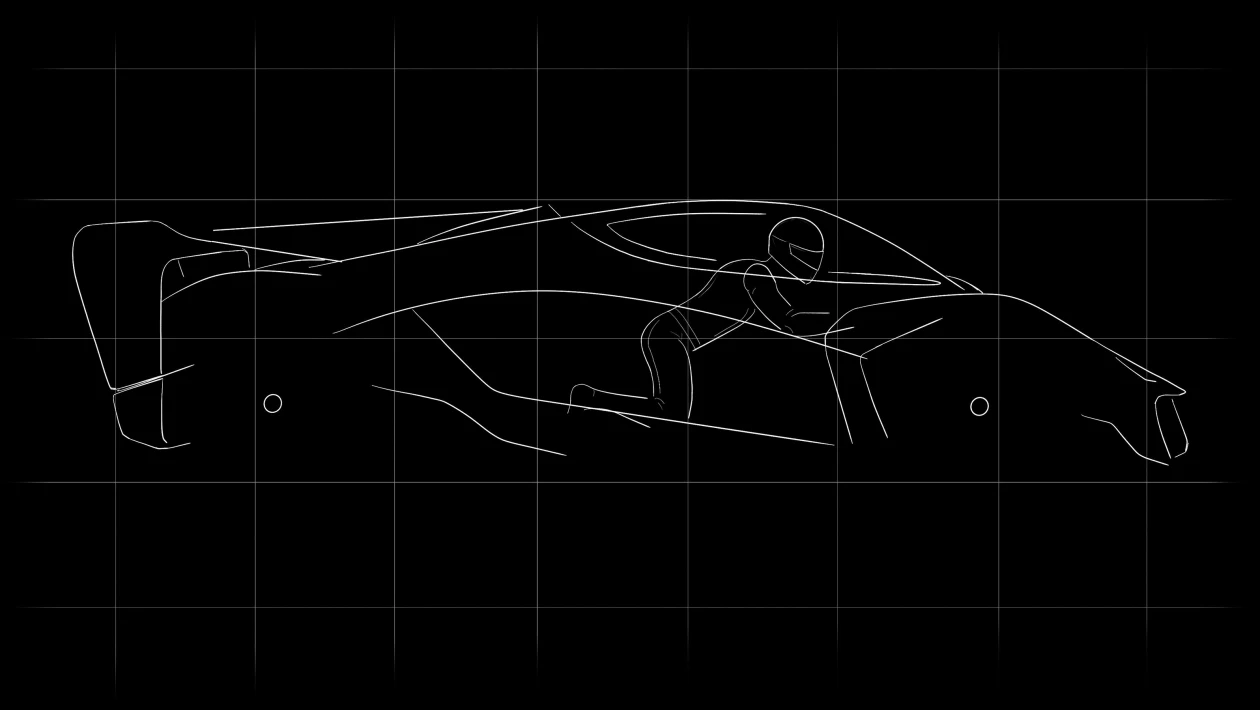
There have been some genuinely wild ideas in the automotive world over the years, but a Dutch start-up called Sanrivatti may have just raised the bar. The company is developing an as-yet-unnamed hypercar built around a seating position borrowed from the world of high-performance motorcycles, and it is every bit as unusual as it sounds.
What Is the Apex Position?
Sanrivatti’s central idea is something it calls the Apex Position, a prone-forward driving stance that places the driver at the heart of the experience rather than upright behind a wheel in the conventional sense. The company says this configuration puts the driver “at the very centre of the hypercar experience,” though it will clearly demand a degree of physical flexibility that most people simply do not possess.
There is no passenger seat. Anyone riding along would end up directly behind the driver with an unobstructed view of the seat in front rather than the road ahead, so it is probably for the best that Sanrivatti has not attempted to accommodate a co-pilot. How the pedals and controls will be incorporated around this radical layout remains an open question for now.
The Thinking Behind the Concept
Santiago Sánchez Rivero, the 23-year-old founder and CEO of Sanrivatti, explains that the idea grew from his admiration for the connection between a motorcycle rider and their machine. His argument is that on a high-performance bike, rider and machine move as one unit, with an immediacy and physicality that cars have never truly replicated.
“For me, the question was never how to create more power or more speed,” he said. “The question was how to create a deeper connection between driver and machine.”
That philosophy shapes everything about Sanrivatti’s approach. Rather than chasing headline figures, the company wants to deliver what it describes as the most immersive and involving driving experience possible. Think of it as a hypercar you ride rather than simply sit in.
Proprietary Technology and a Working Prototype
To make the Apex Position functional in the real world, Sanrivatti says it is developing its own proprietary technologies designed to allow the driver to move more naturally with the car. The goal is a heightened sense of awareness and a superior feeling of balance across all three key phases of driving: acceleration, braking and cornering.
A working prototype is already in development, helping the team refine the posture, the control inputs and the practical realities of making the concept viable outside of a computer rendering.
A Team with Serious Pedigree
Despite its youth as a company, Sanrivatti has assembled an impressive pool of talent. The team draws on expertise from Lotus, Bentley and McLaren. Perhaps the most notable addition is Paul Arkesden, appointed as executive director of technology partnerships, who previously served as head of engineering at Singer and was project leader for the McLaren P1.
“What attracted me to Sanrivatti was the originality of the thinking behind it,” Arkesden said. “The automotive industry has become incredibly effective at refining established ideas, however, opportunities to explore genuinely new perspectives are much rarer.”
It is a sentiment that speaks to why Sanrivatti exists at all. In a world where established names like Ferrari, Lamborghini and Pagani define the hypercar conversation, a new entrant needs a compelling reason to exist. An entirely new take on how a driver interacts with a car could be exactly that.