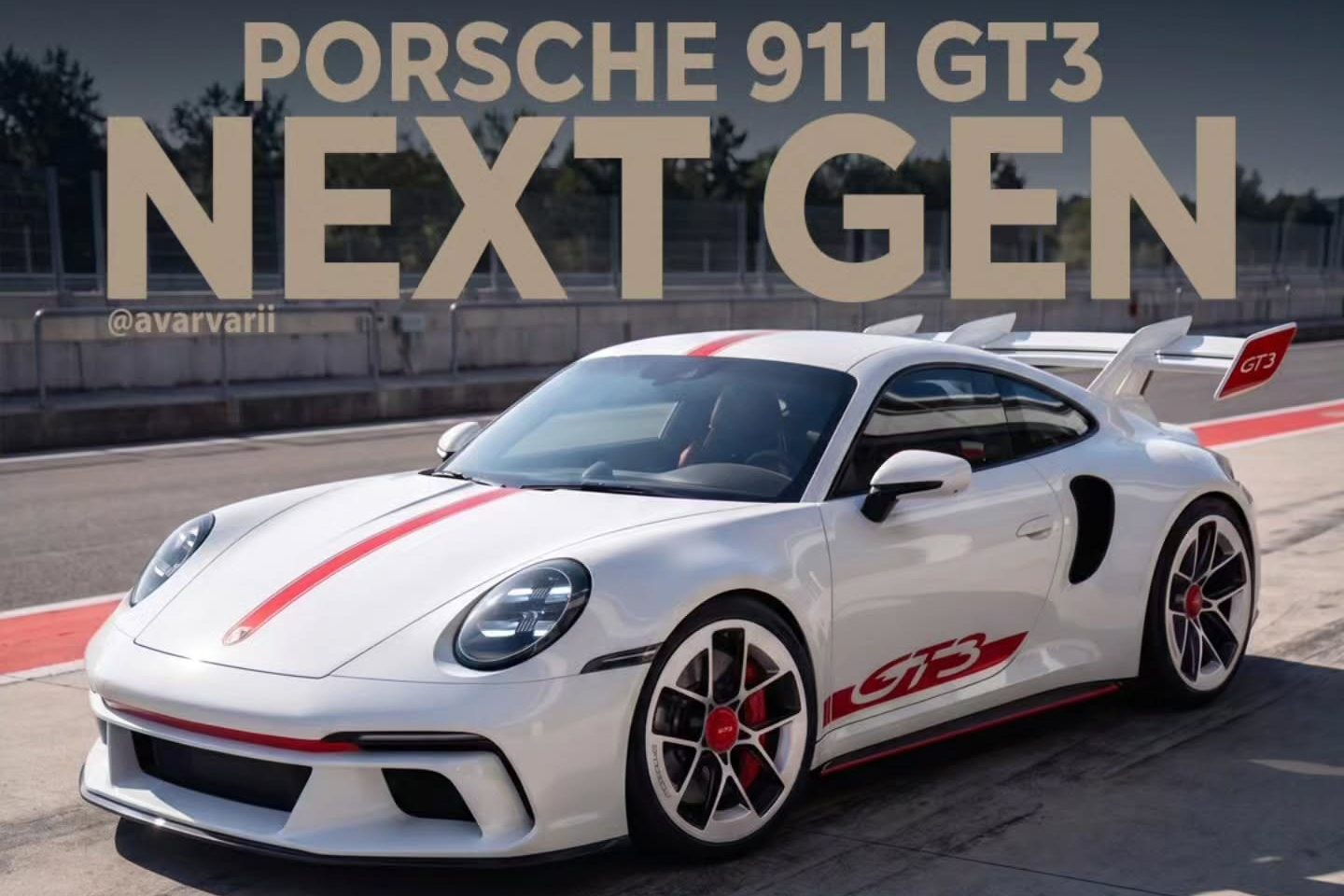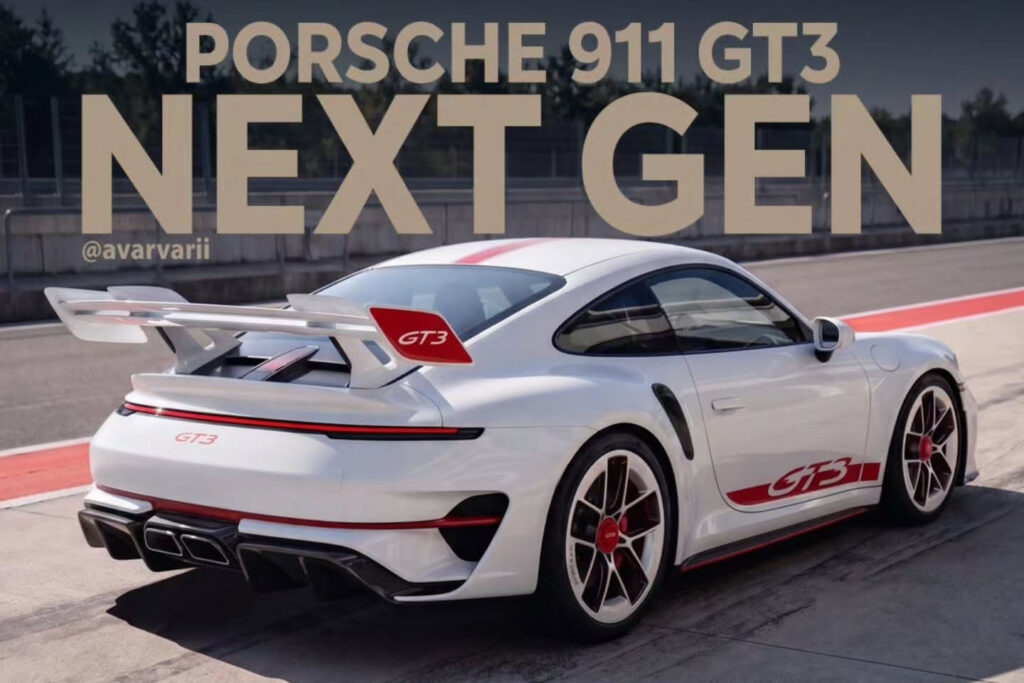
Porsche is nearing the end of the current 992-generation 911’s lifecycle, with only a handful of special editions still expected before the next-generation model arrives. That next chapter is likely to bring one of the biggest changes in GT3 history.
According to industry expectations, the next 911 GT3, tipped to debut in 2029 as a 2030 model, will abandon its naturally aspirated flat-six in favour of turbocharging. The move is expected to be driven primarily by increasingly strict European emissions regulations, leaving Porsche with little alternative.
If that happens, the entire GT3 family, including the more focused GT3 RS and Manthey variants, is expected to transition to forced induction since they all share the same engine architecture.
A Legendary Engine Reaches Its Limit
For decades, the naturally aspirated GT3 engine has been at the heart of Porsche’s motorsport programme and one of the defining characteristics of the road-going GT models.
Despite producing similar outputs over several generations, the GT3 has consistently remained one of the quickest track-focused production cars in the world. Rather than relying on massive power increases, Porsche has focused on refining chassis dynamics, aerodynamics and engine responsiveness.
The current 4.0-litre flat-six has already received extensive engineering updates over the years. Larger displacement, a gasoline particulate filter and countless race-derived improvements to the valvetrain, lubrication, cooling and intake systems have helped keep the naturally aspirated engine alive for as long as possible.
However, tightening emissions legislation appears set to bring that chapter to a close.
Twin-Turbo Power Looks Like the Most Likely Solution
Fortunately for Porsche, integrating turbocharging into the GT3 will not require starting from scratch.
Most 911 variants already feature turbocharged engines, meaning the necessary intake, exhaust, intercooling and cooling systems are already well developed. The challenge will be adapting those components to meet the demanding durability and performance standards expected of a GT3.
While Porsche’s latest GTS T-Hybrid powertrain may seem like an obvious candidate, it is unlikely to be the solution for the GT3. The added complexity and weight of the hybrid system would not align with the lightweight philosophy of Porsche’s GT division or current GT3 racing regulations.
Instead, the next GT3 is expected to adopt a conventional twin-turbo setup similar to the rest of the 911 range.
Performance Should Stay True to the GT3 Formula
The existing 3.0-litre twin-turbo flat-six found in models such as the 911 Targa already produces 473 hp (353 kW) and 529 Nm (390 lb-ft). By comparison, today’s naturally aspirated GT3 delivers 502 hp (375 kW) and 449 Nm (331 lb-ft).
That relatively small performance gap suggests Porsche’s GT engineers would only need modest tuning adjustments to achieve comparable output while maintaining the durability required for both road and track use.
Those expecting the more powerful 3.6-litre twin-turbo engine from the 911 Turbo are likely to be disappointed. The GT3 has never been about headline power figures or straight-line acceleration.
Its reputation has been built on precision, consistency, driver engagement and the ability to deliver lap after lap without compromise. If Porsche can preserve those qualities while meeting future emissions standards, the addition of turbocharging may prove to be less controversial than many enthusiasts expect.