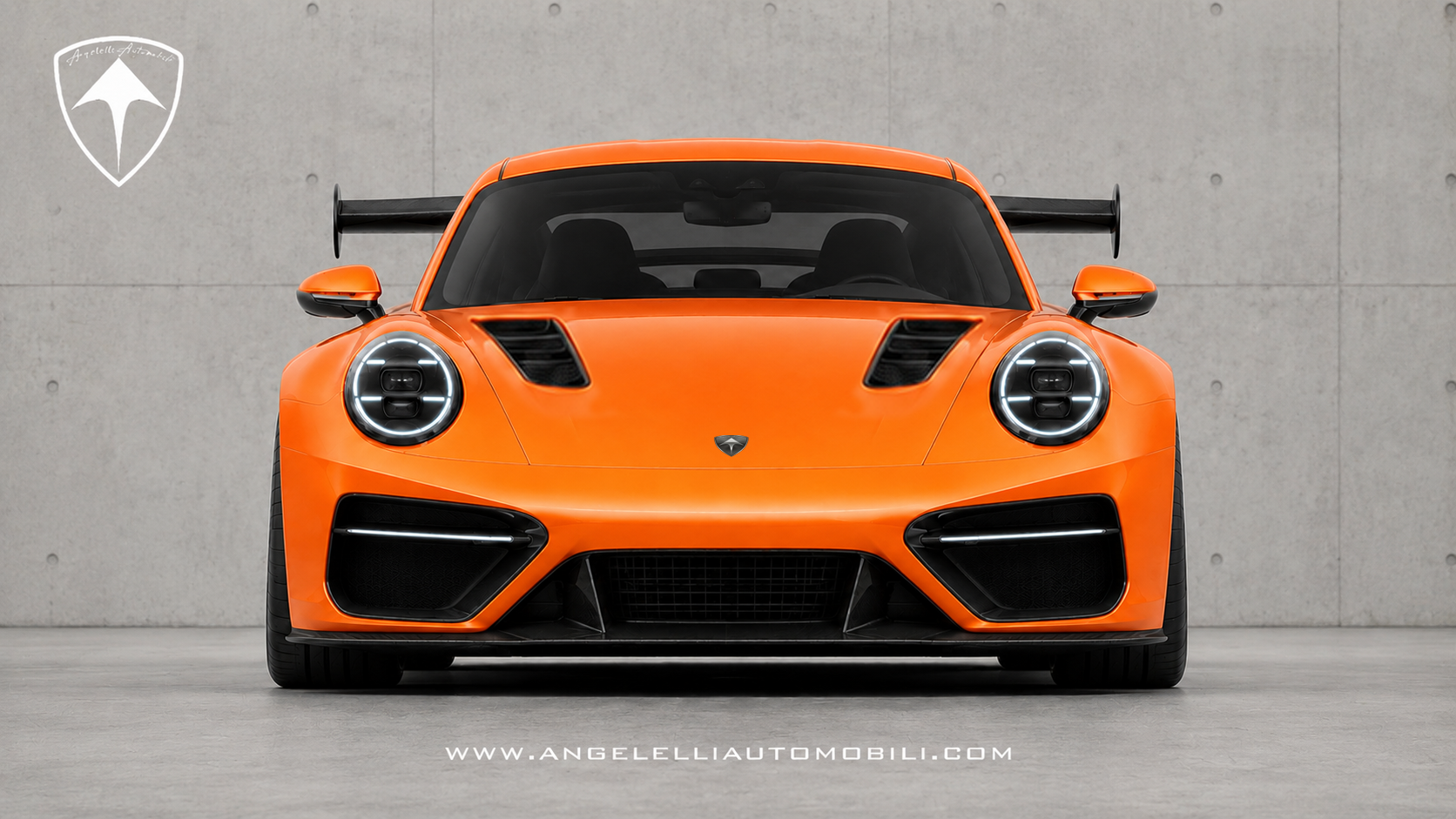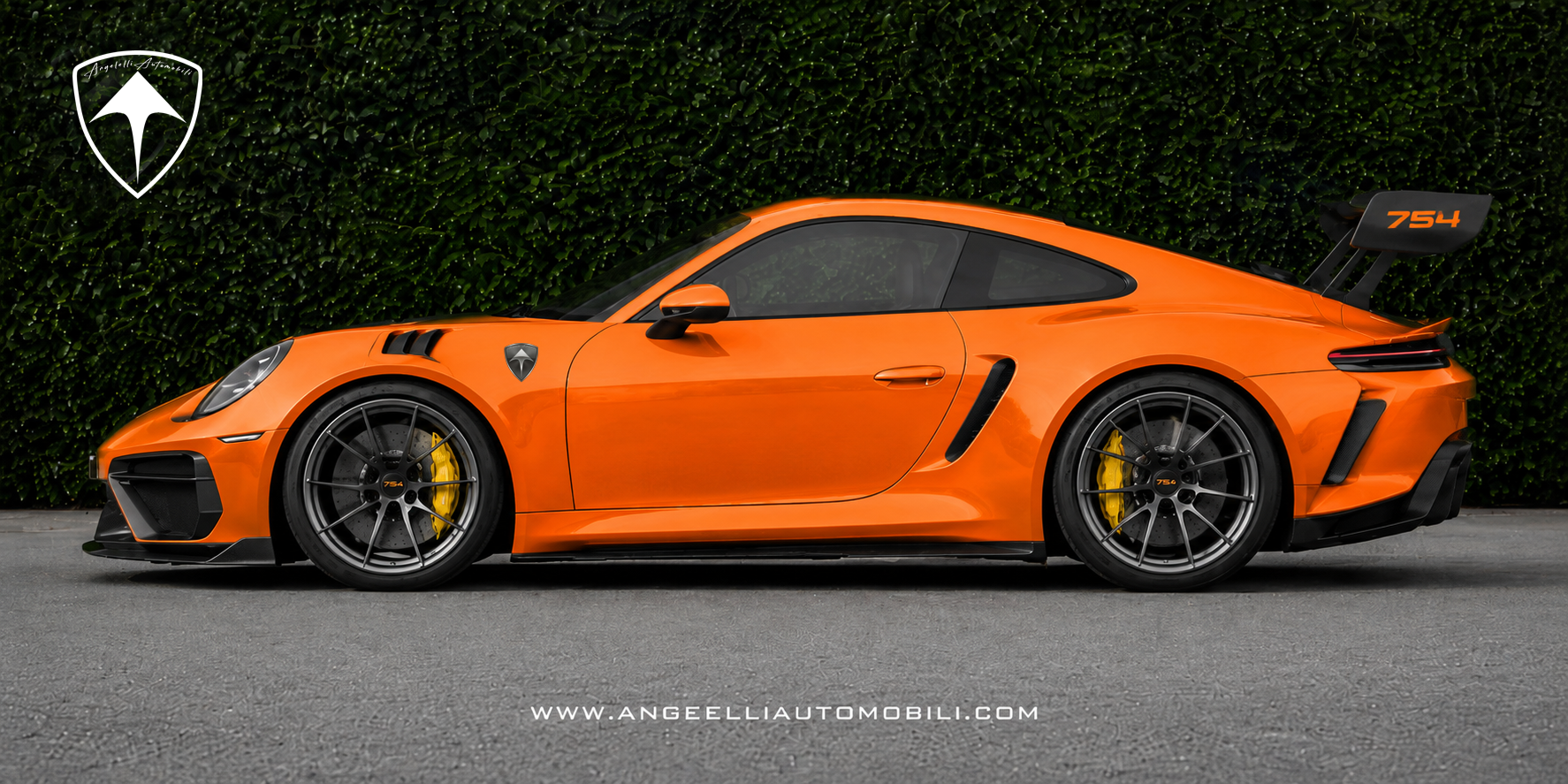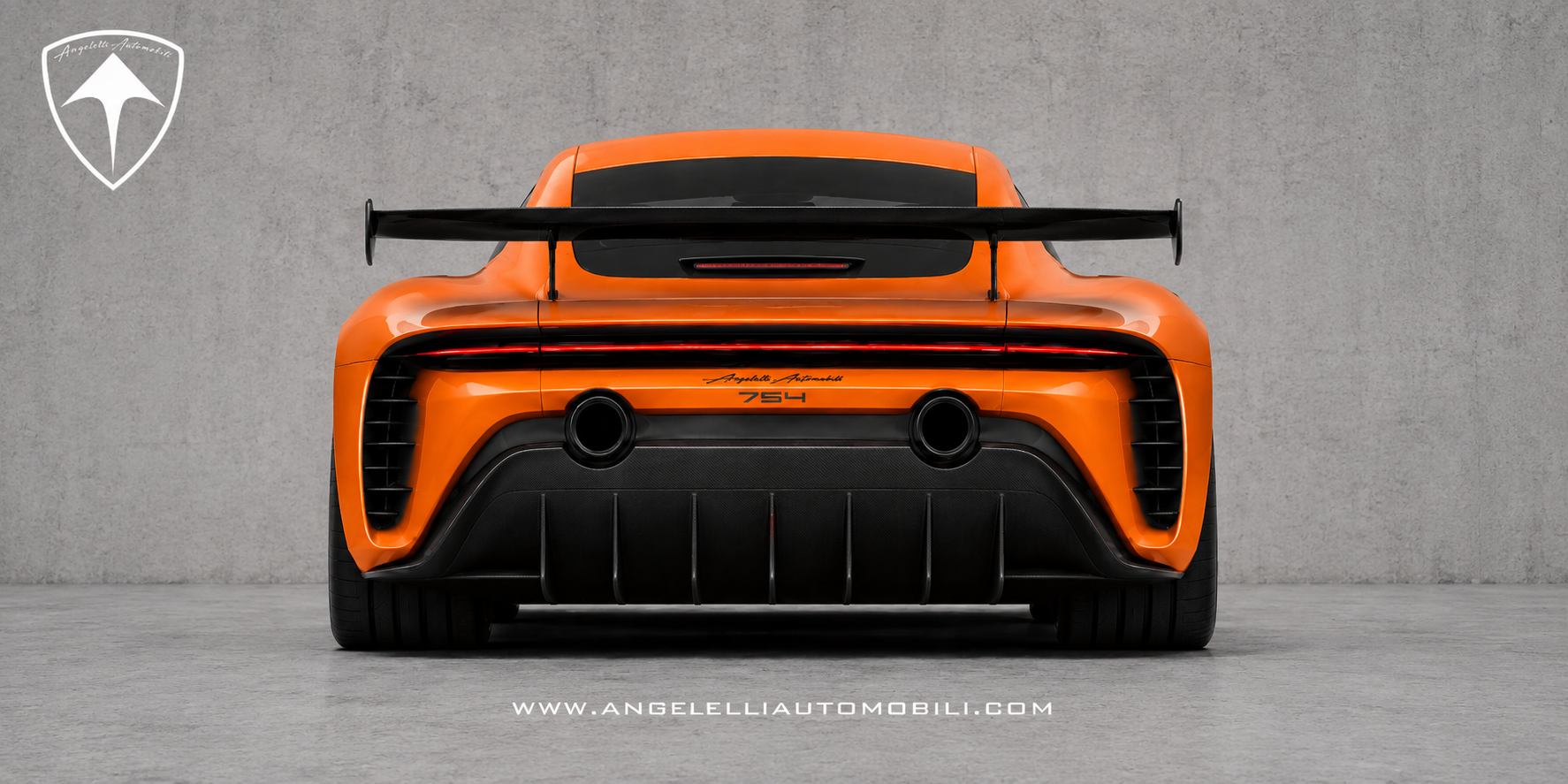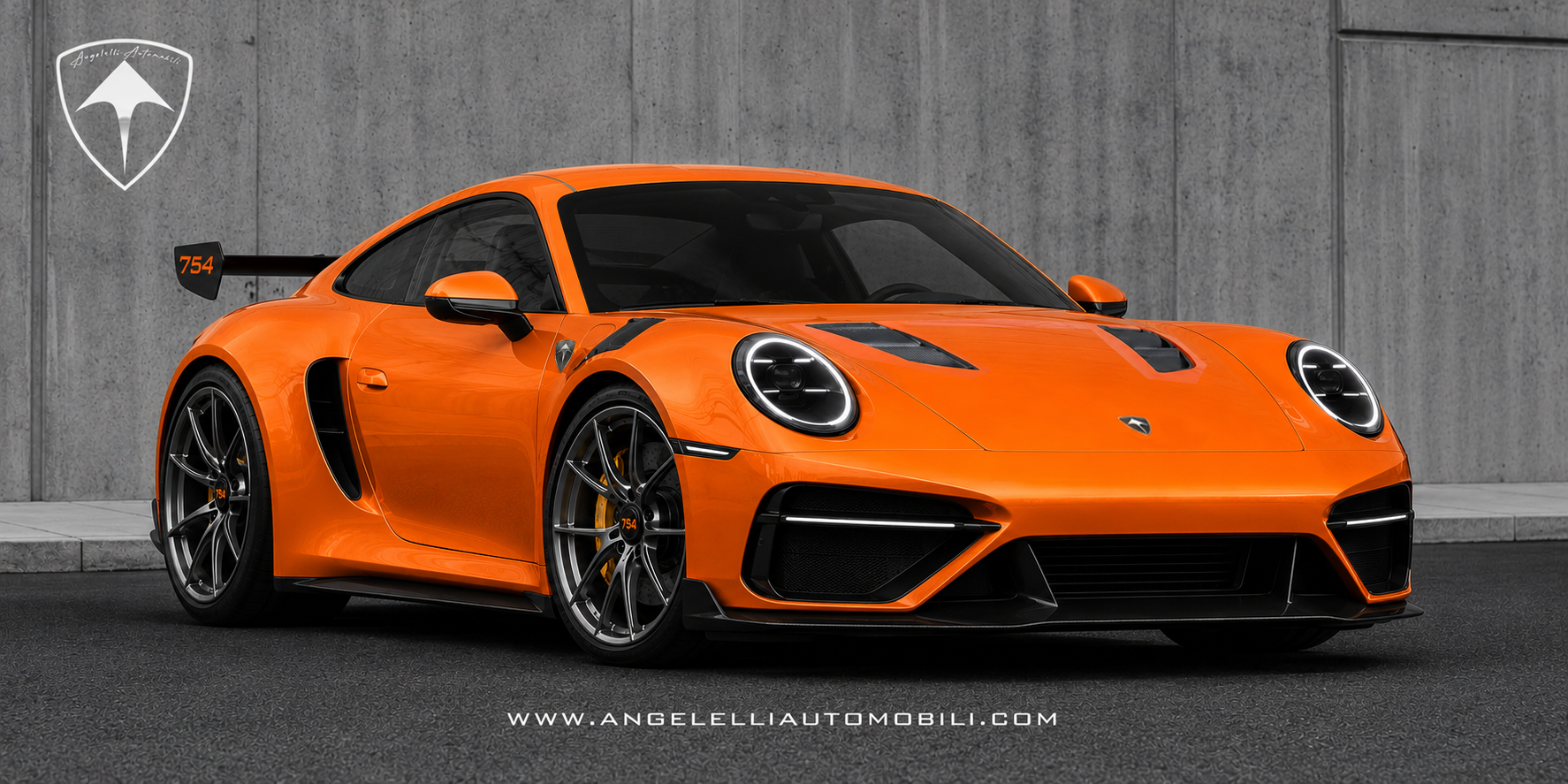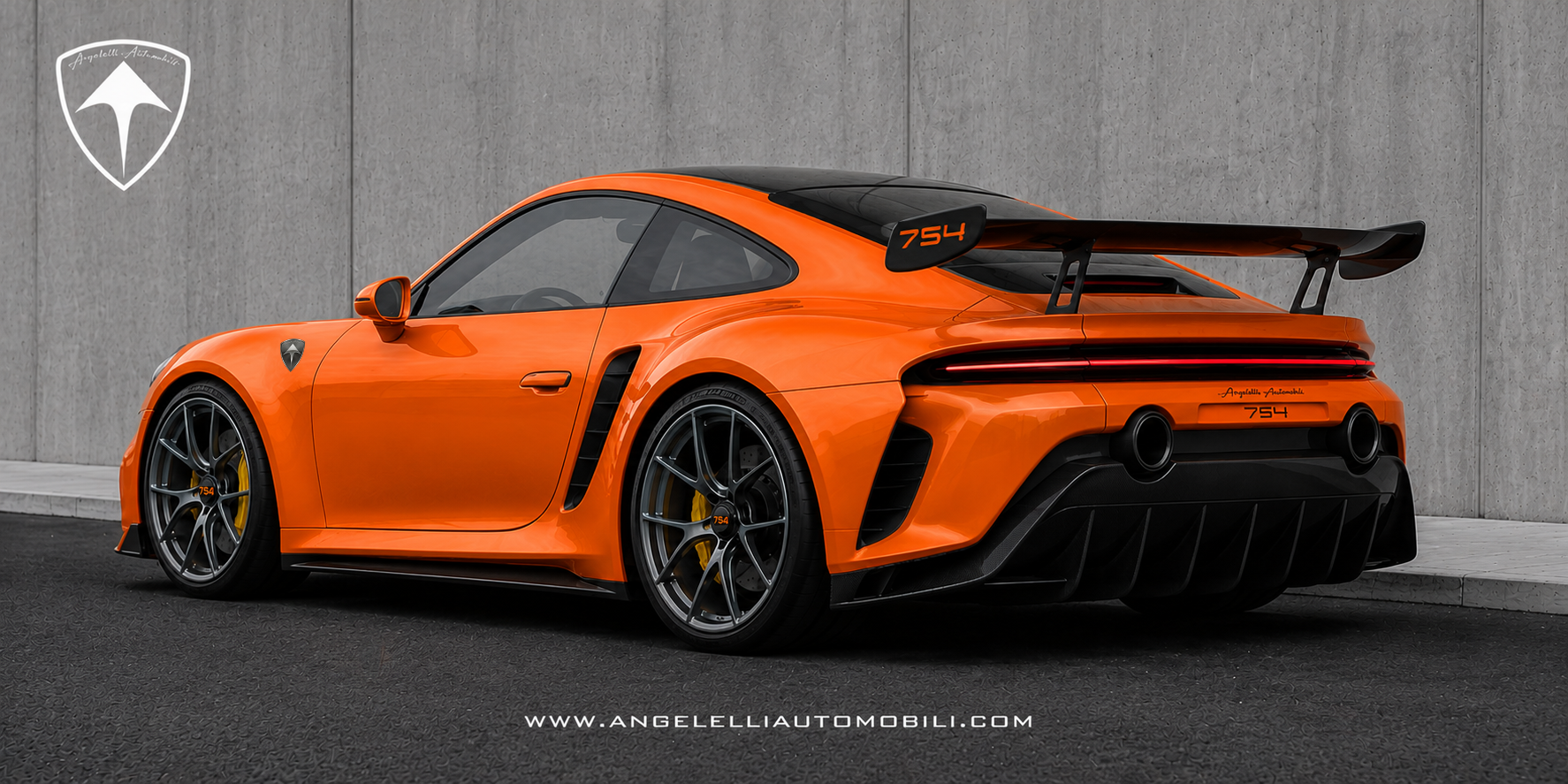
Italian design house Angelelli Automobili has revealed its latest concept, known as Project 754, and it takes one of the world’s most recognisable sports cars in an entirely unexpected direction.
While countless companies have modified the Porsche 911 over the years, Project 754 goes far beyond cosmetic enhancements. Instead, it rethinks the car’s entire engineering philosophy, offering buyers two completely different mechanical layouts while introducing advanced manufacturing techniques and highly bespoke construction.
Although the vehicle is clearly inspired by the 911, Angelelli Automobili makes it clear that the project has no official connection to Porsche.
Two Layouts, One Vision
Project 754 will be offered in two distinct versions, each aimed at a different type of enthusiast.
The first is the 754 R, which retains the traditional rear-engine configuration that has defined the Porsche 911 for decades.
The second is the much more controversial 754 M, which relocates the engine into the middle of the chassis, fundamentally changing the car’s proportions and weight distribution.
According to the company, moving the engine behind the occupants allows the cockpit to shift further forward while widening the track, resulting in a lower, broader and more focused supercar silhouette.
Only digital renderings have been released so far, with every example set to be individually built once customer orders begin.
Performance Targets Exceed 800 Horsepower
Angelelli Automobili says both versions will receive extensive mechanical upgrades designed to improve performance while significantly reducing weight.
The most extreme specification is expected to produce more than 800 horsepower (597 kW) while tipping the scales at approximately 1,100 kg.
The company has also hinted at extensive aerodynamic improvements, although it has yet to reveal exactly how the standard Porsche 911 platform will be transformed into the mid-engine 754 M.
3D Printing Plays A Major Role
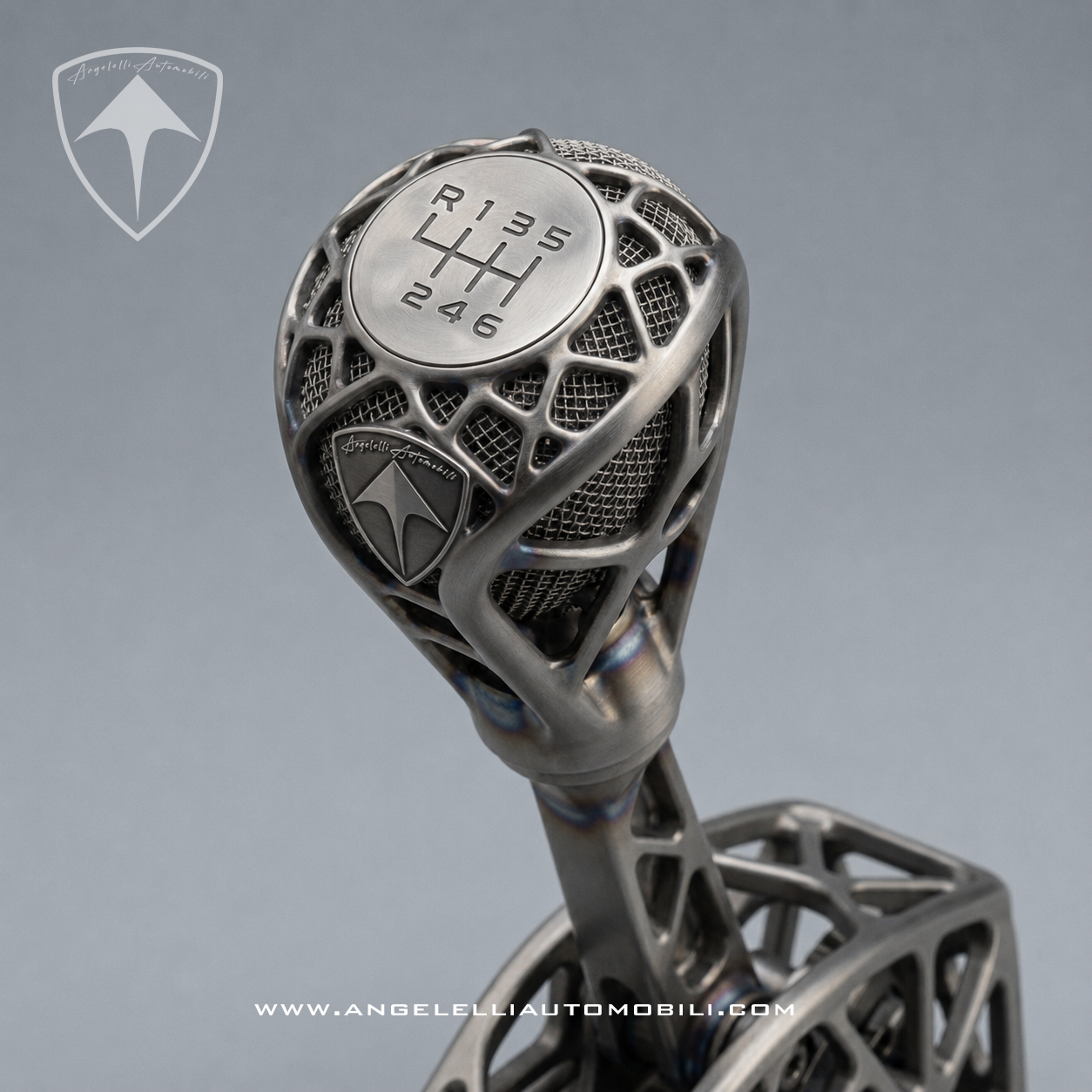
One of the project’s defining technologies is a manufacturing approach called Alien Mesh Design.
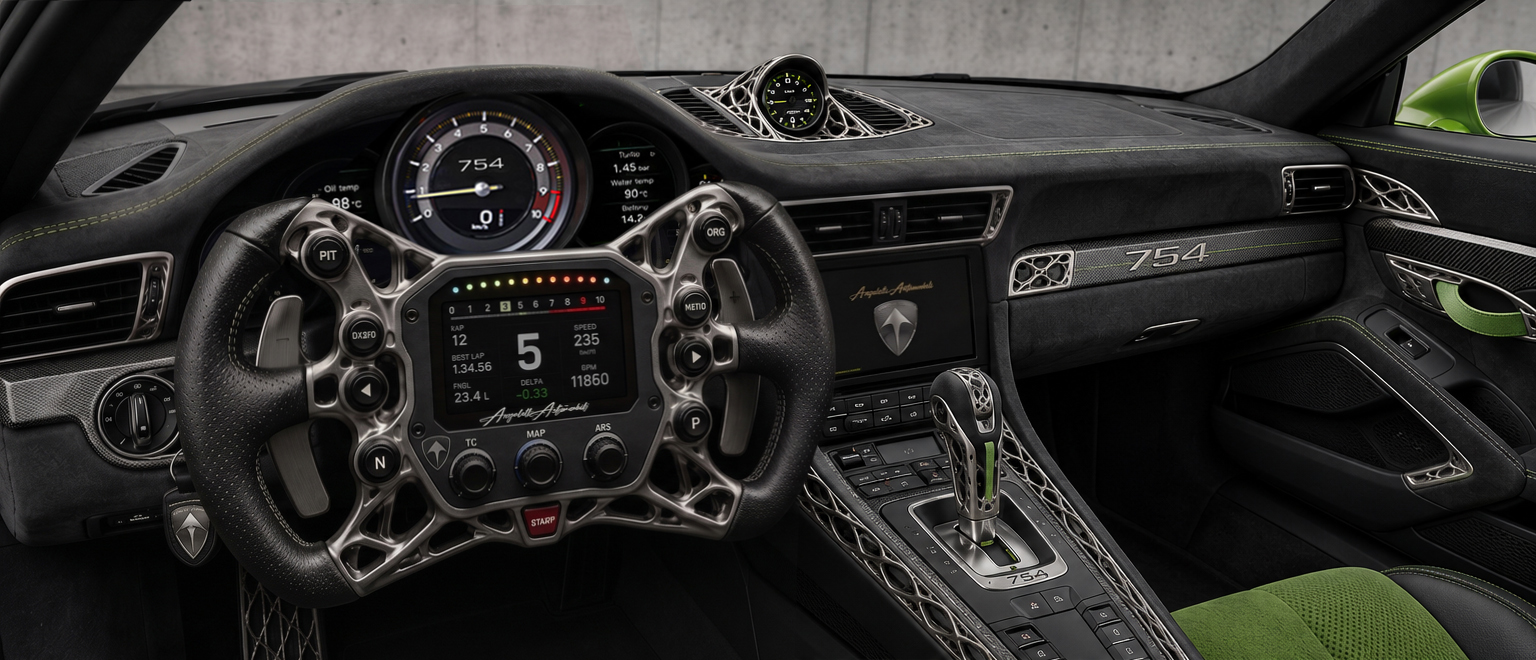
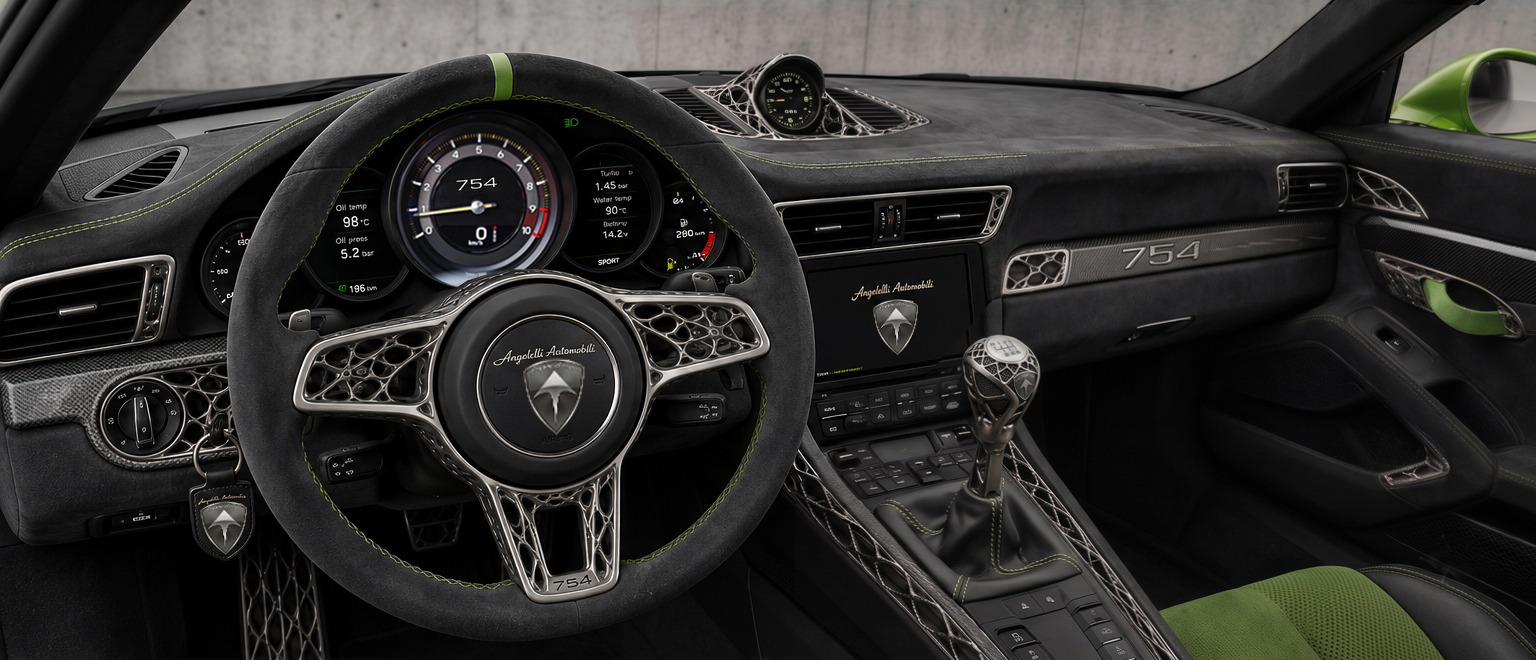
Using generative design software, topology optimisation and advanced 3D printing, components are engineered so that material exists only where it is structurally necessary. The result is lightweight parts with complex organic shapes that would be extremely difficult to produce using traditional manufacturing methods.
This technology will be used for everything from interior trim pieces to suspension components and even lightweight wheels.
The company believes the approach not only improves performance but also allows each customer to create a truly unique specification.
Just 50 Cars Will Be Built
Production will be strictly limited to 50 vehicles, split evenly between the two configurations.
Each car will be built to order, meaning customers must first provide a donor Porsche 911 before the transformation begins.
Pricing starts at €435,000 (approximately R8.17 million) for the rear-engine 754 R, while the mid-engine 754 M begins at €635,000 (approximately R11.92 million).
For buyers wanting an entirely bespoke creation, pricing can exceed $1 million (approximately R16.51 million) depending on the level of customisation requested.
With its combination of radical engineering, lightweight construction and highly exclusive production, Project 754 is shaping up to be one of the most ambitious Porsche-inspired builds ever proposed.