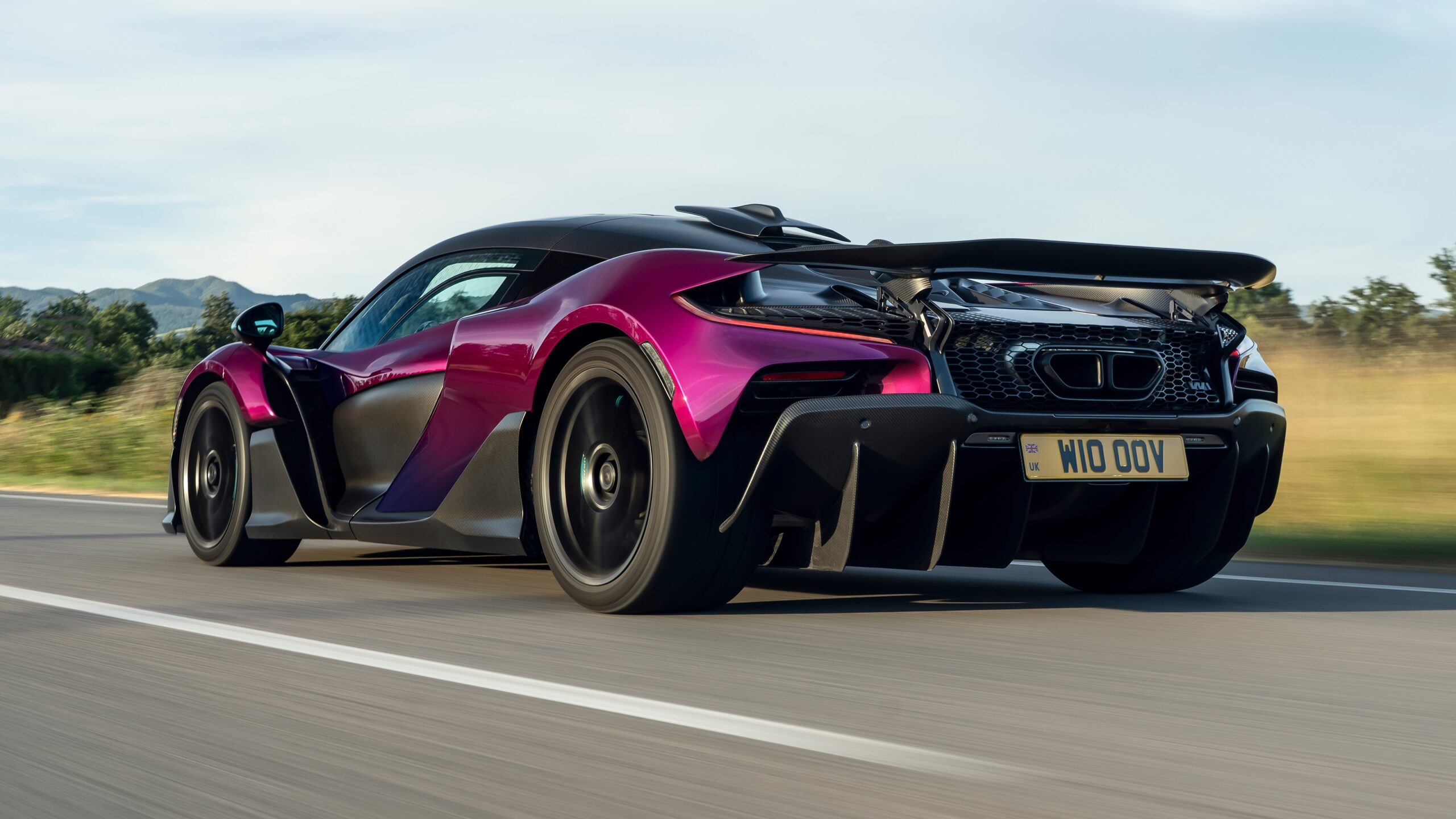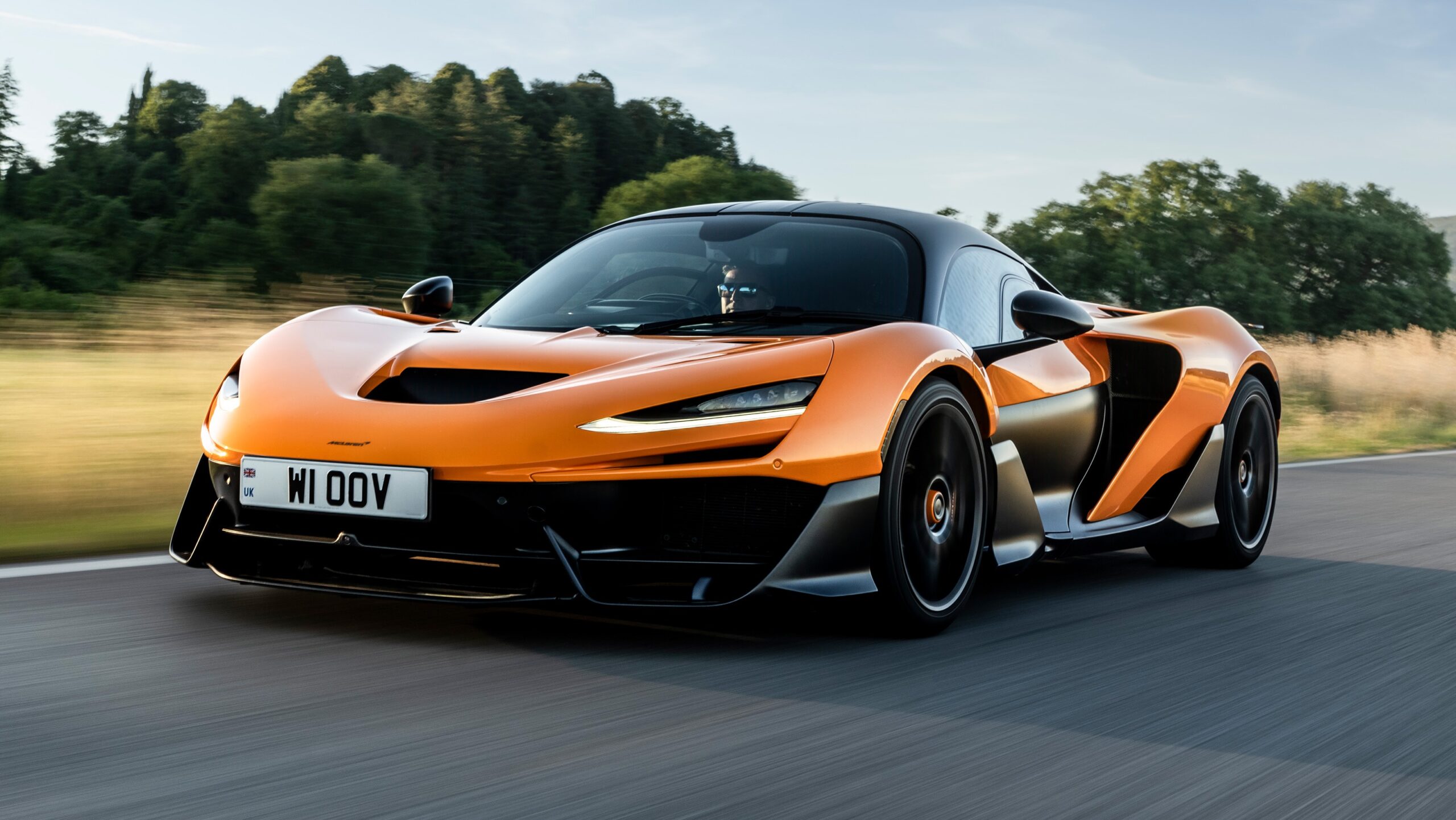
South Africa’s hypercar scene is going to get a serious jolt of Woking’s finest. We can confirm that two units of the McLaren W1, the brand’s spiritual successor to the legendary F1 and P1, are officially headed for South African shores, according to sources close to McLaren South Africa.
It is a significant moment for the local market. With only 399 examples of the W1 being built worldwide, and every single one already spoken for by customers globally, securing not one but two allocations for South Africa puts the country in genuinely rare company among the brand’s international dealer network.
What Is the McLaren W1
The W1 is McLaren’s third “1” car, following in the tyre tracks of the F1 (1992) and the P1 (2013). Where those two cars redefined their respective eras, the W1 is built to do the same for this one, blending Formula 1 derived engineering with road legal usability, though “usability” is a relative term when you are talking about a car this extreme.
At the heart of the W1 sits a new high performance hybrid powertrain, centred around McLaren’s MHP8, a 4.0 litre twin turbo V8 with a flat plane crank, paired with a radial flux electric motor. Combined, the system produces 1,258 hp (938kW) and 1,340 Nm (988 lb-ft) of torque, sent exclusively to the rear wheels through an eight speed dual clutch transmission with an integrated electronic differential.
Those figures translate into properly startling performance. McLaren quotes 0 to 100 km/h (0 to 62 mph) in 2.7 seconds, 0 to 200 km/h (0 to 124 mph) in 5.8 seconds, and 0 to 300 km/h (0 to 186 mph) in 12.7 seconds, before topping out at an electronically limited 350 km/h (217 mph). For context, that 0 to 300 km/h time is quicker than several of the brand’s own hypercars, including the Speedtail.
Weight, or the lack of it, is just as central to the story. Thanks to an all new carbon fibre monocoque McLaren calls the Aerocell, which integrates the seats, front subframe and roof structure into a single structural unit, the W1 tips the scales at a dry weight of just 1,399 kg. That is lighter than a Volkswagen Golf GTI, and it hands the W1 a power to weight ratio of around 670 kW per tonne, the best of any road going McLaren yet.
Formula 1 Thinking, Road Legal Application
Aerodynamics is where the W1 leans hardest on McLaren’s grand prix pedigree. The car runs genuine ground effect aerodynamics beneath the floor, working in tandem with an active front wing and a patent pending Active Long Tail rear wing that can extend rearwards to boost the diffuser’s effectiveness. In Race mode, the suspension drops the car by 37mm at the front and 17mm at the rear, unlocking up to 1,000kg of total downforce.
The anhedral doors, which open upward and outward rather than the dihedral units McLaren has traditionally favoured, are a first for a McLaren road car and double as functional aerodynamic devices rather than a party trick. Underneath, F1 inspired suspension hardware, including 3D printed titanium wishbones and an active heave element, keeps everything pointed in the intended direction, while 390mm carbon ceramic brakes haul the car down from 200 km/h to a standstill in just 100 metres.
What This Means for South Africa
Local hypercar buyers have not been short of options in recent years, but the W1 is a different proposition entirely. It represents the absolute pinnacle of what McLaren currently builds, and unlike some limited run specials, allocation was never a matter of simply writing a cheque. Buyers needed an existing relationship with the brand and, in many cases, ownership history with previous “1” cars to even be considered.
That two units have been allocated to South Africa speaks to the depth of McLaren ownership already established here, through McLaren Johannesburg in Melrose Arch and McLaren Cape Town, as well as the broader appetite for ultra exclusive machinery in the local market. Pricing for the W1 sits at roughly £2 million per car before options, which converts to approximately R44 million, though final landed pricing for South African units, factoring in duties, VAT, and specification, will run drastically higher.
Delivery timing for the local cars has not been confirmed, but considering production of the W1 has been rolling since early this year, a local arrival within the next several months is plausible.