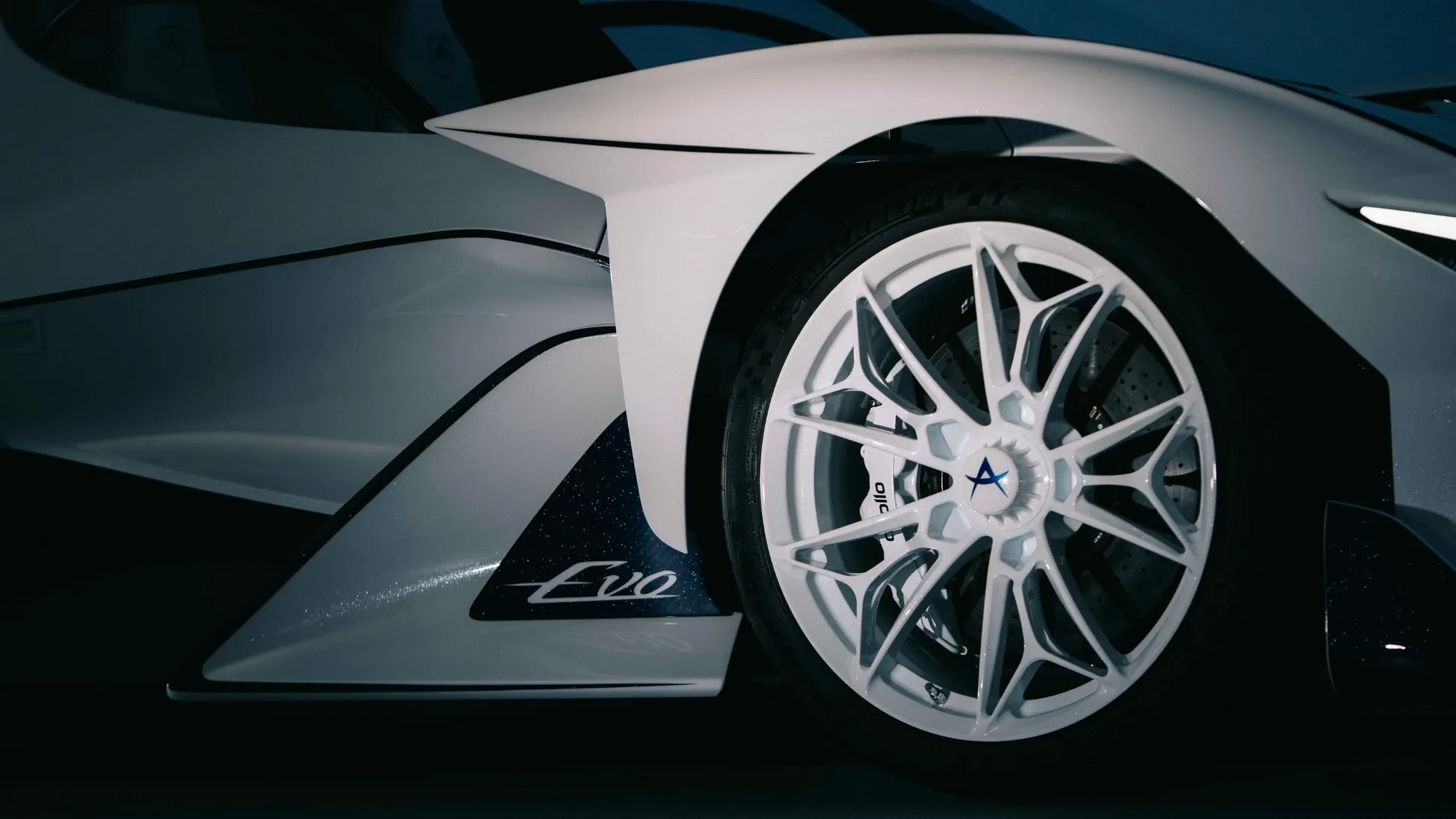
Apollo Automobil has been teasing this moment since 2021, when the EVO hypercar first appeared as a fully functioning prototype. That long wait is finally over, because full scale production has begun in Germany, and the very first customer car has just rolled out of the factory doors.
Only ten will ever be built, and this opening example carries a name as theatrical as the car itself. Apollo has christened it the Caribbean Dragon, and once you see it, the reasoning is obvious.
A Hypercar Built Around A Dragon Theme
Apollo has leaned hard into its dragon obsession with this build. Wings, horn like fins, an aggressive stance and, most memorably, an exhaust system that genuinely looks like it belongs on a mythical creature rather than a car.
The centrepiece is a titanium exhaust produced through 3D printing, finished with a scaled texture Apollo calls Dragon Skin. According to the manufacturer, it can survive temperatures up to 1,000 degrees Celsius and is available in a range of colour finishes, meaning buyers can effectively choose a multicoloured exhaust for their car.
Producing that single component takes 123 hours on the printer, and Apollo says it is the largest one piece 3D printed exhaust ever made for a road or track car.
Handcrafted Bodywork And A Painstaking Paint Process
The exhaust might grab the headlines, but the rest of the car is just as obsessive in its execution. The bodywork is assembled from more than 75 individual carbon fibre panels, each shaped and fitted by hand.
The two tone paint finish alone took in excess of 1,000 hours to complete. Every panel edge is sharp enough that Apollo half jokes you will need stitches if you brush past it carelessly, which tells you everything about how seriously this car takes its design language.
Inside The Cabin
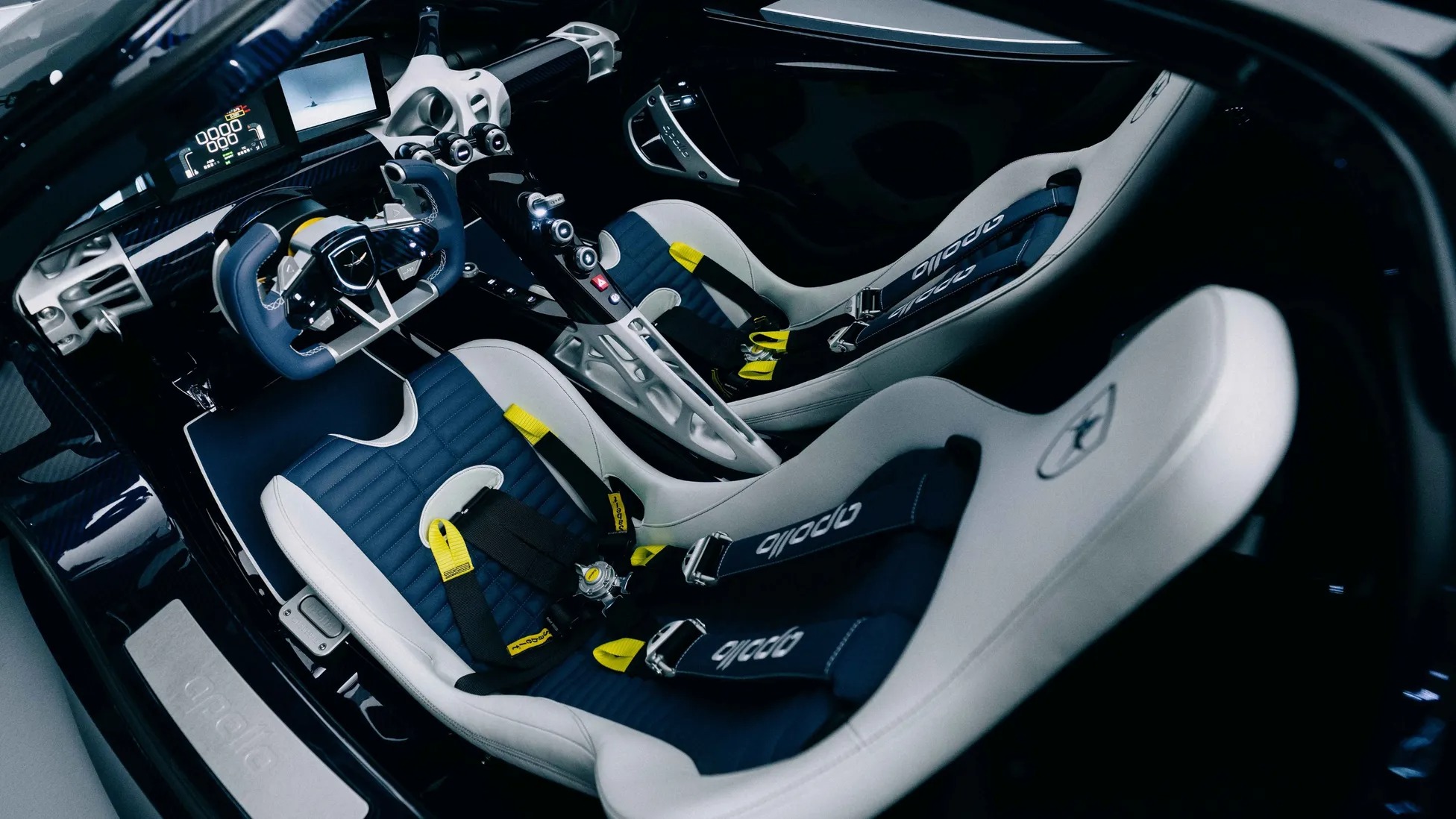
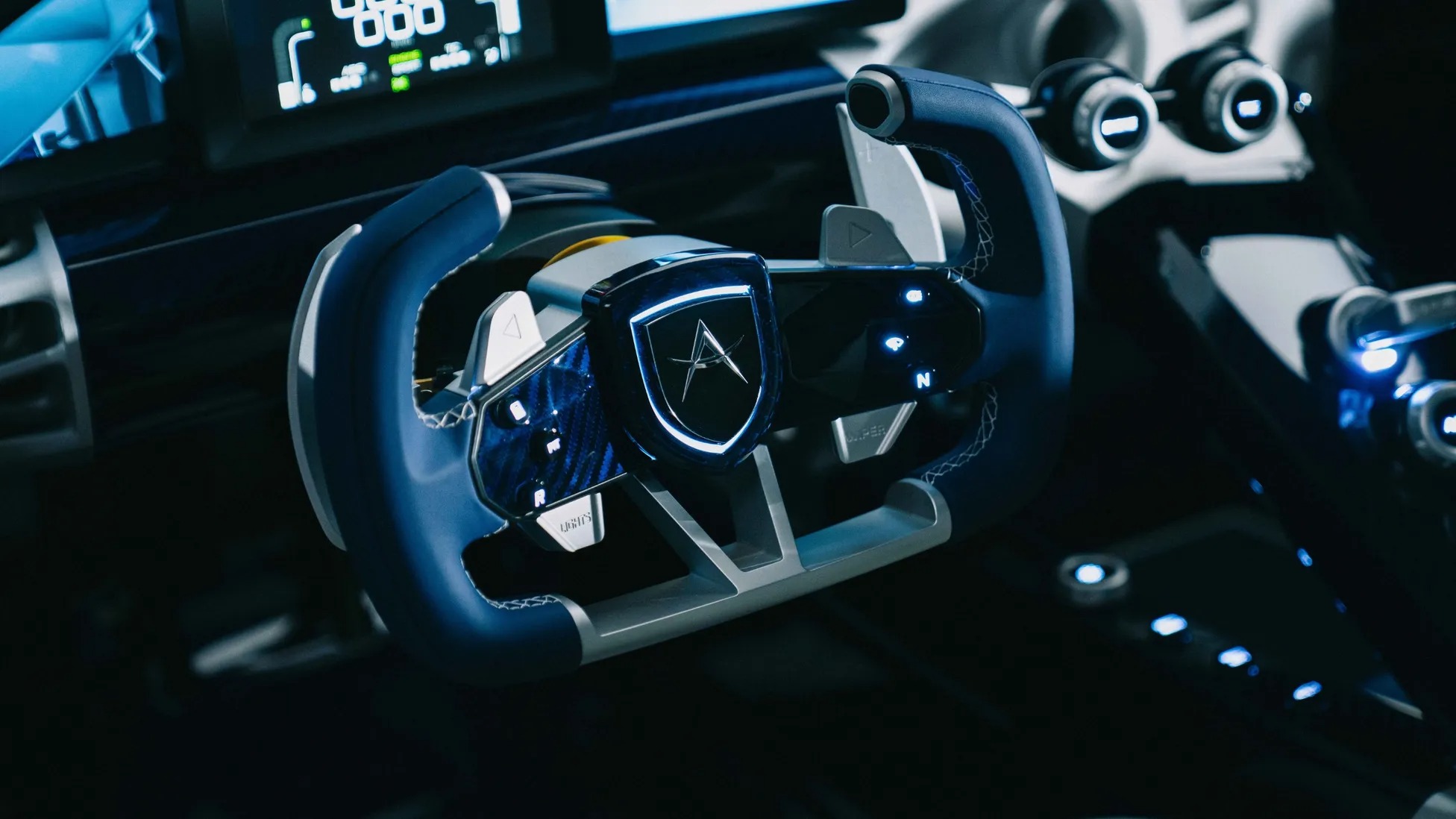
Step inside and the theme continues with generous use of blue tinted carbon fibre and 3D printed aluminium components. Apollo has resisted the urge to bury everything in touchscreens, instead keeping a strong focus on physical switchgear, something enthusiasts will appreciate.
The layout draws an obvious line back to track focused machinery like the Lamborghini Sesto Elemento, with a minimalist dashboard and a motorsport style steering wheel fitted with blade shaped paddle shifters.
What Powers The Apollo EVO
Sitting in a gold lined engine bay is a 6.3 litre naturally aspirated V12 that started life as a Ferrari unit before being extensively reworked by German motorsport specialists HWA AG. In its current state of tune it produces 789 HP (800 PS; 588 kW), enough to send the Evo from 0 to 100 km/h (62 mph) in a claimed 2.7 seconds, with a top speed of 333 km/h (207 mph).
Aerodynamics play just as big a role as the engine. Apollo claims the bodywork alone generates 1,350kg of downforce, while dry weight sits at only 1,300kg. Put a very light driver behind the wheel with a near empty tank, and the numbers start doing some genuinely wild things, at least on paper.
Price And Exclusivity
Realistically nobody will ever test whether the EVO could drive upside down, and not just because of the physics involved. Only ten examples exist, each priced from €3 million (around R56,250,000) before taxes, and this is not a car built for casual thrill seeking.
It is also worth noting that, much like Apollo’s earlier Intensa Emozione, the Evo is not homologated for road use. History suggests that has rarely stopped determined owners before, and a handful of Intensa Emozione cars have quietly found their way onto public roads over the years despite the same restriction.