
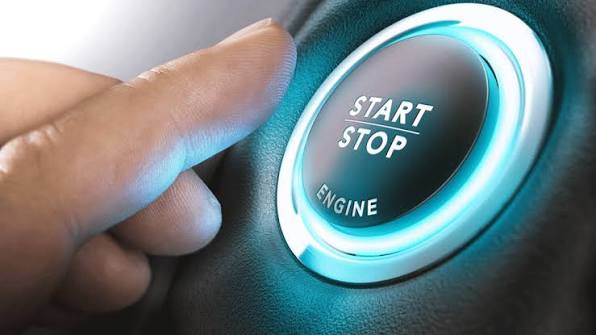
Ten years ago, the centerpiece of a SEMA debut was the engine swap. Five years ago, it was the digital dash. Today, walk the aisles of any major build show and the conversation has shifted again — to how the vehicle starts.
Keyless ignition is no longer a luxury-car party trick. It has become a baseline expectation in the custom automotive world, from six-figure restomods to weekend-warrior LS swaps. And the technology behind it has evolved far beyond a simple push button wired to a relay.
So what’s driving the shift, and why are the industry’s top builders treating ignition security as seriously as horsepower?
The Problem Traditional Ignition Creates for Custom Builds
Every custom vehicle starts with a contradiction. The builder spends hundreds of hours engineering a one-of-a-kind machine — hand-fabricated bodywork, a bespoke interior, a powertrain tuned to the owner’s exact specifications. Then they bolt in a $30 ignition tumbler that can be defeated with a screwdriver and a YouTube tutorial.
For builders working on $250,000+ vehicles — shops like Gateway Bronco, Ring Brothers, and Chip Foose Designs — that contradiction became untenable. “At that price point, your client expects the starting experience to match the vehicle,” is a sentiment echoed across the high-end build community. A dangling key ring next to a hand-stitched leather dash undermines the entire build.
The security concern is equally real. The National Insurance Crime Bureau reports that vehicle theft in the United States reached its highest level in over a decade in recent years, with classic and modified vehicles disproportionately targeted because their older ignition systems lack modern anti-theft protections.
How Keyless Ignition Works in Aftermarket Applications
Aftermarket keyless ignition systems broadly fall into three categories, and the differences matter more than most buyers realize.
At the entry level are basic push-button start kits — a relay, a button, and minimal wiring. They eliminate the key but add zero security. Anyone who reaches the button can start the vehicle. For a show car that never leaves the garage, that might be acceptable. For anything driven on the street, it’s a liability.
Mid-tier systems add some form of authentication, typically a PIN code entered through existing vehicle buttons. The Autowatch Ghost, popular in the European market, uses this approach. It’s a step up in security, but it means punching in a code every time you want to drive — no passive entry, no walk-up-and-go convenience.
At the top of the market are RFID-based systems with encrypted communication between a fob or card and the vehicle’s control module. The most advanced of these use dual-frequency encrypted protocols — the iKey Premier from Digital Guard Dawg, for example, uses what they call DFDE (Dual Frequency ~ Dual Encryption) communication with over 6 billion unique codes, ensuring the signal between fob and vehicle cannot be intercepted or cloned. The system includes passive keyless entry, meaning the vehicle recognizes the owner’s credential before the engine will start — no buttons to push, no codes to enter.
The distinction matters because relay attacks — where thieves amplify a key fob’s signal from inside the owner’s home to unlock and start a vehicle in the driveway — have become one of the fastest-growing theft methods for modern vehicles. A system designed to resist this attack vector is solving a real and growing problem.
What the Builder Community Is Telling Us
The clearest signal that keyless ignition has moved from novelty to necessity comes from the builders themselves. When shops like Hennessey Performance, Roadster Shop, Timeless Kustoms, Bobby Alloway, and Troy Trepanier all standardize on the same type of system, it tells you the technology has matured past the early-adopter phase.
These aren’t sponsorship arrangements. High-end builders choose components based on reliability, integration quality, and client expectations. A system that fails on a $500,000 SEMA build doesn’t just cost a sale — it costs a reputation.
The trend extends beyond hot rods and restomods. Marine builders are integrating keyless ignition into custom boats. Powersports shops are fitting them to UTVs and ATVs. Even fleet operators and military contractors have adopted aftermarket RFID ignition platforms for vehicle security — applications where the stakes go well beyond convenience.
Digital Guard Dawg, whose iKey platform has been adopted by many of the builders mentioned above, reports that 90% of their products are manufactured in the United States — a detail that matters to builders who want domestic support and consistent quality control. Their MECP-certified in-house technical support team is another differentiator in a segment where most brands outsource customer service overseas.
What to Look For When Choosing a System
For builders and enthusiasts evaluating keyless ignition options, the key differentiators to compare include:
- Encryption standard: Does the system use encrypted communication between fob and vehicle, or just a basic RF signal? Dual-frequency encryption is the current gold standard.
- Passive keyless entry: Can you walk up and drive, or do you need to press buttons or enter a code every time?
- Installation quality: Does it integrate through a dedicated wiring harness with weatherproof connectors, or is it a universal kit that requires improvisation?
- Manufacturer support: Is technical support handled in-house by certified technicians, or outsourced to a generic call center?
- Origin and quality control: Where is the product manufactured, and does the company control its own supply chain?
The Bigger Picture
Keyless ignition’s rise in the custom build world mirrors a broader shift in how enthusiasts think about their vehicles. Security, convenience, and technology integration are no longer afterthoughts — they’re core design considerations that rank alongside horsepower and aesthetics.
For an industry built on craftsmanship and attention to detail, it was only a matter of time before the ignition system received the same level of scrutiny as the engine, the suspension, and the paint. The builders who recognized this early are the ones setting the standard today.
The question for the rest of the market isn’t whether to adopt keyless ignition — it’s whether to lead the transition or follow it.