
The next chapter of BMW’s i3 story is about to begin. On March 18, the brand will finally pull the covers off the new model, and this time it is a very different proposition. Instead of a compact carbon-chassis city car like the original, the new i3 moves firmly into BMW’s core territory as a compact executive saloon. In simple terms, this is effectively the electric version of the 3 Series.
BMW has been fairly open about the development process, with camouflaged test cars and teaser images appearing regularly over the past few years. Now the finished product is almost ready, and it will form part of a broader strategy where electric and combustion-powered 3 Series models sit side by side in the same segment.
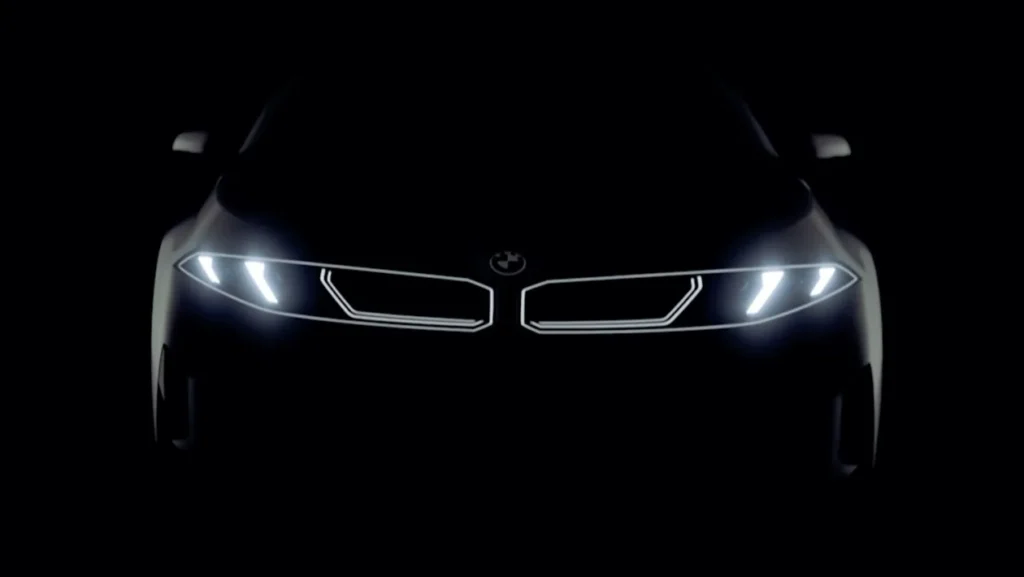
The upcoming i3 will also borrow heavily from the design and technology previewed on the latest iX3 SUV. A recently released teaser image gives a glimpse of what is coming, most notably the illuminated front grille that draws inspiration from BMW’s Neue Klasse concepts.
When it arrives, the i3 will be the first version of the next-generation 3 Series lineup to reach customers. According to Peter Mueller, head of product management for the Neue Klasse programme, the new platform has been engineered to deliver what BMW believes will be its most engaging electric saloon yet.
More specialised variants are already planned. High-performance M models will join the range later, and a practical Touring estate version is also expected further down the line. For now though, attention remains firmly on the traditional four-door saloon.
Much of the design direction was previewed by the Vision Neue Klasse concept revealed in September 2023. That show car introduced BMW’s next design language and will heavily influence almost every new model the company launches over the next few years.
Up front, the most obvious change is the reinterpretation of BMW’s signature kidney grilles. They are slimmer than before but stretch much wider across the nose of the car, wrapping around the front end in a cleaner and more modern form. These grilles will also house sensors and hardware required for the car’s advanced driver-assistance systems.
Spy shots of prototypes suggest the electric i3 will closely resemble the combustion-powered 3 Series that will launch alongside it. There are subtle differences though. The EV version is expected to feature a shorter bonnet, a more steeply raked windscreen and slightly more pronounced wheelarches.
Despite the shift to electric power, the familiar three-box saloon profile remains intact. Classic BMW details are still present too, including a modern take on the Hofmeister kink integrated into the rear doors. Other styling elements such as smoother body surfacing, flush door handles and tighter side sills aim to visually slim down what will inevitably be a fairly heavy vehicle due to its battery pack.
The new 3 Series generation will also introduce BMW’s latest interior concept known as Panoramic iDrive. Instead of a traditional instrument cluster directly behind the steering wheel, key information will be projected across the base of the windscreen. A central touchscreen will handle most functions and is positioned within easy reach so the driver can keep their focus on the road.
Underneath the body sits an entirely new scalable platform designed specifically for electric vehicles. BMW says the architecture has been optimised from the outset for EV use, with no compromises required to accommodate combustion engines.
A key part of this system is an 800-volt electrical setup that supports extremely fast charging. BMW has already demonstrated the capability of this technology with the new iX3, which can add around 414 km (257 miles) of range in just 10 minutes when connected to a high-power charger.
Power will come from BMW’s sixth-generation eDrive technology, which introduces cylindrical battery cells instead of the prismatic units used today. These new cells promise up to 20 percent higher energy density, roughly 30 percent more driving range and charging speeds that are also about 30 percent faster than the current generation.
The battery modules will also form part of the vehicle’s structure, improving rigidity while helping to free up interior space. On some models, BMW may even package the battery in different configurations depending on the body style.
Exact battery sizes for the i3 have not yet been confirmed. If the car were to adopt the 108.7 kWh pack used in the latest iX3, it could potentially deliver a driving range exceeding 805 km (500 miles) on a single charge.