
Back in 2024, Porsche reported an operating profit of €5.64 billion. Fast forward to 2025 and that figure shrank dramatically to just €0.41 billion. It’s a sharp drop for one of the world’s most profitable sports car brands, and it puts serious pressure on the company’s new CEO, Michael Leiters, the former Ferrari and McLaren executive who recently took over the reins in Stuttgart.
With numbers like that on the table, a few big decisions are inevitable. Leiters has already signalled that the company intends to simplify its internal structure, reduce layers of management, and trim some of the bureaucracy that has built up over time. But beyond internal housekeeping, there are hints that Porsche’s future product strategy could also shift in a significant way.
During recent comments about the brand’s direction, Leiters emphasised Porsche’s core philosophy, which is building sports cars that drivers genuinely want to get behind the wheel of. Cars that deliver excitement, performance and emotion regardless of whether they run on petrol, hybrid systems or electricity.
“We are considering the expansion of our product portfolio in order to grow in higher-margin segments. In doing so, we are looking at models and derivatives both above our current two-door sports cars and above the Cayenne.”
That opens the door to several possibilities.
On one hand, Porsche could simply push the 911 further upmarket with even more exclusive and higher-priced variants. Special editions, limited-production derivatives, and more bespoke offerings would technically fulfil the brief of sitting above the current sports car lineup while keeping the brand’s icon at the centre of the strategy.
On the other hand, Porsche might be considering something far more ambitious. A completely new halo supercar could be on the table, aimed squarely at machines like the Lamborghini Revuelto and Ferrari’s next generation of hybrid hyper-performance models. Another possibility is a flagship hypercar designed to follow in the footsteps of the legendary 918 Spyder.
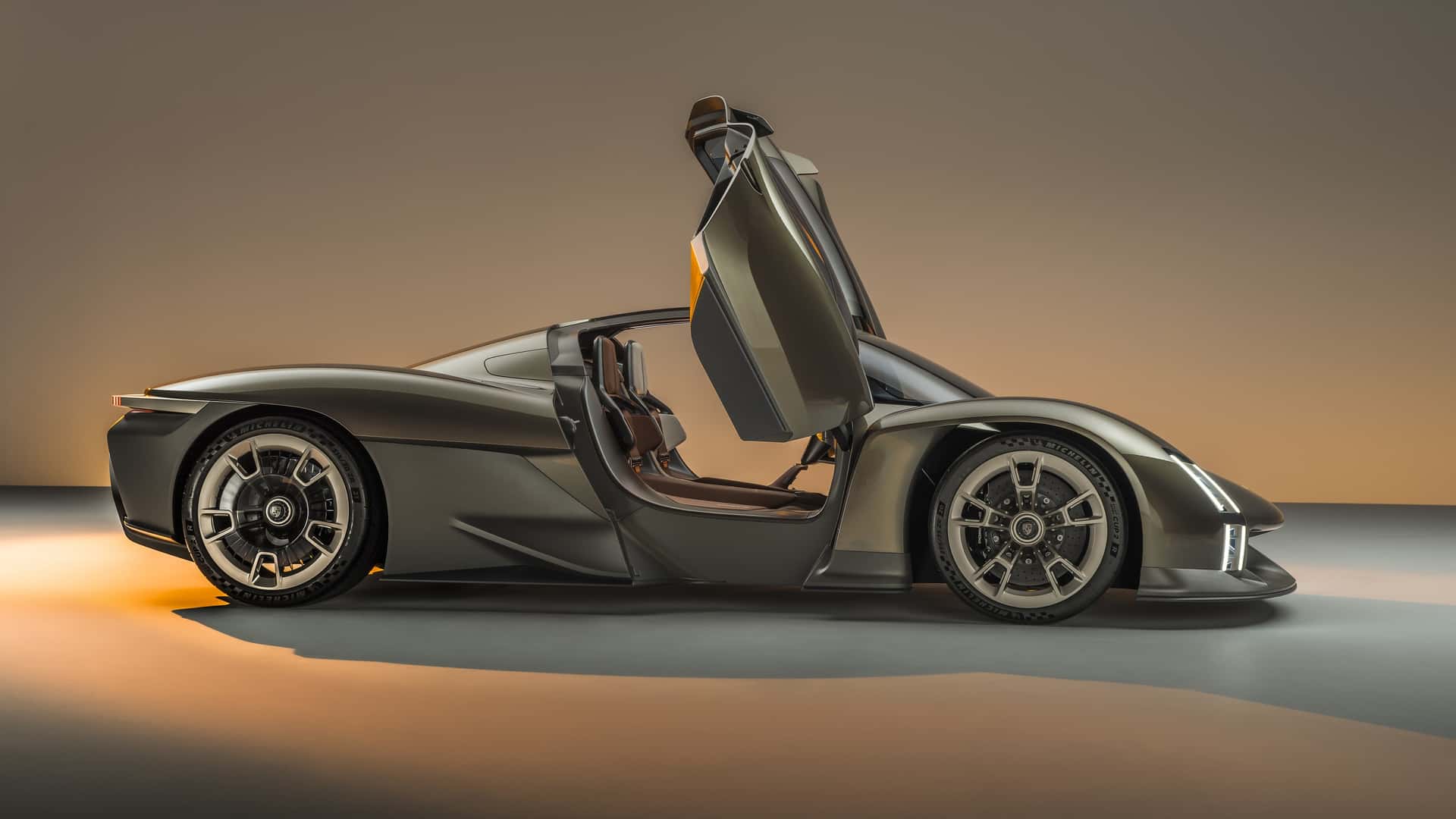
There was already a glimpse of what that future might look like with the Mission X concept (seen above), an all-electric hypercar Porsche revealed as a vision of life after the 918. However, enthusiasm for high-end electric hypercars has cooled somewhat across the industry. If the market continues to favour combustion or hybrid powertrains, it’s not impossible that such a project could be reworked around petrol or hybrid power instead.
Beyond sports cars, Porsche has also been exploring plans for a new flagship SUV positioned above the Cayenne. Originally expected to launch purely as an electric vehicle, the latest thinking suggests combustion or hybrid power may also be included in the mix. That shift reflects a broader trend across the automotive industry, where many manufacturers are slowing their rush toward full electrification as demand for EVs stabilises in several key markets.
Leiters’ comment about pursuing performance and passion regardless of the powertrain fits neatly into that reality. Porsche appears to be keeping its options open rather than locking itself into a single technology path.
Even so, the near-term outlook remains challenging. The company has already warned that the 2026 financial year could be another difficult period. Luxury car demand in China, one of Porsche’s most important markets, remains under pressure. At the same time, aggressive price competition, particularly in the electric vehicle space, is squeezing margins across the premium segment.