
Every older consumer product has some sort of history behind it. In many cases, not interesting history but for vehicle enthusiasts the story behind turn signals is interesting. Thanks to Thompson of Baltimore in Baltimore, MD for this information!
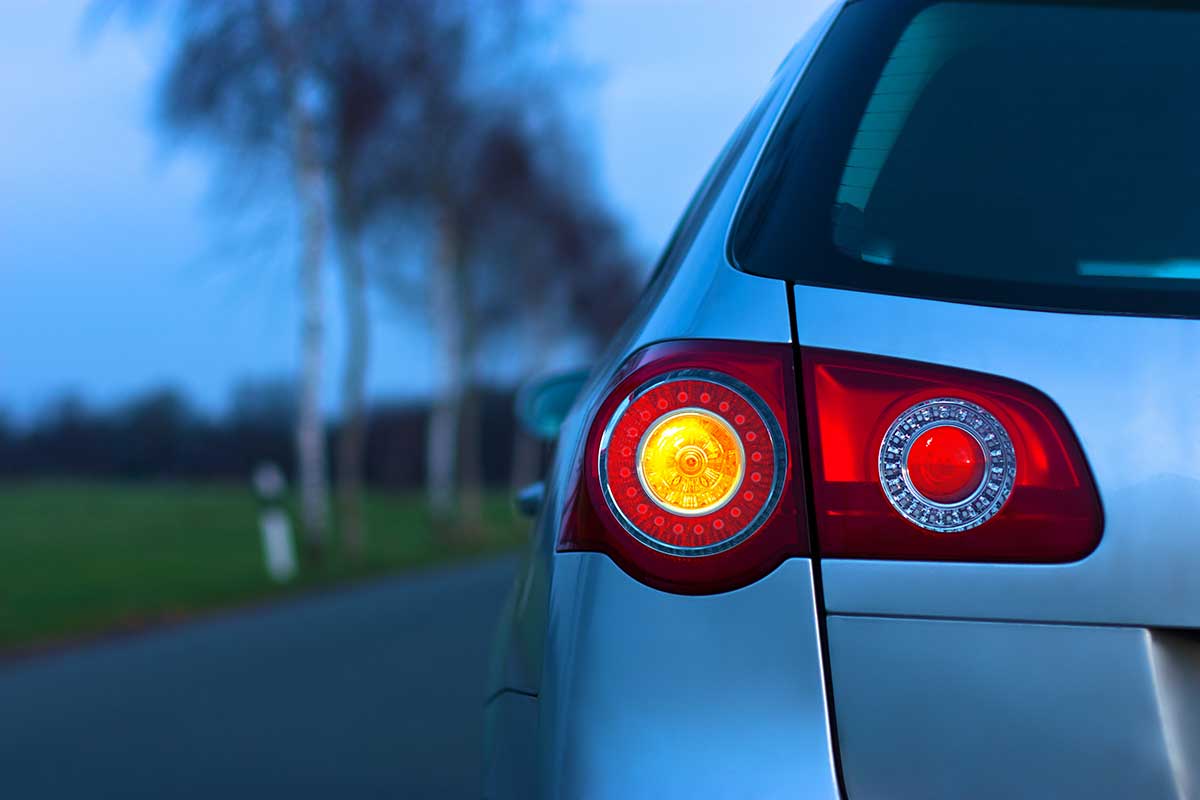
As you may imagine, originally automobile drivers signaled to pedestrians and other drivers their intention to conduct a turn with their vehicles with their hands, like bicycle riders do today. According to the Popular Mechanics December 1985 issue, the first sighting of a modern electric turn signal can be given credit to Edgar A. Walz, Jr. who, in 1925, received a patent for one and attempted to market it to big car manufacturers. Believe it or not they just weren’t interested and the patent expired 14 years later.
Europe’s automotive turn signal situation began differently. In the 1940s, the solution for signaling turns was through semaphore-like indicators. They were called “Trafficators” and powered by electro magnets that pulled up a small lighted arm usually mounted high on the vehicle’s door pillars. When they were “off”, they folded back into the door pillars. Do a web search for the word “trafficator” and you will see what they looked like.
Back in the United States, the first U.S. automaker to offer factory-installed flashing turn signals was Buick. Brought about in 1939 as a safety feature, turn signals were advertised as “Flash-Way Directional Indicators” and were available. The flashing signals only operated on the rear lights. In 1940, Buick made their directional indicators better by extending the signals to front lights too and adding on a self-canceling mechanism. In that year, directional signals became typical on Buick, Cadillac abd LaSalle vehicles yet still available on Chevrolet, Oldsmobile, and Pontiac for just under $8.
The 1960s brought other innovations to turn signals. At the beginning, plans called for Ford to put blinking sequential rear turn signals on their 1964 Thunderbird but installation was put off for over a year while legislatures across the United States considered whether to make them legal. 1968 marked yet another “big” change as the Federal Motor Vehicle Safety Standard 108 required amber–rather than the earlier white–lenses for front turn signals but rear signals could be amber or red. Note: It was also in the sixties that four-way hazard flashers were first mandated on vehicles.
Nowadays we’ve got reliable light-emitting diode (LED) technology for signal lighting. These lights don’t depend on lens color, they emit true amber and red amber hues. While it has bit happened yet, it may not be long before filament bulbs will have been totally, 100% phased out. Though the basic turn signal technology has not changed in years, future improvements could include increased strength and durability, an alert when the turn signal switches off even before we have started our turn, and turn-signal tones that may be personalized.
We hope you have enjoyed this article, and learned something new from it! It will be something to discuss with your friends for sure! Isn’t automotive history interesting?!