
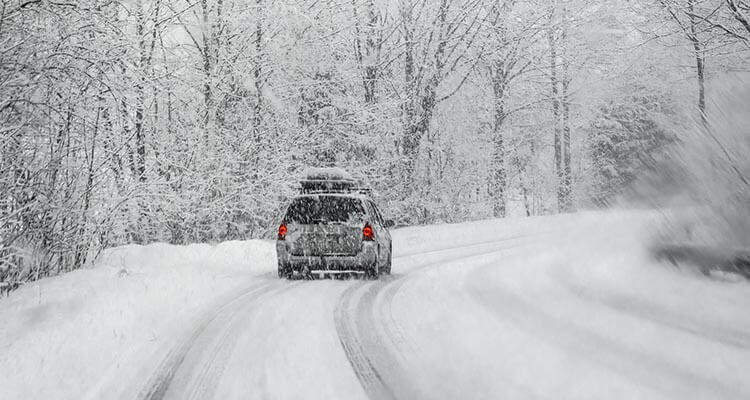
Driving in snowy, icy conditions in the winter can be dangerous. Driver performance and good vehicle maintenance are key factors for keeping you and your passengers safe. If possible, avoid driving on the roads in really bad weather conditions. But if you have to drive or you’re already on the road during a storm, here are some tips to help you stay safe.
Know Your Brakes
In bad road conditions, your brakes arguably play the most important role. Being able to slow down or completely stop in reaction to what’s in front of you can prevent major accidents.
You should check brakes on a regular basis especially before long journeys and driving in bad weather conditions. You should be aware of everything to do with your brakes including brake cylinders, brake fluid, and your car’s minimum brake pad thickness as not all brake pads are the same!
It’s recommended to brake gently in icy conditions to avoid locking the wheels. This way, you get into a low gear earlier than you usually would and allow the car to slow down gradually. If you feel your vehicle start to skid then you should never brake. Instead, ease off the accelerator and steer into the direction you’re skidding in until you have full control again.
Allow Extra Time For Journeys
Driving in winter conditions can be stressful enough without feeling like you’re late for an appointment. Always leave a bit earlier than you usually would so you drive slowly.
Pack A Winter Kit
In case of an emergency, always pack a winter safety kit which may include:
- Torch
- Blankets
- Hi-visibility vests
- Food
- Battery pack to charge your phone
Although not to be used at any point while driving, having a fully charged mobile is essential for contacting breakdown service, police or family members.
Check Your Tires
Make sure your tires have good tread and are properly inflated this is essential for driving in wintry conditions. If needed then purchase some snow tires or winter tires which will help with grip and traction on icy roads.
Leave Extra Room between You and the Car in Front
The typical rule of the road is called the “3-second rule” which is the safe distance between you and the car in front under normal driving conditions. In rainy conditions, it is recommended you leave 4 seconds. In snow and ice, it’s recommended you leave a large gap.
These rules are all to do with stopping time. In wet conditions, the stopping time is doubled but in icy conditions, it can be up to ten times as much. Being up close to the person in front is going to make them feel uncomfortable and prevent you from being able to stop in time.
Make Sure You are Visible
Before you set off on a journey it is important to check that ALL your lights are working. Remove any snow that might be blocking your headlights/brake lights and test they are visible. Even when driving in the daytime in the snow you should have your lights on to help other drivers be able to see you.
Conclusion
Remember to only go out and drive in these conditions if you have to! Always drive slow and be extra careful of cars and pedestrians around you. If you can, avoid stopping when approaching lights or stop signs. There’s a big difference in the amount of inertia it takes when fully at a standstill and while the car is still rolling. And if you do break down it is always best to stay with your car as it’s possible to lose sight of a vehicle if the visibility is poor.