
Imagine living in a world without any cars. When we see a horse and cart on the streets today we see it as a novelty, a fun touristy thing for leisure moments when you have all the time in the world. Either that, or we feel the stress levels rise as we try and pass it in a safe gap between oncoming traffic, as we race to our next pressing appointment.

Before 1769 horse drawn carriages were the norm for transportation. If you needed to get somewhere in a hurry, the carriages were put aside and you just jumped on the horse.
The creation of the steam engine was the first step towards the invention of the automobile in 1769, and it completely transformed the world of transportation. Over the last 245 years, cars have evolved dramatically in both appearance and mechanics, and can now run on electricity, solar power and are even self-driving.
The development of the internal combustion engines was the catalyst to major changes in our world.
1800s
Because Karl Benz and Nikolaus Otto invented the four-stroke internal combustion engine, Germany is generally seen as the birthplace of the automobile industry. Meanwhile France and Great Britain were developing and promoting the electric vehicle, and although it saw some success by the 20th century, the electric car had lost its momentum and production eventually stopped. This was partly due to the discovery of more petroleum reserves, and developing road infrastructures meaning people traveled further on average.
In 1893 the first gasoline powered car (where a single cylinder gasoline engine was installed on a horse drawn carriage) made its first run on roads in America. It didn’t prove to be very successful, and was quickly tucked away out of sight. But 1893 was also a big year for Henry Ford, who was busy perfecting the engine in America, building his first car in 1896.
In the late 1800s, cars were still uncommon and were used predominantly by the very wealthy. They were seen as a novelty since they were very expensive to buy, maintain and use, since fuel could not be easily obtained and roads were not very car friendly.
People started to take notice and understand the potential of cars only after Bertha Benz drove one from Mannheim to Pforzheim (a distance of 50 miles).
The 1920s
In the early 1900s Henry Ford went to work making automobiles easily accessible to the general population through the invention of mass-production techniques, which became the norm for the “Big Three” auto companies (Ford, Chrysler and GM).
They were able to play a significant role during both world wars when they provided valuable resources, like military vehicles and standard cars to the war effort. Motor racing also began to gain popularity, fuelling a competition driven need to constantly push the barriers of what a car could do.
Post World War II
Car production in Europe, and some countries in Asia, like Japan, increased dramatically right after the war ended. North America no longer had a monopoly over the automobile industry. America did continue to produce the largest volume of cars every year, at lower prices than were being offered in Europe however. This meant that the quality of the product itself suffered.
The quality of European cars, German ones especially, were unparalleled. Some of the best and most luxurious brands of cars like Mercedes, BMW, Audi and Porsche were created in Germany. Known for their attention to detail, exceptional care in their craft, and adoption of the latest innovative technologies, German cars continue to remain some of the best in the world.
1960s to Present
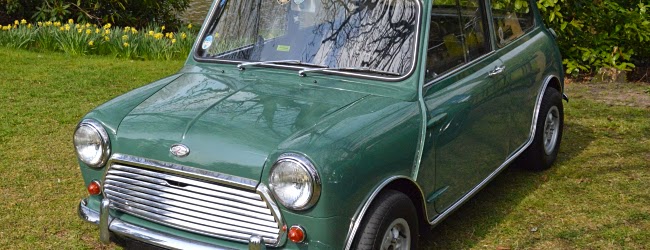
Over the last 50 years cars have continued to evolve and improve. One of the most popular cars of today, the Mini Classic, came about because of a shortage in fuel, which was being rationed in the UK. To this day Mini Classic car insurance, fuel costs and maintenance make it a very practical and popular car.
The energy crisis of the 1970s, and concerns over the environment, and depletion of fuel reserves, have given rise to a renewed interest in the electric car.
Today hybrid cars are becoming more common and increasingly popular. There is continuous development of electric vehicles, of which a limited number of prototypes are taken to mass production and released to the market every year.
The Future
Technological advancements with computers, the Internet, Bluetooth, wireless capabilities and digital communications as a whole will no doubt revolutionise the car industry all over again.
Chances are that 50 years from now, cars will have very different capabilities than those of today. They will be self-driving, they will probably fly and they will look very different.