
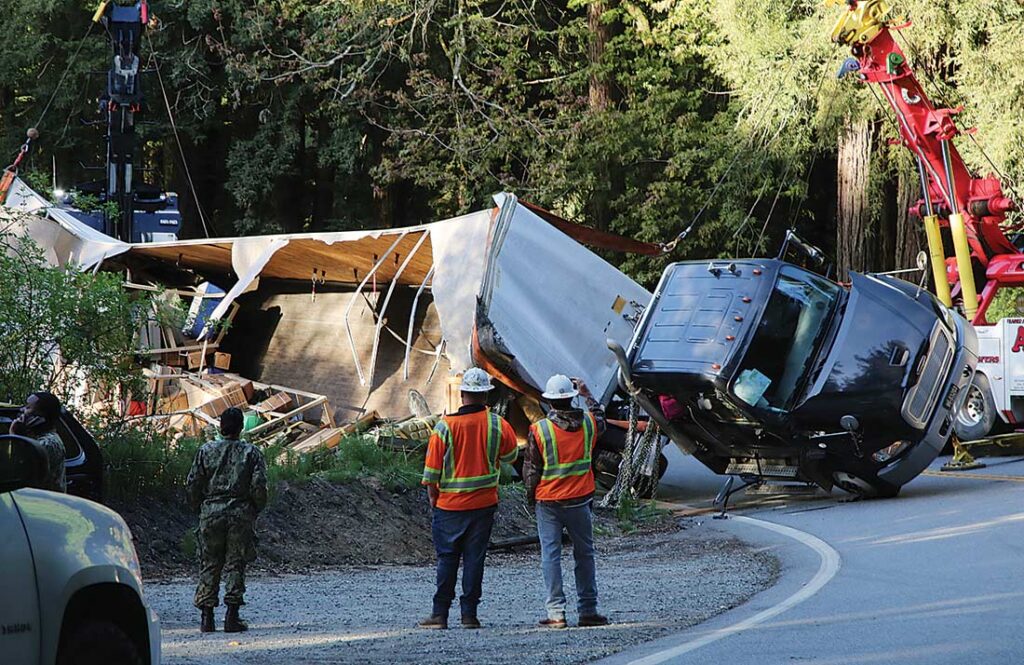
According to the National Safety Council, 5,837 large trucks weighing more than 10,000 lbs were involved in crashes that killed 5,936 people in 2022. This number represents a 49% increase in deaths over a 10-year period. Another 120,200 large truck incidents caused serious injuries that year as well. Although these accidents didn’t always involve big rig trucks, the data includes a high number of big rigs in crashes with smaller passenger and commercial vehicles. Some busy stretches of highway can be dangerous for large trucks and those around them. The 101 freeway in Los Angeles County alone saw 65 serious truck accidents in 2023. Read on to learn more about these trucks, similar dangerous vehicles and the steps to avoid accidents…
Vehicles Classified as Big Rigs
Also known as semi-trailer trucks, semi-trucks, semis, tractor-trailers and eighteen-wheelers, big rigs feature a tractor with an engine and cab at the front and a trailer for hauling at the back. The United States classifies all vehicles based on gross vehicle weight rating (GVWR). Combined passenger and light-duty vehicles like pickup trucks, minivans and SUVs are classified in low-numbered categories based on a GVWR of 6,000 lbs or less.
Big rigs are classified as “heavy-duty” Class 7 (25,001 to 33,000 lbs) and Class 8 (33,001 lbs) and “super-heavy” and “special” Class 9 (all vehicles above 33,001 lbs). Other heavy vehicles in these categories include furniture trucks, utility trucks, fuel trucks, tow trucks, fire trucks and even cement mixers, dump trucks, city transit buses and tour buses. That said, industry standards describe big rigs as medium, high-profile and heavy semis that range from long-haul freight tractor-trailers to heavy-hauling logging and mining eighteen-wheelers. To avoid accidents, drivers of small- and medium-sized vehicles and others should take similar steps when dealing with any vehicle above 25,001 lbs.
Top Reasons Big Rigs Are Dangerous
All “large trucks” with GVWR above 10,000 lbs have manoeuvrability problems because of weight. At the minimum of double the weight and sometimes weighing tens of thousands of pounds with a load, big rigs are among the most dangerous large trucks on the road.
The weight makes it difficult for big rig drivers to accelerate easily in many conditions, such as when driving up hills and ramps or braking and decelerating quickly near curves and when driving down inclines. Vehicle length and a high centre of gravity increase the risk of rollover. Big rig drivers must slow to a crawl long before reaching and when rounding curves. The size of a big rig can even cause wind changes, especially gusts, that adversely affect smaller vehicles.
All of these problems become compounded by driver errors. Big rig drivers sometimes fail to keep up with required vehicle maintenance. Additionally, they must often meet strict deadlines that require risky driving behaviours to prevent the loss of a bonus or future contracts, especially with freight runs. Some semi-drivers choose to speed and tailgate, which prevents them from stopping their vehicles fast enough and causes front-end, fishtail and rollover accidents.
Large truck drivers often drive sleepy or under the influence of alcohol or drugs. They sometimes fail to drive defensively and look for potential animals, vulnerable road users and weather threats. They also drive while distracted, such as by chatting with someone on the phone or reaching for food. These actions on rural roads alone caused more than half of the total fatalities that involved large trucks in 2022 crashes.
Steps for Drivers and Vulnerable Road Users
Drivers of small- and medium-sized passenger and commercial vehicles and bicyclists, skateboard users, pedestrians and other vulnerable road users must proactively defend against tractor-trailer dangers. For example, they should only pass a big rig using safe-driving procedures on flat, straight highways during excellent weather conditions. They need to signal their intent to pass well before making a lane switch and watch the big rig driver’s mirrors. If they can’t see the driver in a mirror, then the driver can’t see them. They should never stay too long in passing lane blind spots to the back or sides of the truck.
When returning to the original lane, they should wait until they see the driver in their mirror and have more than two car lengths of space available. Drivers need to follow other safety procedures unique to driving around large trucks, such as anticipating slowdown and braking long before reaching curves and wide turns that might require a big rig driver to back up and move forward multiple times.
Vulnerable road users must pay closer attention to traffic conditions. For example, they must never assume that large truck weight and manoeuvrability problems mean that they have plenty of time to cross a road. A semi can move quickly like any vehicle but without the equal ability to stop without skidding a long distance during an emergency braking manoeuvre.