
A sport quad tells you exactly what it thinks of your riding about two seconds after a bad landing. Something metallic complains under the floorboards, the bars sit a half inch out of true, and the machine tracks slightly crooked for the rest of the afternoon. Nothing broke. Something moved, and moved parts do not move back.
Factory sport quads are built to a price and a warranty, not to the punishment a quick rider hands out on a rocky trail or a rutted track. The frame is usually honest work. The hardware hung off that frame, the parts that swallow every impact before it reaches you, is where the cost cutting lives.
Build order matters more than budget. Riders who keep a machine tight for five seasons rarely spend first on horsepower; they spend on everything between the engine and the dirt, then add power once the chassis can survive it. So it is worth knowing precisely where a stock setup gives up, and which upgrades actually change the outcome.
The Factory Weak Points Nobody Advertises
Tear down a three-year-old sport quad and the damage pattern repeats itself across every brand. A-arm bushings sit oval instead of round. The rear carrier bearings have play you can feel with one hand on the tire. Rim lips carry two or three flat spots along the outer bead seat. None of that is a warranty claim and none of it fails dramatically, which is the problem: the geometry drifts, the quad starts steering differently at speed, tires scrub unevenly, and the owner concludes the machine simply feels old. Federal injury data on off-highway vehicles is blunt about where that ends, since overturns and loss of control dominate the reported incidents, and a quad whose geometry has quietly shifted is a quad that surprises its rider.
Wheels Carry Load, Not Just Style
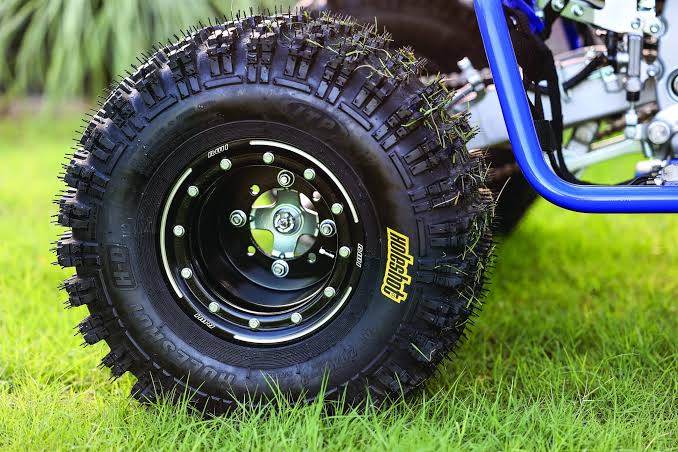
Most riders shop wheels by offset and finish, then act surprised when a bead unseats halfway through a rock garden. The rim is the final link in the load path, so every impact the tire cannot absorb arrives at the outer lip as a concentrated hit. Stamped steel bends and stays bent. Budget cast aluminum cracks at the spoke root because cast grain structure offers no directional strength exactly where the stress concentrates. Spun and forged shells move material along the load path instead, which is why the lip resists denting and the bead holds through the sidewall flex of a fast, loaded corner. Fitting heavy-duty atv wheels designed for racing loads removes more failure modes in one purchase than anything else on this list, because a straight rim keeps the tire round, loads the wheel bearings evenly, and spares the hub the shock cycling that eventually shears studs.
Suspension Decides What Reaches the Frame
Stock shocks arrive valved for a rider the engineers had to average into existence, and the spring rate assumes moderate speed over moderate terrain. Land a double at your actual weight with a full tank and the shock blows through its stroke, the A-arms take the remainder, and the frame takes whatever is left. Rebuildable shocks with valving matched to rider weight and terrain fix that properly, and they keep fixing it, since you can revalve after a season instead of buying again. While the wrenches are out, replace the steering stem bearings with a sealed set, because the factory bushings pack with grit and turn steering feel vague long before anything measurable breaks. Thicker-wall A-arms with replaceable bushings are worth the money for anyone riding rocks, as they bend predictably rather than folding, and the bushings become a twenty-minute service item instead of a reason to buy a new arm.
Armor Protects the Parts You Cannot Buy Twice
A full-coverage skid plate, A-arm guards, and proper nerf bars look like accessories until the first time a buried rock finds the case. Aluminum plate spreads the hit across the frame rails; the thin factory shield transmits it straight into the engine mount. Heel guards and nerf bars matter for the rider, not the machine, and the ATV Safety Institute’s golden rules exist because feet leaving the footpegs is how a fun weekend turns into surgery. Add a handlebar with a real clamp, reroute brake lines away from the tire’s arc, and fit a rear grab bar you can actually lift with. None of this is glamorous, and all of it keeps a fifteen dollar part from writing off a fifteen hundred dollar one.
Maintenance Keeps the Upgrades Honest
Good hardware still needs a routine. Torque the lug nuts to spec after the first ride on new wheels and again after every hard day, because a wheel that has been run loose for an hour will never seat the same way again. Pull the wheels twice a season and clear the trapped mud behind them, since packed clay holds moisture against aluminum and starts corrosion under the paint where nobody looks. Some jobs genuinely belong to a shop, and Zero2Turbo’s list of repairs worth handing to a professional applies to quads as much as to cars, especially anything involving bearing presses or engine internals.
An indestructible sport quad does not exist, but a predictable one does. The upgrades above share a single logic: move load into parts designed to carry it, and stop asking the frame to absorb what a wheel, a shock, or a plate should have taken first.
Work through it in order and the machine stops telling you stories after every landing. The bars stay where you left them, the tires wear flat across the tread, and the quad you ride in year four feels like the quad you bought. That is the whole return on the investment, and it shows up as time riding rather than time in the garage.