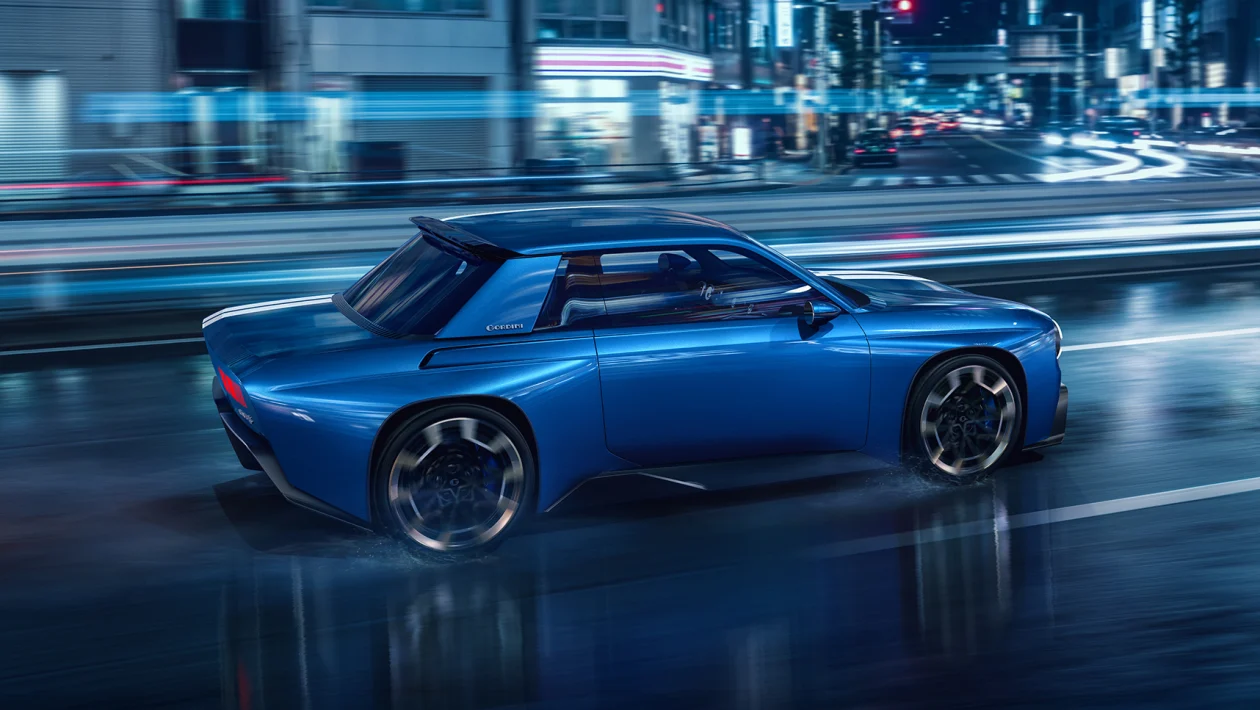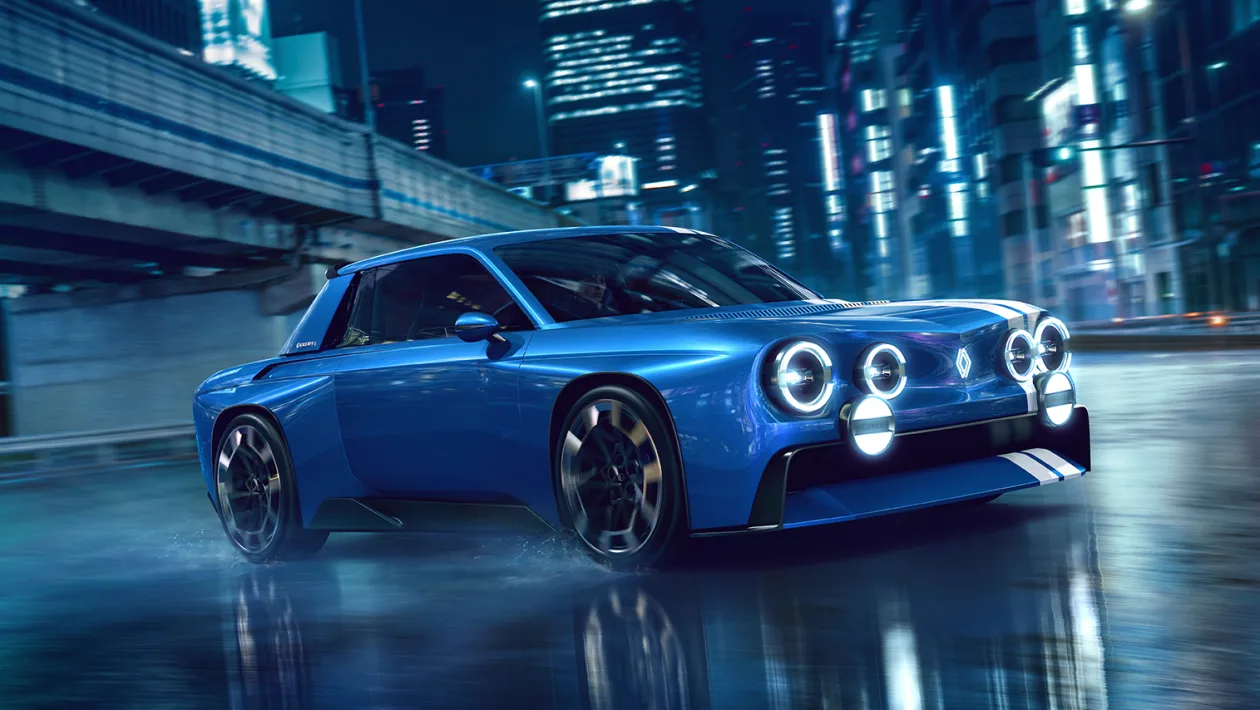
Renault has reached deep into its performance archives for its latest concept, reviving the legendary Gordini name with a spectacular modern interpretation of the Renault 8.
Called the Renault 8 Gordini Concept, the compact electric coupe takes inspiration from one of France’s most important early performance saloons while giving it an entirely new personality. The result is a rear-wheel-drive EV with 266 hp (198 kW), two seats and enough retro detailing to make the connection with the 1964 original immediately obvious.
The Gordini Name Returns
Long before Renaultsport and Alpine became Renault’s performance flag-bearers, there was Gordini.
Racing driver and engineer Amédée Gordini developed a reputation for extracting remarkable performance from relatively small engines, earning himself the nickname ‘The Wizard’. His relationship with Renault eventually resulted in a series of faster road cars, while Gordini-powered machinery also competed at events including Le Mans and in Formula 1.
Several memorable models wore the Gordini badge, but few became as recognisable as the Renault 8 Gordini launched in 1964. Its combination of compact dimensions, rear-wheel drive and motorsport success helped turn the small French saloon into a performance icon.
More than six decades later, Renault has decided to imagine what an R8 Gordini could look like today.
Designed In Just Two Months
Renault’s designers reportedly considered around 300 different proposals before settling on the final direction for the concept.
Once the winning idea had been chosen, the project moved remarkably quickly, with the finished design coming together in roughly two months.
Rather than simply recreating the original car with modern lights and larger wheels, Renault’s team started with a clean sheet. The challenge was retaining enough of the original R8 Gordini’s character while producing something that looked completely contemporary.
The result is deliberately playful rather than intimidating. It may have a far more aggressive stance than its ancestor, but Renault wanted it to remain a car that looks approachable and entertaining rather than something requiring racing experience to enjoy.
Classic Renault 8 Details With A Modern Twist
There is no mistaking where the inspiration came from.
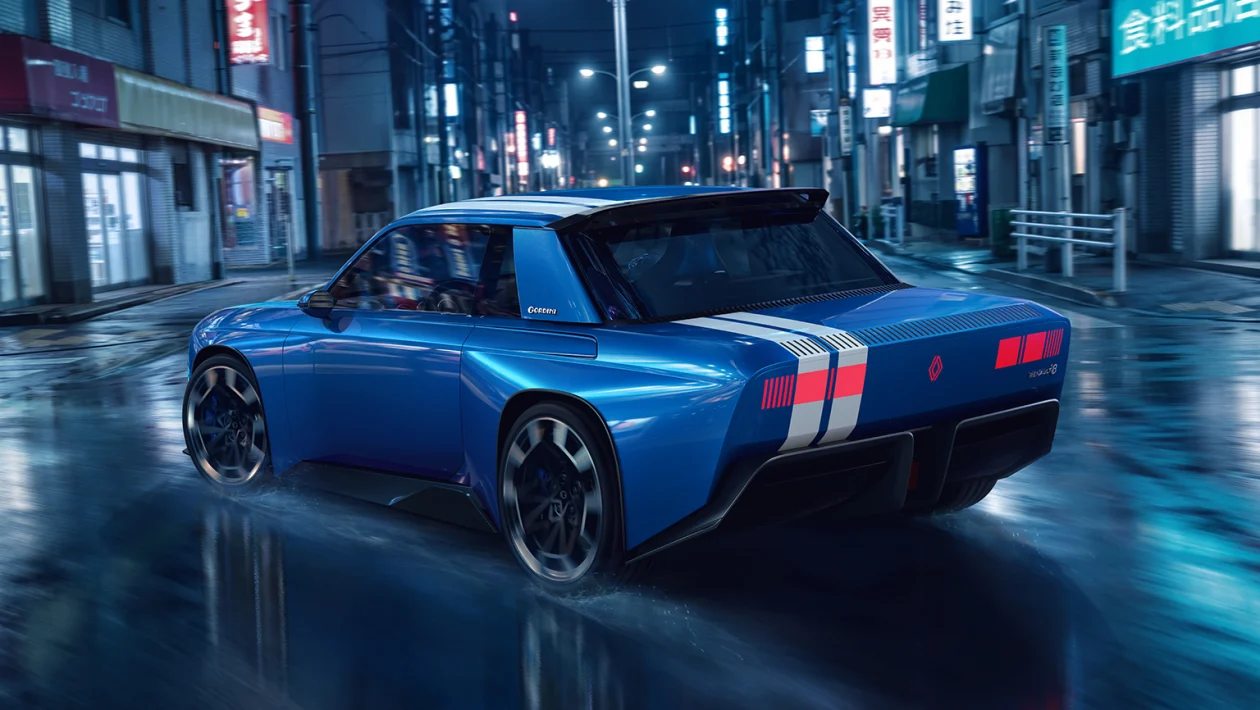
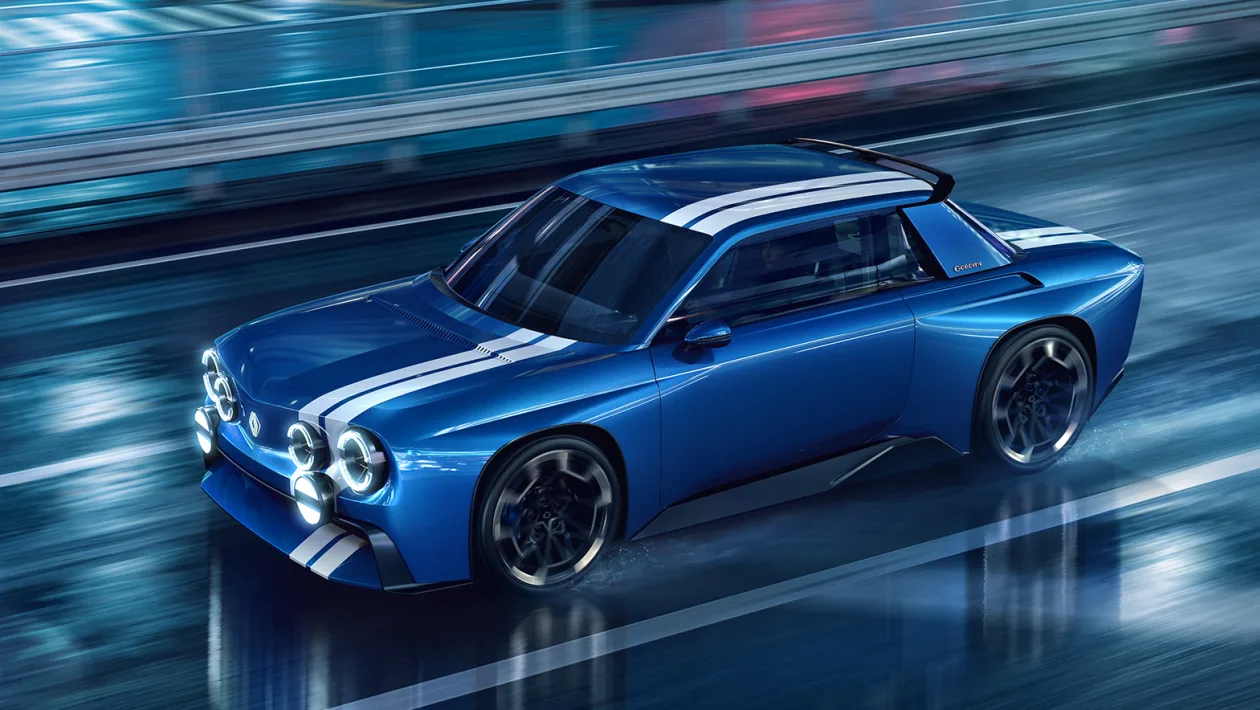
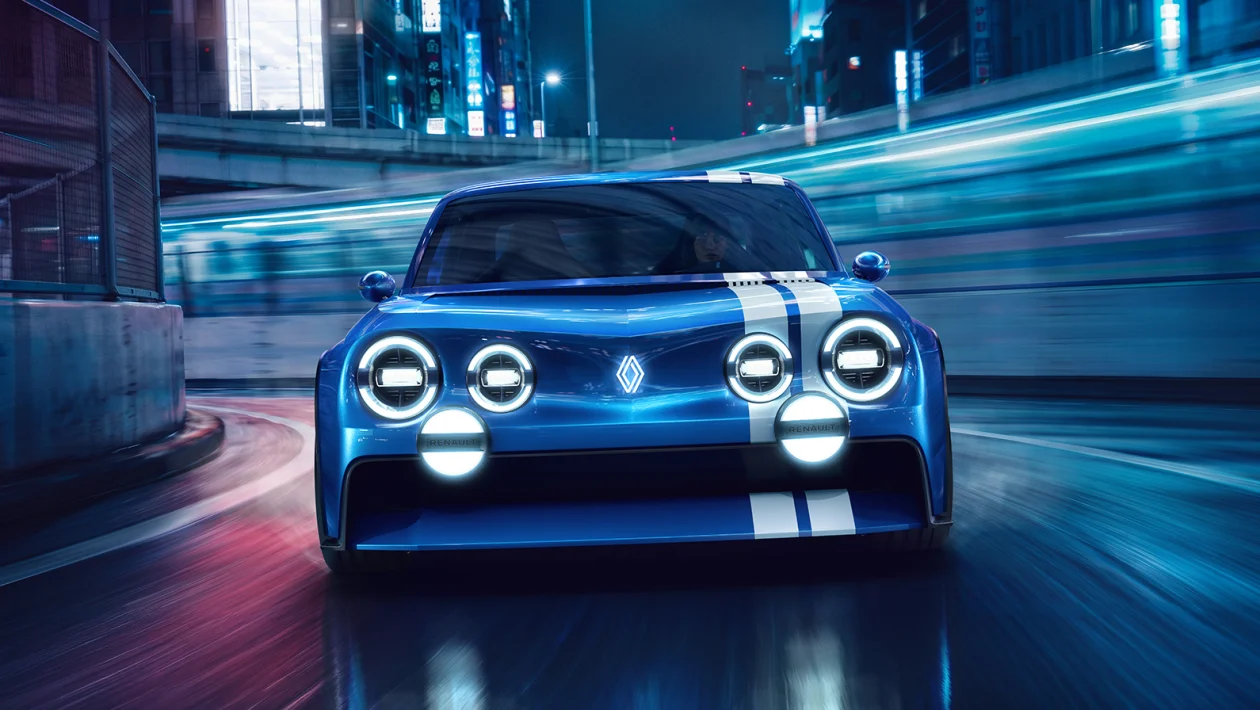
The familiar V-shaped front end returns alongside four round headlights, while the upright proportions and distinctive double white stripes pay tribute to the original. Naturally, the body is finished in the trademark Bleu de France shade.
Renault has also reinterpreted the squared wheelarches and the recessed character line running along the side of the original car. On the concept, that line eventually feeds into an air outlet.
However, this isn’t a restomod.
The original four-door body has been abandoned completely in favour of a much more sporting two-door coupe configuration. Its classic three-box proportions give it the sort of shape associated with compact European performance cars from the 1960s and 1970s.
At just 4.12 metres long, the R8 Gordini Concept remains remarkably compact. Renault has instead added visual drama by making it substantially wider and lower than its ancestor.
Huge Wheelarches And Serious Rally Influence
Those proportions are exaggerated by enormous flared wheelarches housing staggered wheels measuring 19 inches at the front and 20 inches at the rear.
The concept sits low with an aggressive rake, while the rear is dominated by a substantial diffuser.
Additional spotlights reference the original Gordini’s rallying exploits, while an F1-inspired rain light provides another nod to the brand’s motorsport history.
The rear presented one of the biggest challenges because Renault’s designers had fewer historical details to work with. One particularly neat solution involves the taillights, which sit behind laser-etched and painted plexiglass. They virtually disappear when switched off before illuminating through the panel when required.
A Beautifully Simple Interior
The cabin may be even more interesting than the exterior.
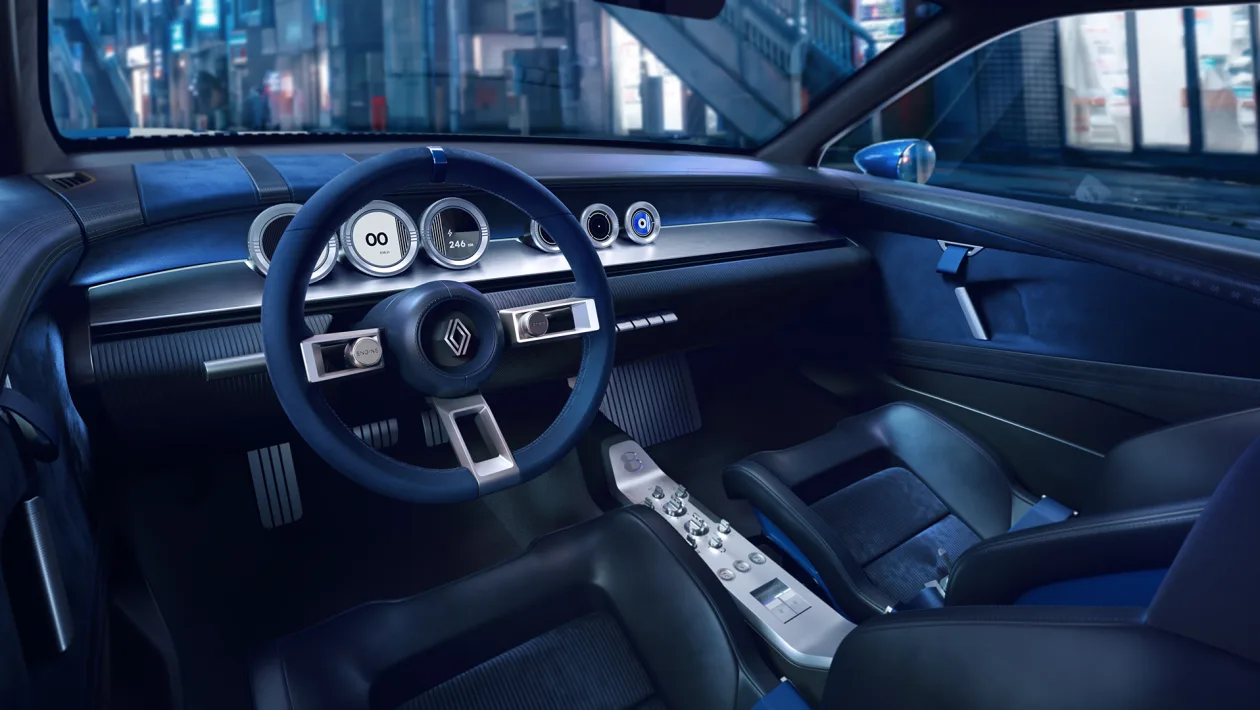
Renault has adopted what it calls a ‘cafe racer’ philosophy, stripping away unnecessary equipment and concentrating on the driving experience.
There is no enormous central touchscreen dominating the dashboard. Instead, the driver gets simple circular instruments that visually echo the round headlights outside.
Brushed aluminium stretches across the dashboard and is used extensively for the centre console and switchgear. A small red detail on the stopwatch provides one of the few contrasting touches.
The dashboard and instrument cluster sit beneath a sweeping wraparound beltline, keeping the driver’s view ahead remarkably clean.
Renault has also deliberately avoided cheap plastics and decorative carbon fibre inside the concept.
Instead, blue corduroy covers sections of the dashboard and bucket seats, with leather and Alcantara used elsewhere. The three-spoke steering wheel continues the minimalist theme, while the combination of metal, fabric and leather gives the interior an almost furniture-like quality.
Electric Power And Rear-Wheel Drive
Renault has revealed very little about what sits underneath the R8 Gordini Concept, but we do know it is fully electric.
Its electric powertrain produces 266 hp (198 kW), with all of that power sent exclusively to the rear wheels. Renault’s own material describes the concept as producing 270 PS.
That makes for an interesting connection with the original 1964 Renault 8 Gordini, which was also rear-wheel drive but used a rear-mounted 1.1-litre four-cylinder engine producing around 95 hp (71 kW).
Battery capacity, driving range, charging speeds and performance figures for the new concept have not been announced.
There has been speculation that Renault could have used technology related to the wild Renault 5 Turbo 3E, which produces 533 hp (397 kW), but Renault has not confirmed any connection between the two cars.
Will Renault Build The R8 Gordini Concept?
Unfortunately, don’t expect to walk into a Renault dealership and place an order just yet.
The Renault 8 Gordini Concept has been created as a one-off design study rather than a preview of a confirmed production model. Renault describes it as part of a series of projects that reinterpret important cars from its history, following creations such as the R17 electric restomod and Renault 5 Diamant.
Still, it looks considerably more production-ready than many purely experimental concepts, which will inevitably leave enthusiasts hoping Renault changes its mind.
The concept makes its debut at the Renault Carwalk on the Champs-Élysées in Paris on 24 September before appearing at the 2026 Paris Motor Show from 12 to 18 October.
If Renault is looking to gauge public reaction to a modern Gordini, it probably won’t have to wait very long.