
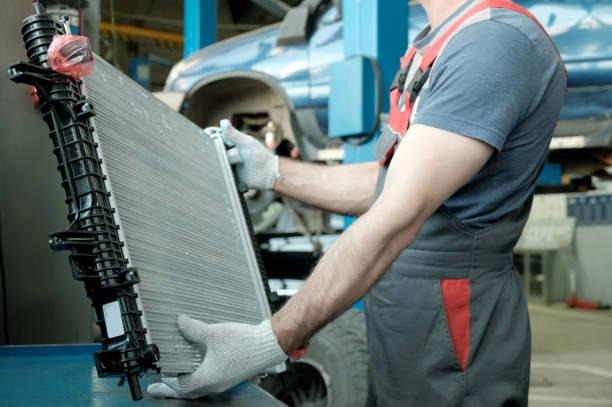
A Mercedes radiator can fail because of corrosion, coolant leaks, damaged hoses, internal blockages, or excessive heat. The radiator plays a vital role in regulating engine temperature by transferring heat from the coolant to the surrounding air. When it cannot perform this job effectively, the engine may overheat, potentially causing expensive damage. Recognizing the common causes of radiator failure and addressing warning signs early can help Mercedes owners maintain reliable performance and avoid unexpected repairs.
Atlanta’s warm summers and periods of heavy traffic can put additional demands on a vehicle’s cooling system. Frequent stops and slow-moving traffic may reduce airflow through the radiator, making the cooling fan and coolant circulation especially important. For local drivers experiencing cooling problems, understanding Mercedes radiator failure can help them recognize when professional inspection may be necessary.
1. Coolant Leaks
Coolant leaks are a common reason a Mercedes radiator may stop working properly. Over time, radiator seams, plastic end tanks, seals, and connecting hoses can deteriorate. Small cracks or loose connections may allow coolant to escape, reducing the amount available to regulate engine temperature.
Drivers may notice a puddle beneath the vehicle, a falling coolant level, or a sweet smell around the engine compartment. However, not every leak comes from the radiator itself. A water pump, hose, reservoir, or another cooling-system component may be responsible.
Check the coolant level only when the engine is completely cool, and never remove a hot radiator or coolant reservoir cap. If the temperature rises above its normal range, stop driving safely and arrange an inspection.
2. Corrosion and Contaminated Coolant
Coolant does more than carry heat away from the engine. It also contains additives that help protect cooling-system components from corrosion. Over time, these additives can lose effectiveness, particularly when the wrong coolant is used or maintenance is neglected.
Corrosion may weaken radiator passages and create leaks. Contaminated coolant can also leave deposits that interfere with heat transfer. Following the coolant specifications for the particular Mercedes model and observing the recommended service schedule can help reduce these risks.
If the coolant looks unusually dirty, contains visible particles, or appears discolored, a technician should examine the system before deciding whether flushing or component replacement is appropriate.
3. Blocked Radiator Passages
A radiator needs unobstructed internal passages to circulate coolant efficiently. Deposits, rust, or contamination can restrict that flow and reduce cooling performance. External debris, such as leaves, dirt, and insects, can also collect on the radiator surface and limit airflow.
A restricted radiator may cause the engine temperature to rise, especially during slow driving or in hot weather. A professional inspection can determine whether the problem involves an internal blockage, external obstruction, cooling fan, or another component.
Cleaning or flushing may help in some situations, but a radiator that is severely corroded or damaged may need replacement.
4. Faulty Cooling Fans or Thermostat
Radiator problems are not always caused by the radiator itself. The cooling fan helps draw air through the radiator when natural airflow is insufficient, particularly at low speeds. If the fan motor, electrical connection, or control system fails, the engine may overheat while idling or sitting in traffic.
A faulty thermostat can also prevent coolant from circulating as intended. Similarly, a malfunctioning water pump may reduce coolant flow throughout the engine. Diagnosing these related components is important because replacing the radiator alone will not correct an underlying fan, thermostat, or pump problem.
How to Prevent Costly Cooling-System Repairs
Routine maintenance can help identify developing problems before they lead to engine damage. Watch for warning lights, unusual temperature changes, coolant loss, and visible leaks. Have the cooling system inspected if you repeatedly need to add coolant, even when no puddle is visible.
The right Mercedes radiator failure diagnosis should identify the underlying cause rather than simply address the most obvious symptom. A qualified technician can pressure-test the cooling system, inspect hoses and connections, assess radiator condition, and check the fan, thermostat, and water pump as needed.
Avoid continuing to drive an overheating vehicle. Excessive engine heat can damage gaskets and other internal components, turning a cooling-system repair into a much larger expense.
Key Takeaways
- Coolant leaks, corrosion, blockages, and damaged components can cause radiator problems.
- Atlanta traffic and summer heat can increase the demands on a Mercedes cooling system.
- Faulty fans, thermostats, and water pumps can create symptoms similar to radiator failure.
- Use the correct coolant and follow the vehicle’s recommended maintenance schedule.
- Stop driving safely if the engine overheats and arrange a professional inspection.