
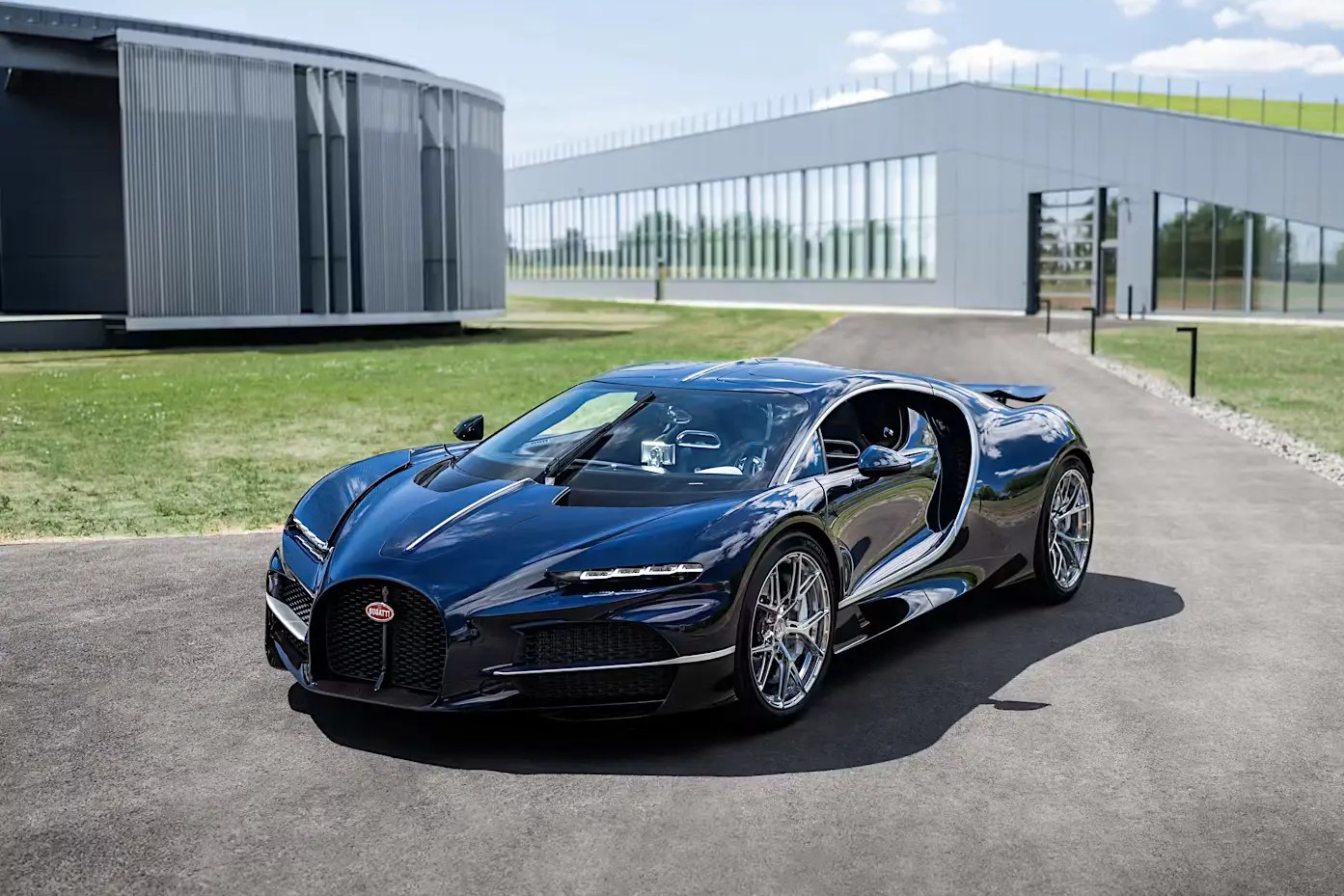
Bugatti’s next move could give drivers something even more tempting than another power record: a naturally aspirated V16 paired with a manual gearbox.
Mate Rimac has expressed interest in a lighter, simpler car built around the Tourbillon’s foundations. There is no confirmed production programme yet, but his comments suggest driver involvement could shape a future Bugatti.
Porsche’s Exit Opens A New Chapter
Porsche completed the sale of its stakes in Bugatti Rimac and Rimac Group in September. A consortium led by HOF Capital acquired the holdings, with BlueFive Capital its largest investor. Rimac Group previously held the majority stake in Bugatti Rimac alongside Porsche.
Speaking to Top Gear, Rimac said independence from a major car manufacturer gives Bugatti greater freedom to pursue ambitious long-term projects. He also made clear that the Tourbillon’s platform has potential beyond the model already revealed.
Asked about a manual gearbox, his response was brief: ‘Absolutely. You bet.’
A More Involving Bugatti Inspired By The Type 35
Rimac is interested in exploring lower weight and less complexity, drawing inspiration from the agility of early Bugattis such as the Type 35.
That could take the brand in a different direction after two decades defined by the Veyron and Chiron’s extraordinary speed. A lighter car would give Bugatti room to place greater emphasis on feedback, response and the driver’s role in the experience.
The Tourbillon’s V16 Provides The Starting Point
As covered in our Bugatti Tourbillon reveal, the hypercar combines an 8.3-litre naturally aspirated V16 developed with Cosworth and three electric motors.
The petrol engine produces approximately 986 hp (735 kW) on its own. With electrical assistance, combined output reaches around 1,775 hp (1,324 kW). Two motors drive the front wheels, while a third works at the rear.
An eight-speed dual-clutch gearbox handles transmission duties, supported by an 800V electrical system and a 24.8 kWh battery. Bugatti’s published technical specifications list a DIN mass below 1,995 kg.
Could Removing The Hybrid System Save 300 kg?
Top Gear suggests that losing the hybrid hardware and replacing the dual-clutch transmission could cut roughly 300 kg. That remains an estimate, rather than a weight target confirmed by Bugatti.
There would also be substantial engineering work involved. Bugatti describes the Tourbillon’s battery as a structural element of its carbon fibre monocoque, so removing it would require more than simply disconnecting the electrical components.
Still, the appeal is easy to understand. A high-revving V16, less mass and a gearbox that asks the driver to participate would make a compelling combination.