
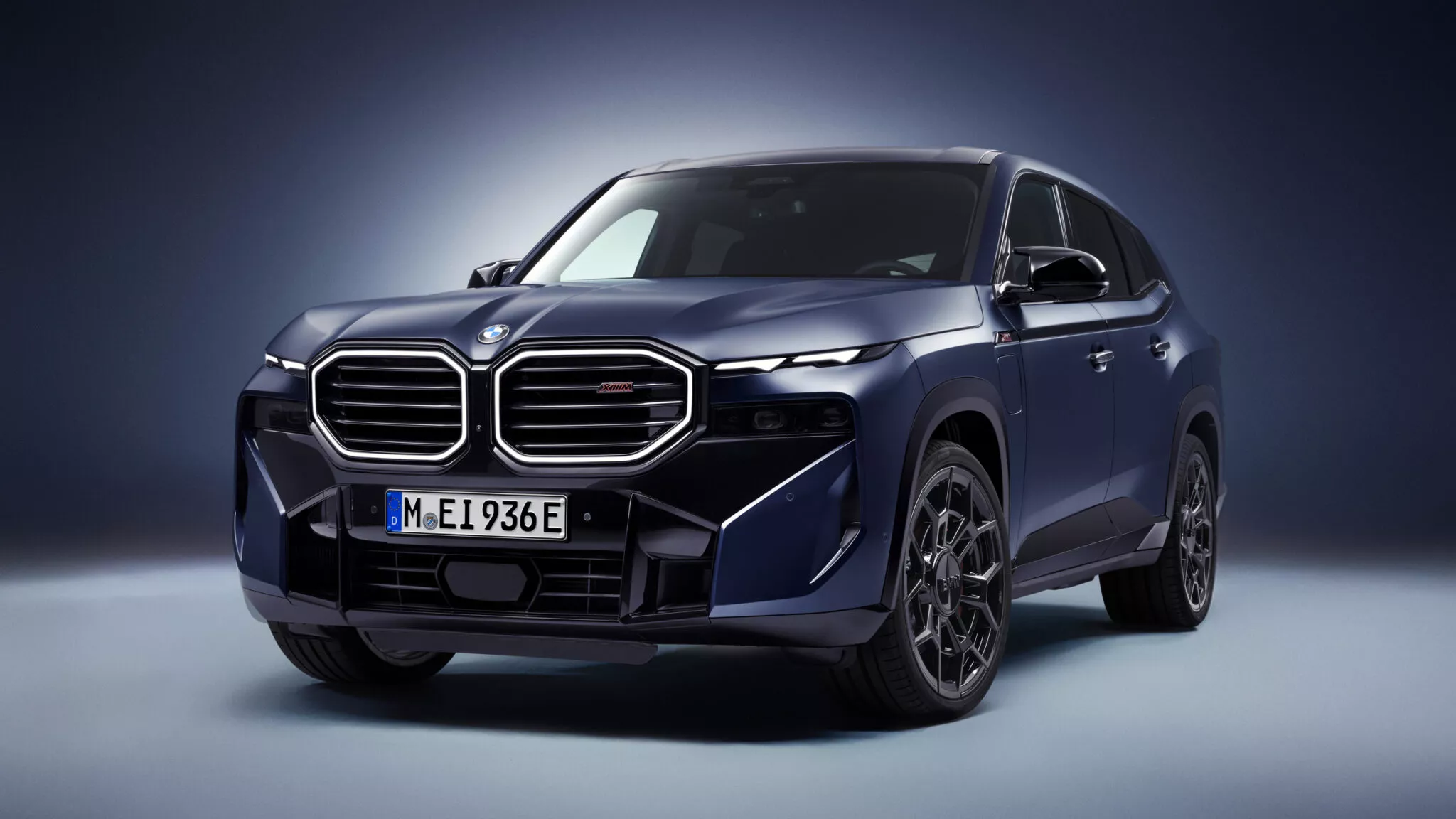
The BMW XM has never been short of attention. As the first standalone BMW M model since the legendary M1, it arrived with huge expectations, controversial styling and an equally substantial price tag. Now, less than four years after production began, its future appears increasingly uncertain.
BMW is reportedly reviewing its wider model strategy as it looks to reduce costs, and niche products could be among the first to feel the effects. That puts the XM firmly in the spotlight.
BMW’s Model Lineup Is Under Review
According to reports, BMW production boss Milan Nedeljkovic is reviewing the company’s model strategy as part of a broader cost-cutting drive.
The changes are expected to affect thousands of jobs, while BMW is also examining niche models, individual derivatives and certain powertrain options as it looks for areas where spending can be reduced.
The XM fits squarely into the niche category. Unlike the X5 M or X6 M, it was developed as a dedicated BMW M product rather than a performance version of an existing BMW model.
That exclusivity may no longer be enough to guarantee its survival.
Sales performance in China is reportedly another concern. With manufacturers under increasing pressure to improve margins and simplify their portfolios, keeping a relatively low-volume and expensive model in production becomes increasingly difficult to justify.
BMW XM Remains A Very Unusual M Car
Production of the XM began at BMW’s Spartanburg plant in South Carolina towards the end of 2022.
Its arrival was significant because it became only the second standalone model developed by BMW M. The first was the Giorgetto Giugiaro-designed BMW M1, produced between 1978 and 1981.
Despite its bespoke positioning, the XM isn’t completely isolated from the rest of the BMW range underneath. It uses BMW’s CLAR architecture, which also underpins models including the X5, X6, X7, 7 Series and 8 Series.
The XM measures 5,110 mm long, 2,005 mm wide and 1,775 mm tall, with a substantial 3,105 mm wheelbase. Kerb weight sits at roughly 2,750 kg, making it one of the heaviest vehicles ever to wear an M badge.
XM Label Still Packs Serious Performance
BMW has already simplified the XM range, leaving the XM Label as the headline offering.
Its plug-in hybrid powertrain combines a 4.4-litre twin-turbocharged V8 with an electric motor integrated into the eight-speed automatic transmission.
Combined output stands at 738 hp (550 kW) and 1,000 Nm (738 lb-ft) of torque, which is sent to all four wheels through BMW’s M xDrive system.
Would BMW Really Kill The XM?
Nothing has officially been confirmed at this stage, so the XM isn’t dead yet.
However, its position is certainly more vulnerable than that of BMW’s mainstream models. A combination of limited volumes, high production costs and its niche position could make developing a second-generation XM difficult to justify.
It would bring a remarkably short life to one of BMW M’s most ambitious projects.
The XM may not have won everyone over with its styling, but its significance in BMW M history cannot be ignored. It was created as a standalone flagship and brought electrification into the M division in a very loud way.
BMW i4 Could Also Be Under Threat
The XM apparently isn’t the only model being examined.
The BMW i4 is also said to face an uncertain future as BMW moves deeper into its Neue Klasse generation of electric vehicles.
The i4 has been around since late 2021 and remains based on architecture shared with combustion-powered BMW models. The arrival of BMW’s newer Neue Klasse electric sedans potentially creates significant overlap within the range.
Maintaining two similarly positioned electric models may make little financial sense, particularly once the newer architecture becomes established.
BMW 8 Series Facing Full Retirement
The third model reportedly under scrutiny is the 8 Series.
Its future has already been looking increasingly bleak, with various versions gradually disappearing from BMW’s portfolio.
There had previously been speculation that the 8 Series concept could be reinvented under Alpina, but those plans are now reportedly off the table.
That leaves the current 8 Series without an obvious route into BMW’s Neue Klasse era.
Unlike the XM, the potential loss of the 8 Series will probably sting enthusiasts a little more. The Coupe, Convertible and Gran Coupe combined elegant grand touring proportions with some seriously capable powertrains, particularly in M8 Competition form.
BMW’s Range Could Look Very Different Soon
BMW is entering one of the biggest product transitions in its modern history.
Neue Klasse technology will gradually spread throughout the range, while the company simultaneously needs to manage combustion, plug-in hybrid and fully electric models across multiple markets.
Something eventually has to give.
If the latest reports prove accurate, models with relatively low sales volumes or significant overlap with upcoming products could become increasingly difficult to justify.
The XM, i4 and 8 Series are three very different BMWs, but all could ultimately become casualties of the same strategy.
For the XM in particular, retirement without a direct replacement would bring an unusual chapter in BMW M history to an unexpectedly early end.