
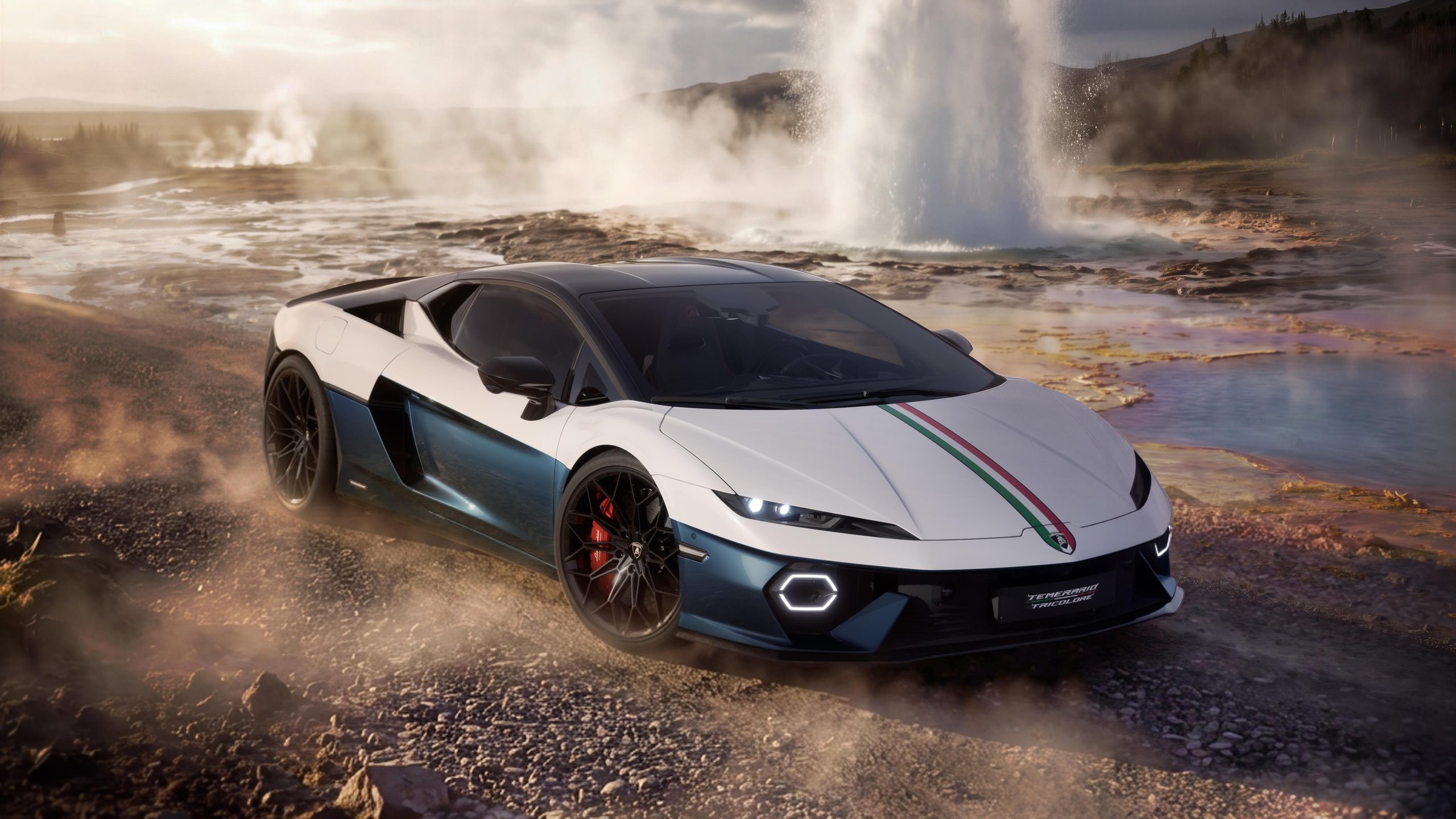
Lamborghini is watching the rapid rise of China’s high-performance car industry, but it isn’t losing any sleep over it.
Brands such as Denza and YangWang are producing electric machines with enormous power figures and increasingly serious performance credentials. Despite that, Lamborghini CEO Stephan Winkelmann believes these newcomers are playing a very different game to the one being played in Sant’Agata.
Lamborghini Doesn’t See Chinese EVs As A Threat
Speaking to Autocar at the 2026 Goodwood Festival of Speed, Winkelmann was asked about the growing number of Chinese manufacturers entering supercar territory.
One of the most striking examples at Goodwood was the Denza Z, a fully electric supercar claimed to produce 1,583 hp (1,180 kW). Its projected performance is equally extreme, with 0 to 100 km/h (62 mph) expected to take less than two seconds and a potential top speed of around 349 km/h (217 mph).
On paper, those numbers comfortably place it among the fastest road cars on the planet.
Winkelmann, however, doesn’t believe outright numbers tell the whole story. He said Lamborghini currently doesn’t regard Chinese manufacturers as direct competitors, largely because their flagship performance cars are predominantly electric.
That distinction matters because Lamborghini has deliberately decided not to rush into the fully electric supercar market.
Lamborghini Believes Emotion Still Matters
While Winkelmann acknowledged the impressive software found in many Chinese vehicles, Lamborghini believes its advantage lies elsewhere.
Performance is obviously part of the equation, but so too are sound, character and the emotional connection created by a combustion engine.
That philosophy can be seen clearly in the latest Lamborghini Revuelto SV, which combines a naturally aspirated 6.5-litre V12 with three electric motors to produce 1,050 hp (783 kW).
Rather than replacing the combustion engine, Lamborghini is currently using electrification to enhance it.
The strategy extends across the wider range, with the company having now electrified each of its core models while retaining combustion power.
First Electric Lamborghini Delayed Beyond 2030
Lamborghini had originally intended to introduce its first fully electric production model much sooner, but those plans have changed.
The company has pushed its first EV beyond 2030, citing both customer demand and the current limitations of battery technology.
Lamborghini’s position is straightforward. If it eventually produces a fully electric model, it needs to deliver something genuinely exceptional rather than simply existing because regulations or market trends demand it.
Product director Stefano Cossalter has previously indicated that an electric Lamborghini would need to be a benchmark product from a performance perspective before the company would be comfortable putting its badge on it.
The decision also appears to have been well received by Lamborghini customers.
Plug-In Hybrids Are The Priority
Instead of moving directly from combustion engines to battery-electric cars, Lamborghini intends to continue developing plug-in hybrid technology.
That gives engineers access to the instant response and additional performance of electric motors without sacrificing the noise and theatre traditionally associated with the brand.
Most importantly, it gives Lamborghini an opportunity to keep its naturally aspirated V12 alive.
The engine remains one of the company’s biggest differentiators at a time when many manufacturers are downsizing engines or abandoning them completely.
It also explains why Lamborghini’s upcoming fourth model has changed direction. The production model inspired by the Lanzador concept was initially destined to become a fully electric car, but plans have shifted towards plug-in hybrid power.
Chinese Supercars Could Still Become Rivals
Lamborghini isn’t dismissing China’s car industry altogether.
Chinese manufacturers have demonstrated how quickly they can develop new technologies, improve quality and push performance boundaries. The enormous resources being invested into batteries, electric motors and vehicle software mean today’s competitive landscape could look very different within a few years.
Winkelmann acknowledged that possibility, effectively leaving the door open to Chinese brands becoming genuine Lamborghini rivals in the future.
For now, though, Lamborghini appears comfortable sticking to its own formula.
Rather than chasing four-figure electric power outputs simply for the sake of producing bigger numbers, the Italian manufacturer is betting that customers will continue to value sound, emotion, heritage and combustion engines alongside outright performance.
Considering Lamborghini is still finding ways to extract more performance from its V12 hybrid platform, including the record-breaking Revuelto SV at Hockenheim, the combustion era in Sant’Agata certainly isn’t finished yet.