
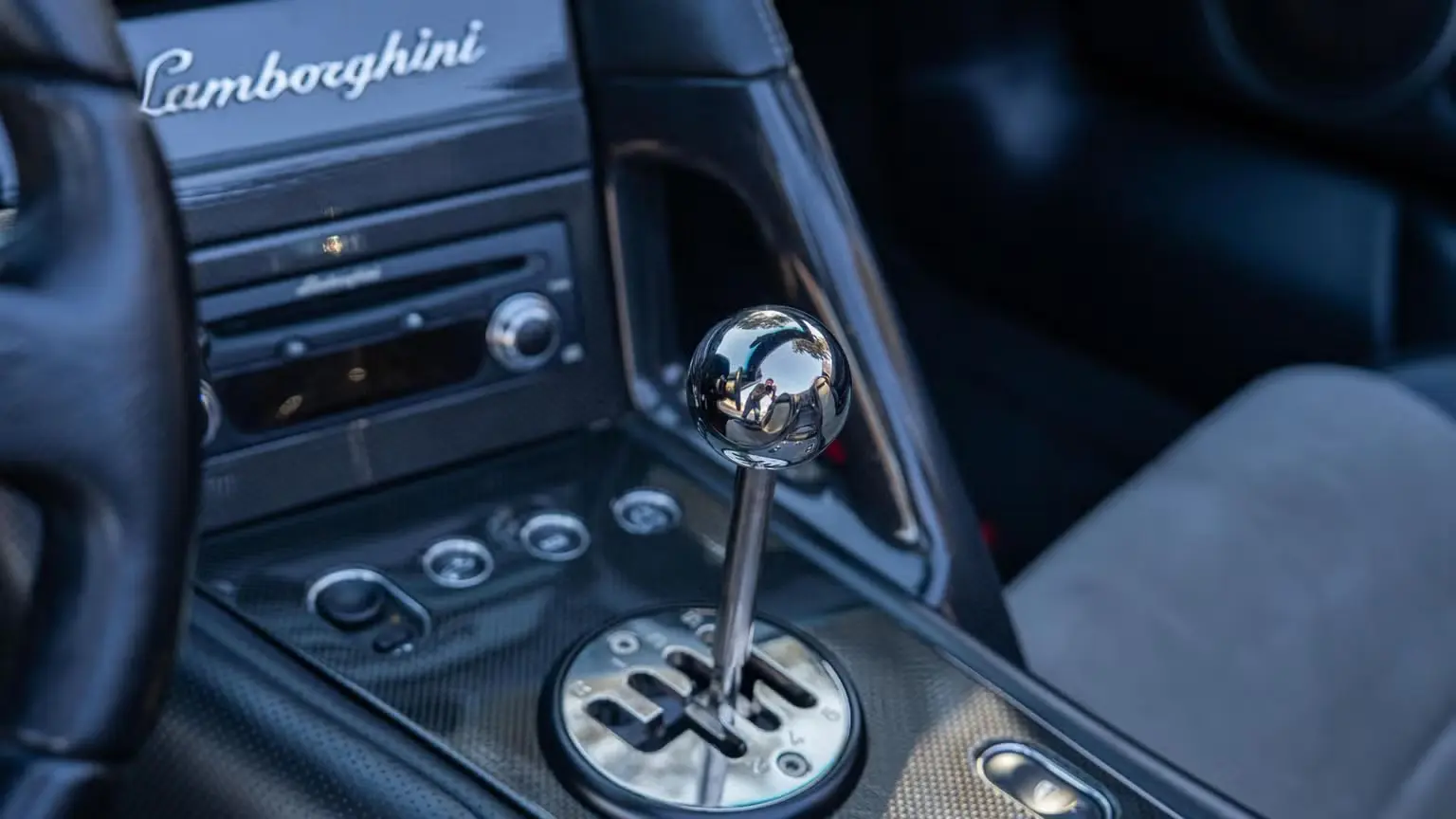
Lamborghini has embraced electrification across its current supercar range, but anyone hoping the brand might balance that technology with the return of a traditional manual gearbox shouldn’t get too excited.
Despite renewed interest in manual transmissions at the very top end of the performance car market, Lamborghini CEO Stephan Winkelmann has made it clear that a three-pedal model isn’t currently part of the plan.
Lamborghini’s Manual Era Ended With The Gallardo
It has been more than a decade since Lamborghini offered buyers a conventional manual transmission.
The Gallardo was the final series-production Lamborghini available with three pedals and a gear lever, remaining on sale until production ended in 2014. Finding one today isn’t easy, particularly as buyers increasingly favour the more engaging manual versions.
For V12 fans, things are considerably more exclusive. The Murciélago LP 670-4 SuperVeloce was the final V12 Lamborghini offered with a clutch pedal, with only a tiny handful reportedly leaving Sant’Agata in manual form.
Everything that followed moved away from the traditional gearbox.
The Huracán exclusively used a dual-clutch transmission, while the Aventador relied on Lamborghini’s ISR automated manual. Today, both the Revuelto and Temerario use sophisticated dual-clutch gearboxes as part of their electrified powertrains.
Lamborghini CEO Says A Manual Isn’t A Priority
With manual gearboxes enjoying something of a revival among collectors and low-volume manufacturers, Lamborghini CEO Stephan Winkelmann was recently asked whether his company might follow suit.
His response suggests enthusiasts shouldn’t expect anything soon.
Winkelmann explained that a manual transmission simply isn’t on Lamborghini’s priority list, largely because the company already has numerous projects under development. He also views modern manual-equipped supercars primarily as collector-focused products rather than something Lamborghini currently needs in its mainstream range.
That doesn’t necessarily mean a manual Lamborghini will never happen again, but there are no active plans for one right now.
Interestingly, Lamborghini has previously discussed the possibility of finding ways to make manual-style transmissions work in future models. You can read more about the company’s thinking in our article on Lamborghini’s manual transmission future.
Hybrid Technology Makes Things Complicated
There is also a major technical hurdle.
Pairing a traditional manual transmission with a modern high-performance plug-in hybrid system isn’t straightforward. Mild-hybrid powertrains can work with manual gearboxes, but the complex relationship between combustion engines, electric motors and transmissions in more advanced hybrid systems makes a conventional three-pedal arrangement much harder to engineer.
There are ways around the problem, but they aren’t necessarily traditional manuals.
Ferrari recently demonstrated one possible solution with the 12Cilindri Manuale. Instead of replacing the car’s existing dual-clutch transmission, Ferrari created a shift-by-wire system that uses a gear lever and clutch pedal to replicate the interaction of a conventional manual gearbox.
It’s an interesting approach, although importantly, the naturally aspirated 12Cilindri isn’t a hybrid.
Lamborghini Has Bigger Projects To Focus On
The other issue is simply where Lamborghini wants to spend its development resources.
A modern manual transmission would likely make the most sense in an extremely limited collector model rather than something produced in meaningful numbers. Lamborghini certainly has the ability to build such a car, but its immediate product strategy appears focused elsewhere.
One of the biggest projects is Lamborghini’s upcoming fourth model line, which is expected to take the form of a two-door 2+2 grand tourer.
The new model will revive a part of Lamborghini’s history that stretches back to cars such as the 350 GT, 400 GT and Espada. It was originally expected to become the company’s first fully electric production model, but Lamborghini’s changing electrification strategy means a plug-in hybrid powertrain is now expected instead.
Lamborghini has also confirmed that hybrid combustion power remains important elsewhere in its range, including the next-generation Lamborghini Urus.
Could A Manual Lamborghini Eventually Return?
Never say never.
Demand for analogue supercars remains strong, particularly among collectors, and manufacturers are finding increasingly creative ways of introducing more driver involvement into modern powertrains.
A simulated manual system similar to Ferrari’s solution could theoretically give Lamborghini the interaction of a gated gearbox without forcing engineers to abandon a modern dual-clutch hybrid architecture.
For now, though, Lamborghini has plenty of other cars to develop. A manual gearbox might appeal to the purists, but Winkelmann has made it clear that bringing back the clutch pedal isn’t high on the company’s to-do list.