
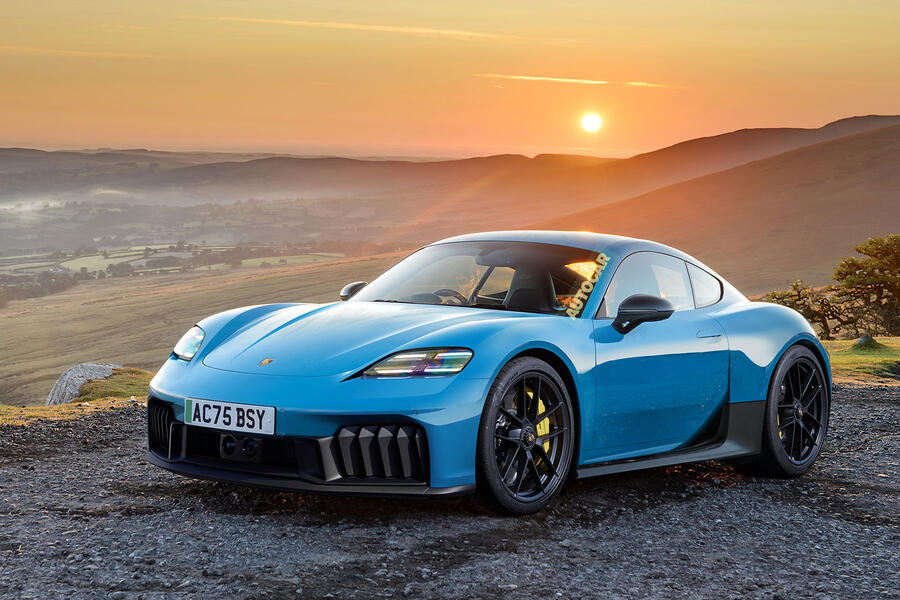
Porsche’s plans for the next-generation 718 Boxster and Cayman have taken another unexpected turn. Despite previously suggesting that combustion-powered versions could return, the German manufacturer now insists there are no plans to offer petrol engines in its upcoming entry-level sports cars.
The all-electric replacements are still coming, but Porsche’s latest comments raise questions about what happened to the combustion models mentioned in its own investor presentations.
Porsche Denies Plans For New Petrol-Powered 718 Models
During its latest Capital Markets Day presentation, Porsche outlined a new business strategy called Sportwagenschmiede ’35, loosely translated as “sports car forge.”
The plan focuses on improving profitability, reducing operating costs and putting greater emphasis on the sports cars that have traditionally defined the brand.
One thing noticeably absent from the presentation was any mention of combustion-powered replacements for the 718 Boxster and Cayman.
Porsche’s Head of Corporate Communications, Matthias Rauter, has since stated that the company never officially confirmed plans to introduce another generation of petrol-powered 718 models.
However, that explanation doesn’t quite line up with Porsche’s previous announcements.
Previous Porsche Presentation Clearly Mentioned ICE 718 Models
In September 2025, Porsche presented investors with slides specifically referencing “Top ICE derivatives for new 718.”
Another slide featured the 718 Cayman alongside both internal combustion engine (ICE) and battery-electric vehicle (BEV) powertrain options.
At the time, the information suggested Porsche was considering petrol-powered versions of its most focused 718 models, potentially successors to the Cayman GT4 and 718 Spyder.
Those cars were among the highlights of the previous 718 generation, particularly with their naturally aspirated 4.0-litre flat-six engines.
Production of the outgoing Boxster and Cayman range eventually ended in October 2025, following an earlier extension.
When questioned about the apparent change in direction, Porsche confirmed that there are currently no plans for another combustion-powered 718. The manufacturer did not explain why its earlier investor material had suggested otherwise.
Electric Porsche 718 Boxster And Cayman Still Coming
Despite the uncertainty surrounding petrol engines, Porsche remains committed to introducing electric replacements for the Boxster and Cayman.
The project has experienced several delays, but the latest information suggests production should begin during 2027.
Porsche has identified 2028 as the first full year of production, indicating that manufacturing is expected to get underway before then.
The electric sports cars will represent a significant departure from their predecessors, which built their reputations around lightweight construction, sharp handling and engaging combustion engines.
Whether the electric replacements can deliver the same appeal remains to be seen.
New Petrol And Hybrid Porsche SUVs Are On The Way
While the 718 range appears destined to remain electric, Porsche is taking a different approach with its SUVs.
The company is developing a new combustion-powered SUV to sit alongside the electric Macan. Expected to arrive in 2027, it will offer petrol and plug-in hybrid powertrains under a different model name.
Essentially, the newcomer will fill the gap left by the original petrol-powered Macan.
Porsche is also working on a larger SUV positioned above the Cayenne. Previously known internally as the K1, the model has been spotted testing in electric form, although Porsche has yet to clarify its final powertrain options.
The broader strategy suggests Porsche is prepared to retain combustion engines in certain segments where customer demand remains strong.
Porsche Plans Significant Price Increases And Cost Cuts
Porsche’s revised strategy extends well beyond its future model range.
The manufacturer intends to increase prices on its most desirable performance models, including Turbo and GT derivatives, by approximately 20%.
At the same time, Porsche is targeting substantial reductions across its operations, including:
- 20% lower development costs.
- 20% lower sales costs.
- A potential 30% reduction in its workforce.
The combination of higher prices and aggressive cost reductions forms part of Porsche’s efforts to restore profitability and improve its financial position.
For enthusiasts, however, the prospect of considerably more expensive GT and Turbo models is unlikely to be particularly welcome.