
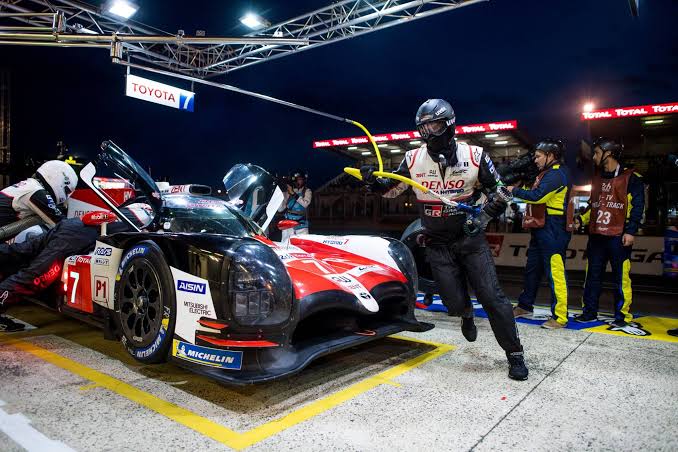
The 24 Hours of Le Mans is known for being one of the toughest challenges for cars and drivers in the sport of auto racing. If you’re looking for a Le Mans complete guide, GrandPrixTimes.com is the perfect place for you. They provide all the things that you need to know about Le Mans and also some other great stuff you won’t expect. In Part Two of this article, we will look at some cool facts and stories about the greatest sports car endurance race in the world.
The champagne shower
Poppin’ bottles and spraying champagne is the standard of most motor racing victories. The tradition actually started at Le Mans in 1967 with Dan Gurney. After winning the race in the Ford GT40 with teammate A.J. Foyt, Gurney was handed a bottle of champagne. In front of him were Henry Ford II, team owner Carroll Shelby, their wives and a number of journalists. Gurney took the bottle, gave it a big shake and sprayed everyone in an act of spontaneity that would start a tradition that continues to this day.
Lone drivers
It seems crazy to attempt to drive for 24 hours straight, but a few drivers have attempted and even succeeded at the feat. Today, the rules at Le Mans require that driving be limited to a certain amount of time behind the wheel. This means most teams have three to four drivers.
Women at Le Mans
Women have a long history of competitive auto racing at the 24 Hours of Le Mans. In total, 61 women have participated in the great Le Mans race including Michele Mouton, the only woman to win a World Rally Championship Event and Lella Lombardi, the only woman to have raced in Formula 1.
Cars with unusual engines
Many manufacturers use the Le Mans race as a test bed for future technologies and engine design. For example, the winning cars recently have all been hybrids. We were told by Land Rover of North Dade that one of the most uncommon engines used at Le Mans was found in the Rover-BRM gas-turbine engine producing just 150-horsepower.
The infamous 1955 accident
At the 1955 running of the 24 Hour race, one of the worst racing crashes in history occurred. Mike Hawthorne’s Jaguar darted for the pit lane, cutting off the Austin-Healey of Lance Macklin. Macklin swerved to avoid the Jaguar and into the path of Pierre Levegh driving a Mercedes-Benz 300 SLR. The collision between the Macklin and Levegh launched the Mercedes into the spectator stands. The horrific crash killed 83 people and injured nearly 180 others.
Smallest engine
The 1937 Gordini Simca 5 has the distinction of having the smallest engine ever to compete at Le Mans. Powered by a 570cc four-cylinder engine with only 23-horsepower, had a top speed of about 75 mph.
Largest engine
The Dodge Viper GTS-R race car had massive 8.0-liter V10 engine under its long hood. This car won its class at the 24 Hours of Le Mans three years in a row from 1998 to 2000.
How the winner is chosen
In a normal auto race, the winner is the car that crosses the finish line first after a set number of laps. In endurance racing it works a bit differently, the winner is the car that’s completed the most number of laps in the allotted time. That means, that if a car doesn’t cross the finish line when the checkered flag flies, it can still win the race if it has completed more laps than the other cars. The most reliable cars that spend the least amount of time in the pits will usually come out on top.