
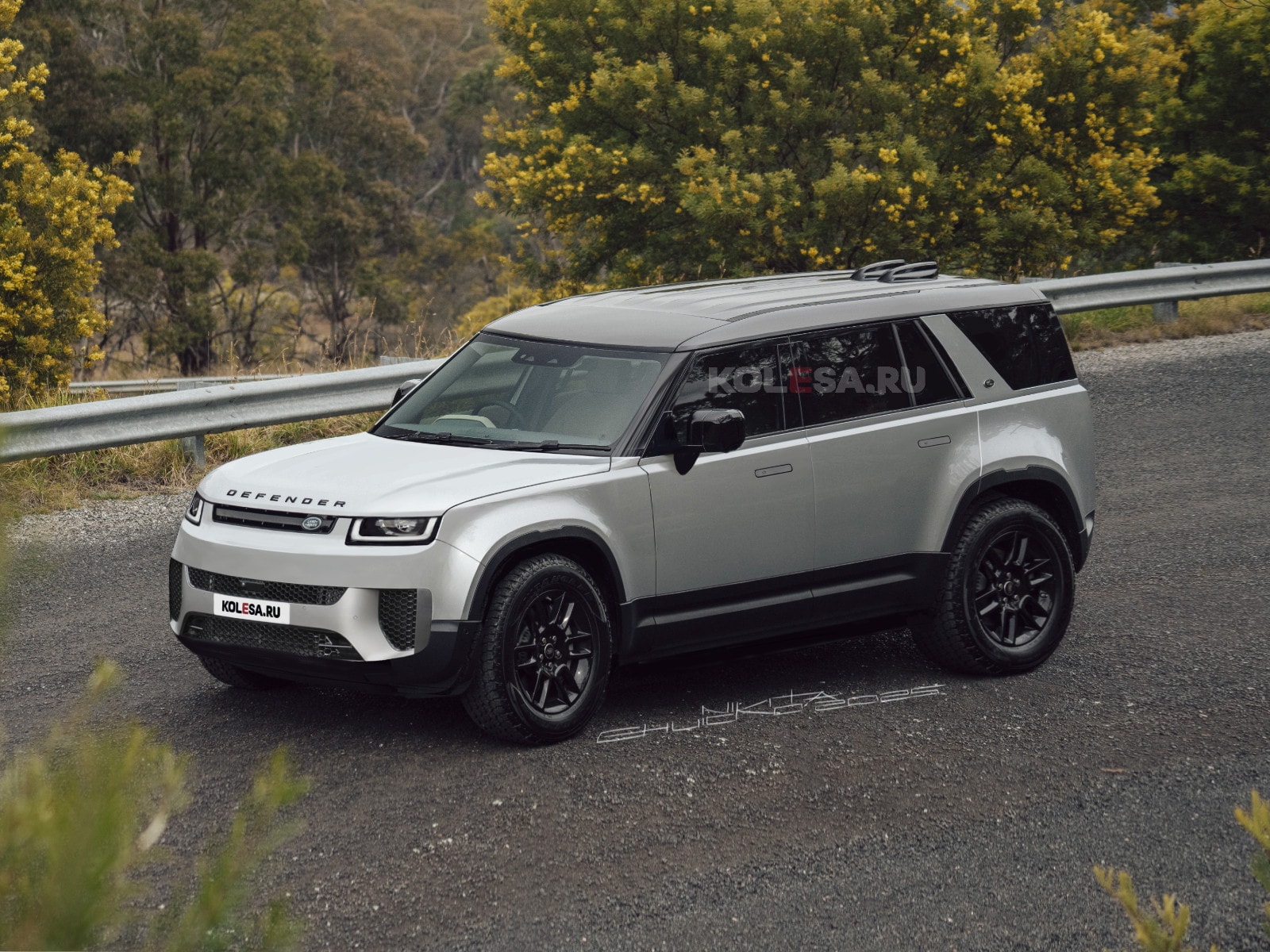
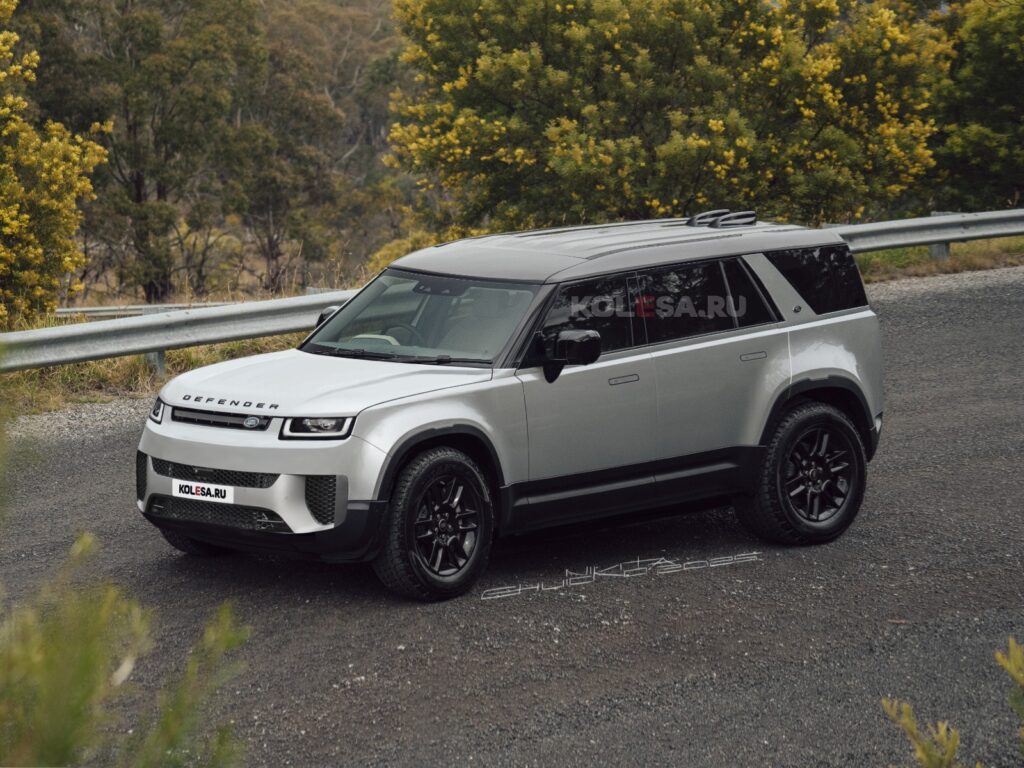
Land Rover is preparing to significantly expand the Defender family with an all-new, smaller sibling to the current lineup, and it will offer buyers the choice of both hybrid and fully electric powertrains. The model, widely expected to carry the Defender Sport name, will ride on JLR’s latest EMA platform, which the company has confirmed will now support both HEV hybrid and BEV battery-electric configurations.
Mark Cameron, the managing director responsible for the Defender and Discovery brands, has been open about the fact that development of the new model is well advanced, though he has stopped short of confirming an exact launch date or locking in the Sport name officially.
A New Era for the Defender Brand
This model marks a meaningful moment for JLR. It will be the first entirely new vehicle developed under the company’s restructured ‘House of Brands’ approach, which elevated Defender, Range Rover and Discovery into standalone brand identities. Cameron described the past few years as a period of laying the groundwork: defining the brand’s DNA, establishing what every future Defender must deliver, and building a product pipeline that stretches seven to ten years ahead.
“Every Defender has to have a red line, a circle,” he explained, referring to the design and engineering principles his team has spent years codifying.
The current range covers the 90, 110 and 130 bodystyles, plus the formidable Octa variant and the commercial Hardtop. The Defender Sport is intended as the opening chapter of what Cameron suggested could become a much larger family of vehicles. When asked how big the Defender lineup could eventually become, his answer was simple: “Huge.”
What the EMA Platform Means for Off-Road Ability
The Defender Sport is expected to measure just over 4.5 metres in length and will share JLR’s EMA platform with upcoming versions of the Range Rover Evoque and Velar. The more premium MLA platform, meanwhile, will continue underpinning the full-size Range Rover and larger Defender variants. Jaguar uses its own separate JEA architecture for its EV models.
Because EMA was designed from the outset as an electric-first platform with underfloor battery packaging, Cameron acknowledged it creates some constraints. Wheel travel and suspension articulation will likely be reduced compared to the current Defender, which uses the older D7 architecture. He was, however, clear that the Sport will still be engineered to deliver serious off-road performance and that four-wheel drive will be standard, suggesting a dual-motor electric setup is on the cards.
The aerodynamic demands of EV efficiency also present a challenge given the Defender’s characteristic upright stance and bluff rear end. Cameron noted that the shape works against range figures, and that finding the right balance between preserving the Defender’s identity and maximising efficiency is a key part of what his team is solving.
“My job is to make sure we retain Defender’s DNA,” he said, “otherwise we just become another SUV brand, and there are no shortage of those.”
Hybrid Power Added in Response to Global Demand
The confirmation that EMA will support hybrid powertrains alongside full electric is a significant development, and the reasoning is straightforward. Defender sells globally, with diesel models still accounting for the majority of UK sales and the United States now its single biggest market. In both regions, full electrification remains a tough sell for customers, and Cameron was candid about the gap between what legislators expect and what buyers actually want.
JLR’s position is to offer as much powertrain flexibility for as long as possible. The current Defender PHEV uses a four-cylinder engine on the D7 platform, a setup that was never ideally suited to electrification and delivers a limited electric-only range as a result. Future architectures, Cameron hinted, will address that.
Test Cars Already Spotted, Quality Timelines Maintained
Prototype versions of the new Defender have already been photographed during testing on UK roads, confirming that development is well into its later stages. Notably, JLR has resisted the temptation to compress its testing programme in order to match the faster development cycles seen from Chinese manufacturers.
Cameron acknowledged the disruption those brands have caused but made clear that Defender’s standards require a minimum of two winter test cycles and two hot-weather test cycles for every new model. Speed to market, he said, cannot come at the expense of the durability and quality expectations that come with positioning Defender as a luxury lifestyle brand.
On the question of whether to develop technology in-house or purchase it from suppliers, Cameron indicated that the decision is nuanced. While battery packs and electric drive units have increasingly become commodity items, Defender’s specific requirements around torque delivery and off-road drivability mean that simply buying everything in off the shelf may not produce the result the brand needs.
A Bigger Defender Family on the Horizon
Cameron’s comments point to a product strategy that extends well beyond the Defender Sport. He referenced specific market opportunities, including the popularity of pick-up trucks in the United States, which aligns with previous speculation about a Defender bakkie, and the demand in Europe for smaller vehicles suited to tighter urban streets.
The guiding principle, he said, is finding segments where a Defender product can exist credibly rather than simply chasing volume. JLR’s track record of creating new segments rather than copying existing ones, from the original Range Rover through to the Evoque and the reimagined Defender, appears to be the template for what comes next.