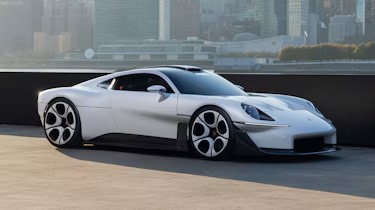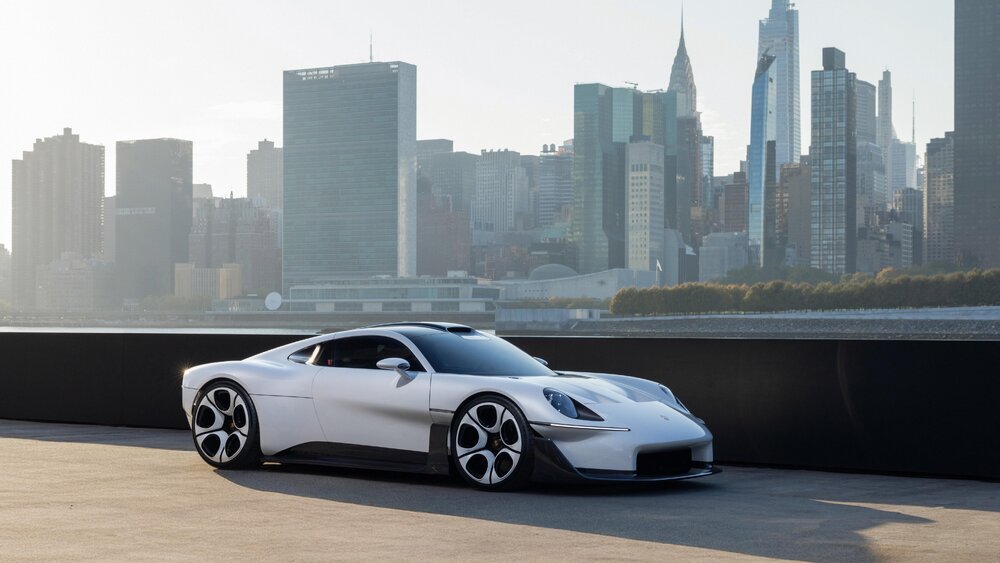
Porsche is making room above the 911, and the new Mission S shows what could fill it. The low-slung concept previews a mid-engined supercar with petrol power, bringing the brand back into territory occupied by the Carrera GT and 918 Spyder.
There is a significant difference this time. Porsche wants an ongoing supercar offering at the top of its range, giving customers something beyond the 911 without waiting for another limited-production hypercar. The Mission S also introduces styling ideas that will influence future models.
A New Porsche Supercar With Combustion At Its Core
Following our earlier report on Porsche’s plans for a supercar above the 911, the Mission S gives those ambitions a recognisable shape.
CEO Michael Leiters says Porsche is developing a super sports car platform for a new mid-engined model. Its flexible architecture can accommodate conventional petrol engines, hybrid assistance or a plug-in hybrid powertrain. A fully electric version is excluded, with Leiters pointing to insufficient customer demand.
That leaves Porsche with several possible directions. It could pursue a relatively simple, lightweight combustion car or use electrification to increase performance and support more sophisticated chassis technology.
The approach fits with Porsche’s wider rethink of its combustion and electric model range.
Familiar Porsche Curves With A Fresh Approach
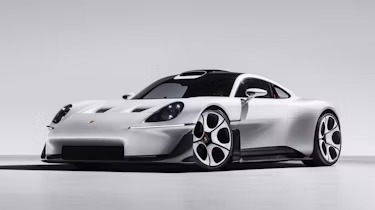
Design chief Tobias Sühlmann has used the Mission S to establish a new direction built around flowing surfaces, compact proportions and familiar Porsche features.
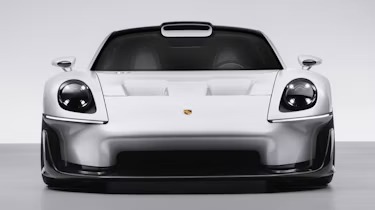
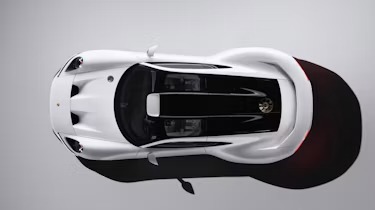
Raised front wings frame the bonnet, while the roof sweeps towards the tail with a clear family resemblance to the 911. The headlights combine rounded upper sections with broader lower shapes, and the wheels reinterpret the 928’s distinctive teledial design.
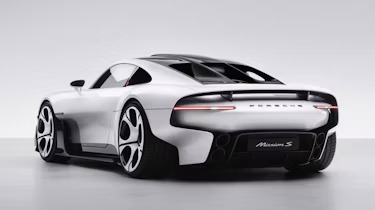
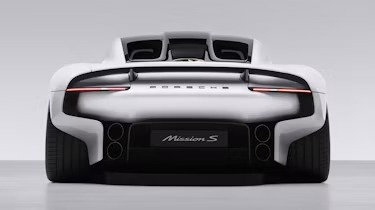
The rear takes a different approach to Porsche’s familiar full-width light bar, using slim lighting elements with intricate detailing. Open sections around the diffuser expose mechanical components, while a retractable rear wing preserves the clean silhouette when additional downforce is unnecessary.
There is purpose behind the broad rear bodywork, too. It accommodates the rear track needed to put substantial power onto the road.
Engine Choice Remains Open
Porsche has yet to confirm the engine, output or performance figures for the production car.
Its development toolkit includes several engine configurations, although the concept’s low rear deck makes a flat-six an interesting possibility. That remains speculation rather than confirmation.
The modular approach also allows Porsche to share individual components and technologies between cars with different layouts. Common architecture does not necessarily mean identical engine placement or powertrains.
Hybrid technology already plays a major role in the latest Porsche 911 Turbo S, where electrically assisted turbochargers improve response and a transmission-mounted motor adds assistance.
However, Porsche executives maintain that simpler sports cars still have a place, including models with naturally aspirated engines and manual gearboxes. Whether either reaches the Mission S production programme remains undecided.
Low Weight And A Driver-Focused Cabin
Porsche’s engineers intend to control weight through a carefully chosen mix of materials. Aluminium and carbon-fibre could both feature, with each material selected according to the job it needs to do.
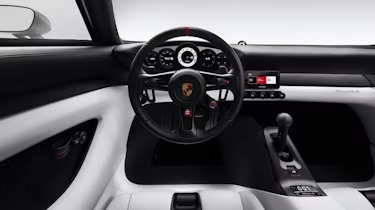
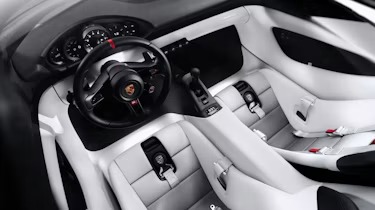
Inside, the dashboard wraps into the doors, creating a cockpit centred on the driver. The instruments adapt to the selected driving mode, reducing peripheral information during track use and bringing the rev counter closer to the driver.
The intention is straightforward: give the driver useful information without allowing screens and secondary functions to dominate the experience.
When Will The Production Porsche Mission S Arrive?
Porsche has not announced a production launch date, price or final model name.
A showroom arrival before the end of the decade has been suggested, particularly as the company works towards shorter development cycles. That remains an expectation rather than a confirmed deadline.
The Mission S nevertheless makes Porsche’s ambitions clear. A mid-engined supercar could become a lasting part of the range, offering buyers a new alternative to Ferrari while retaining the character that brings them to Porsche.