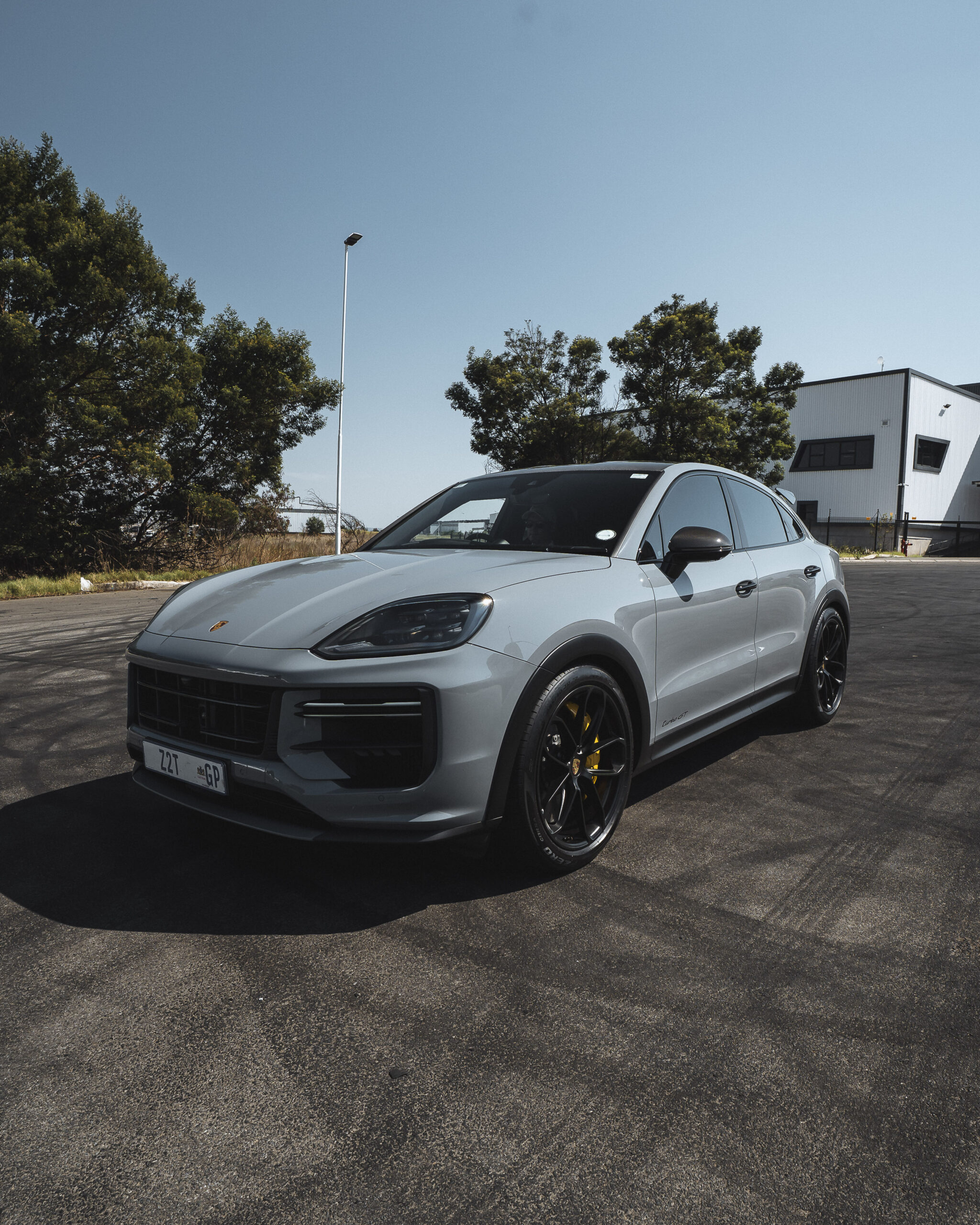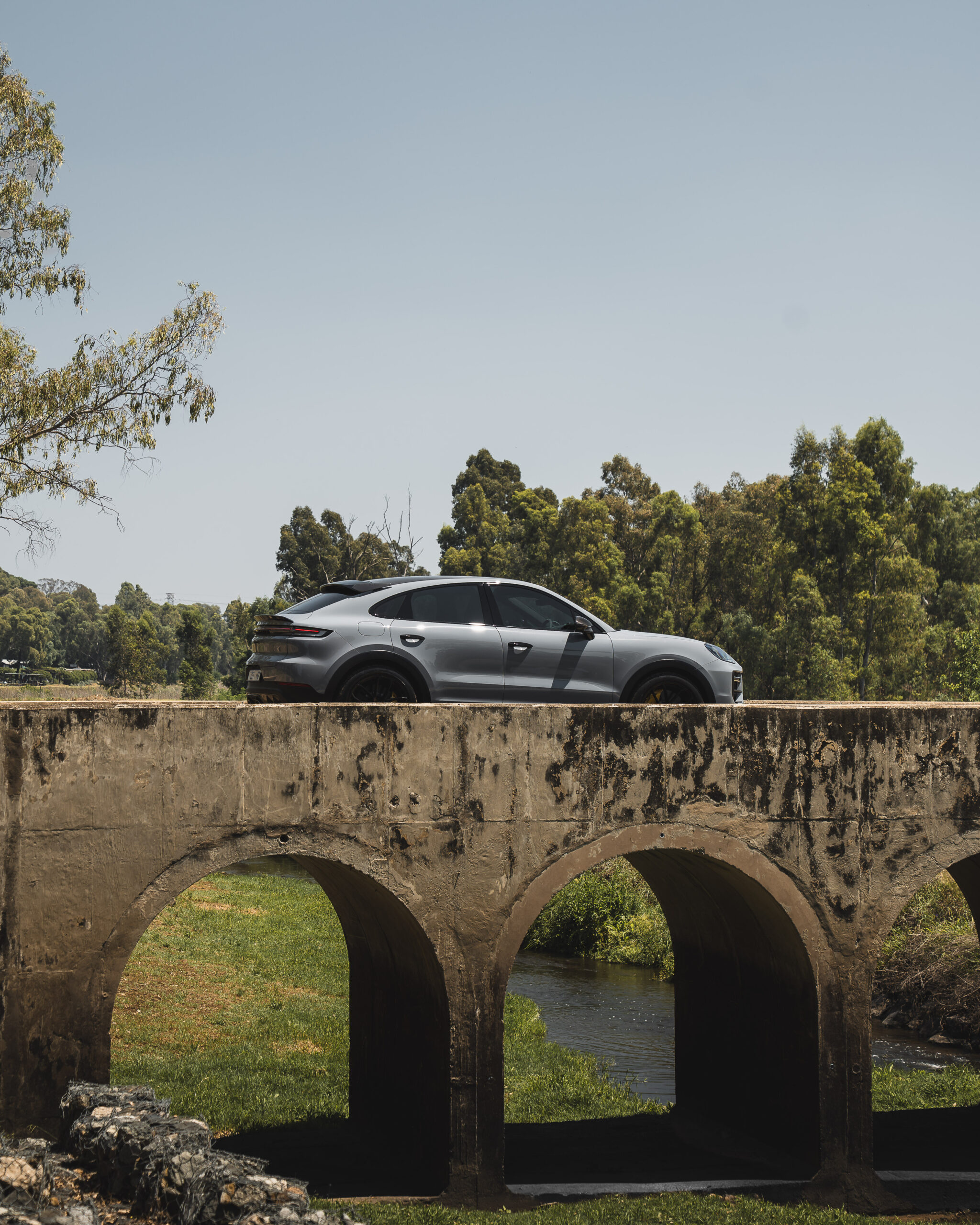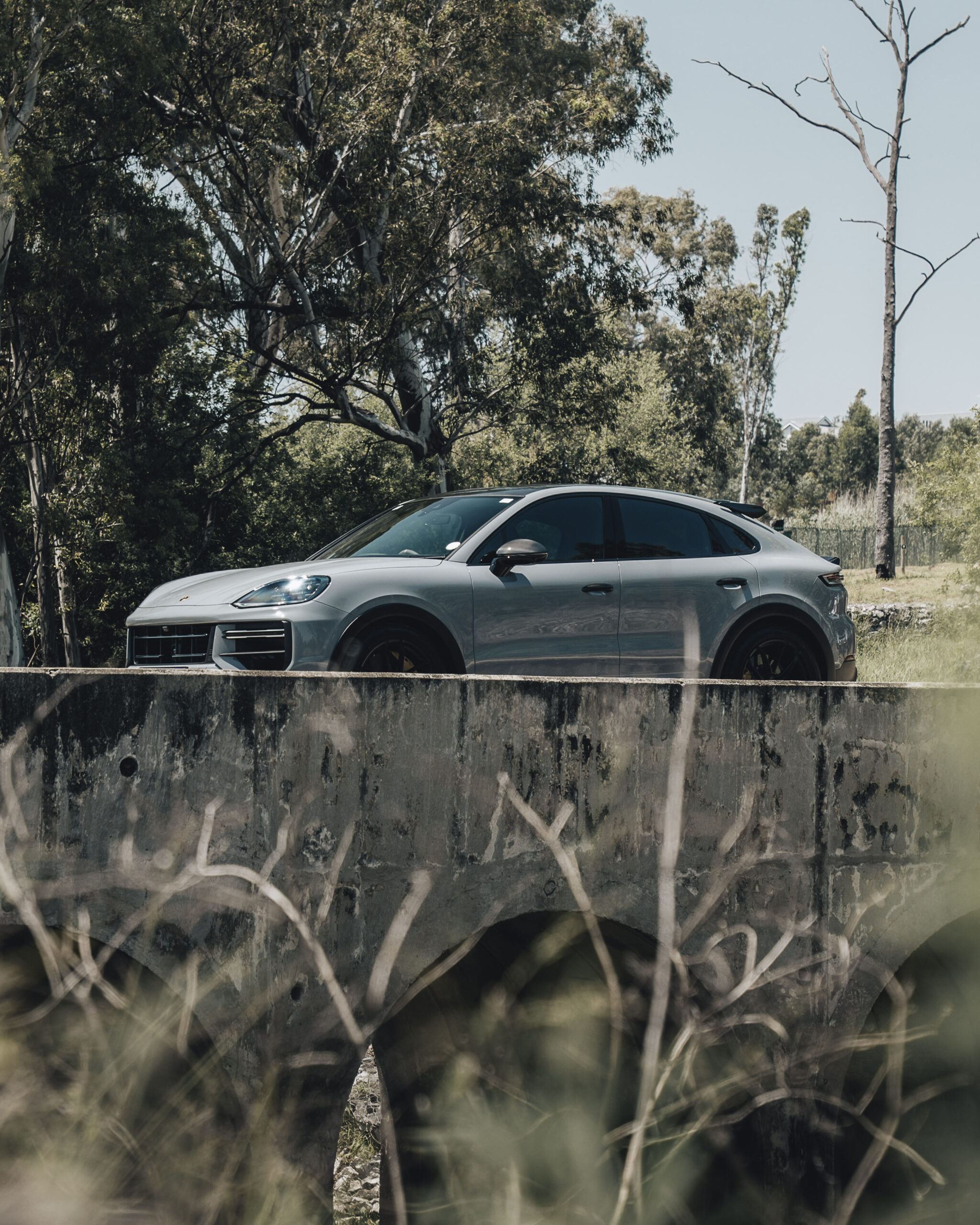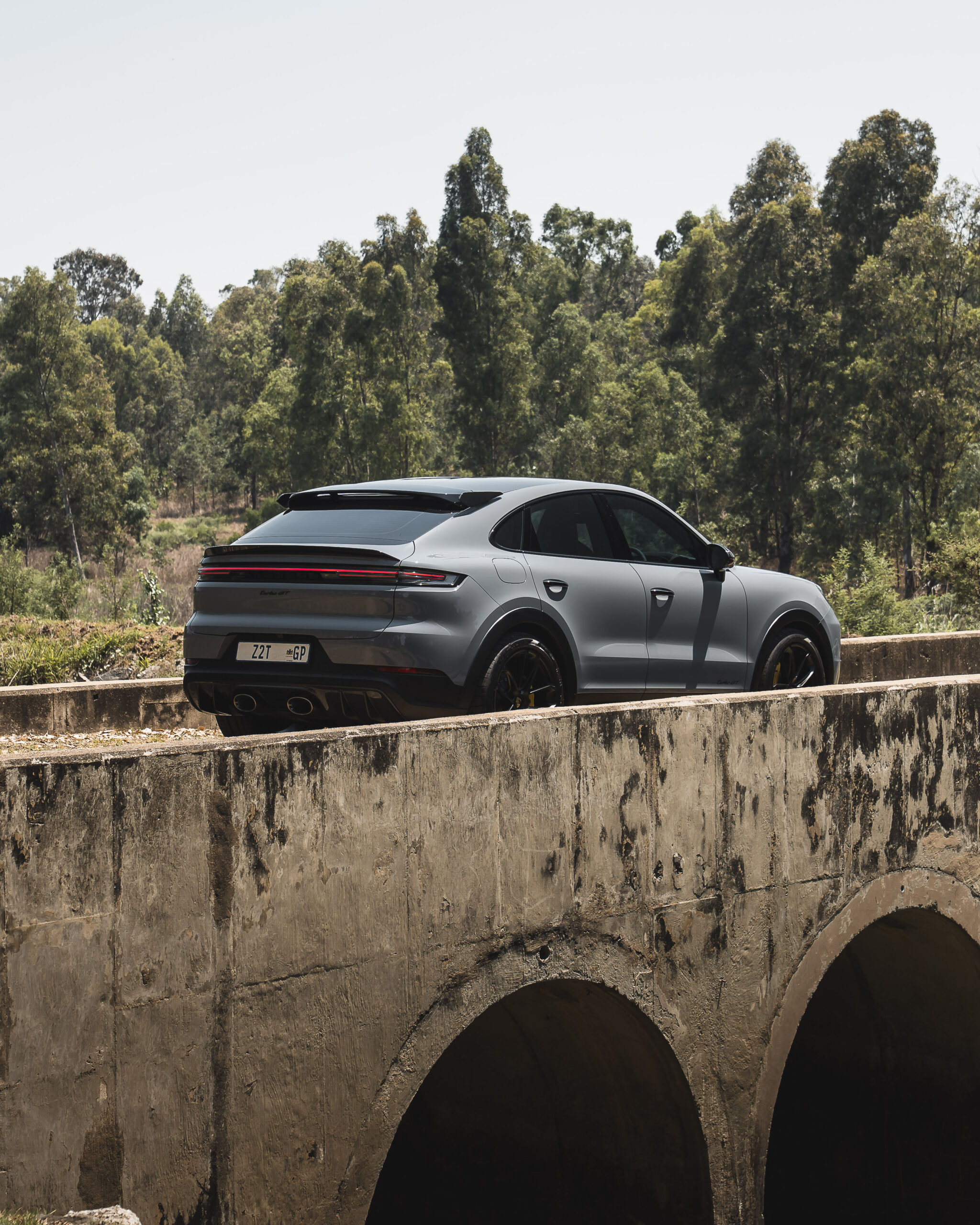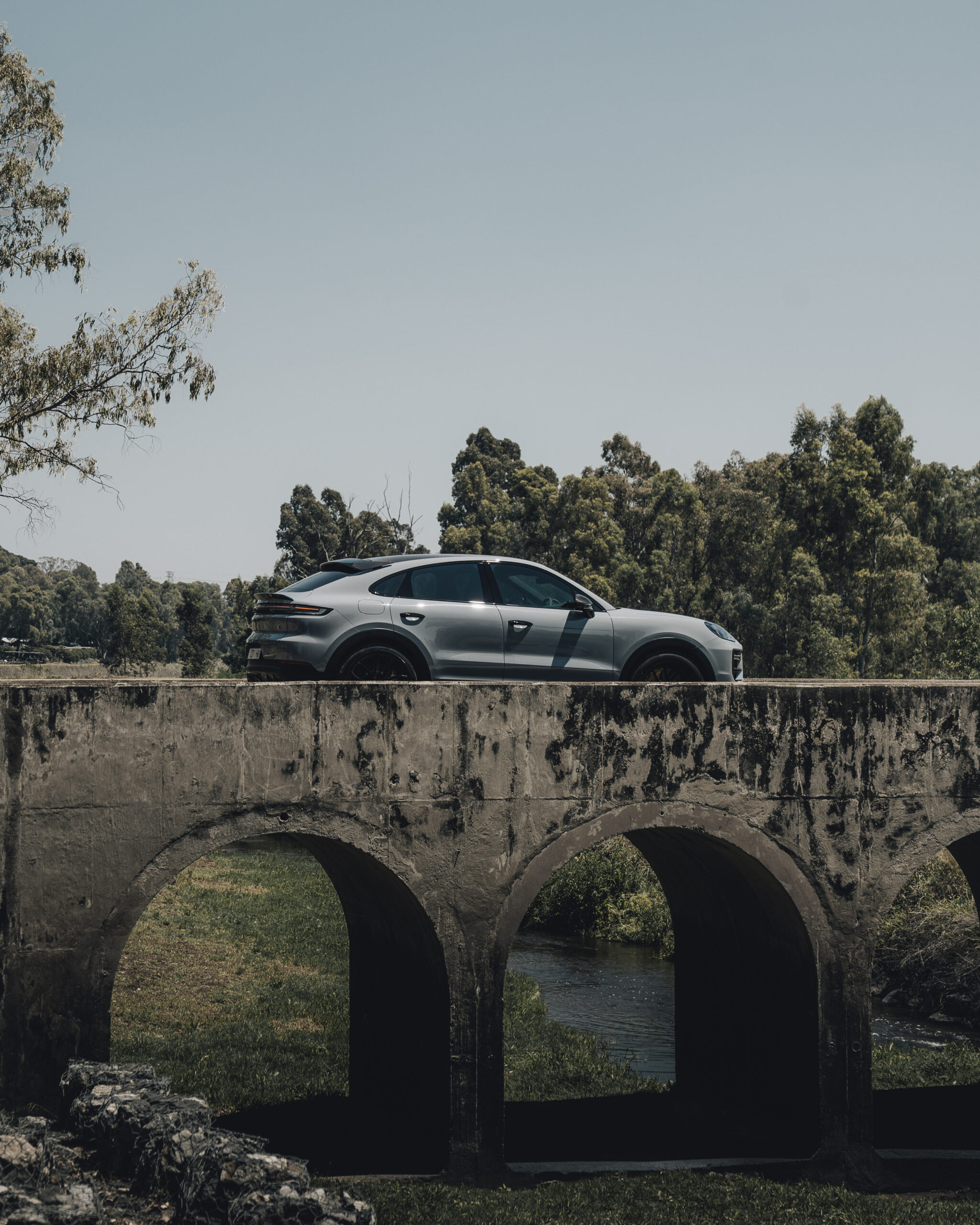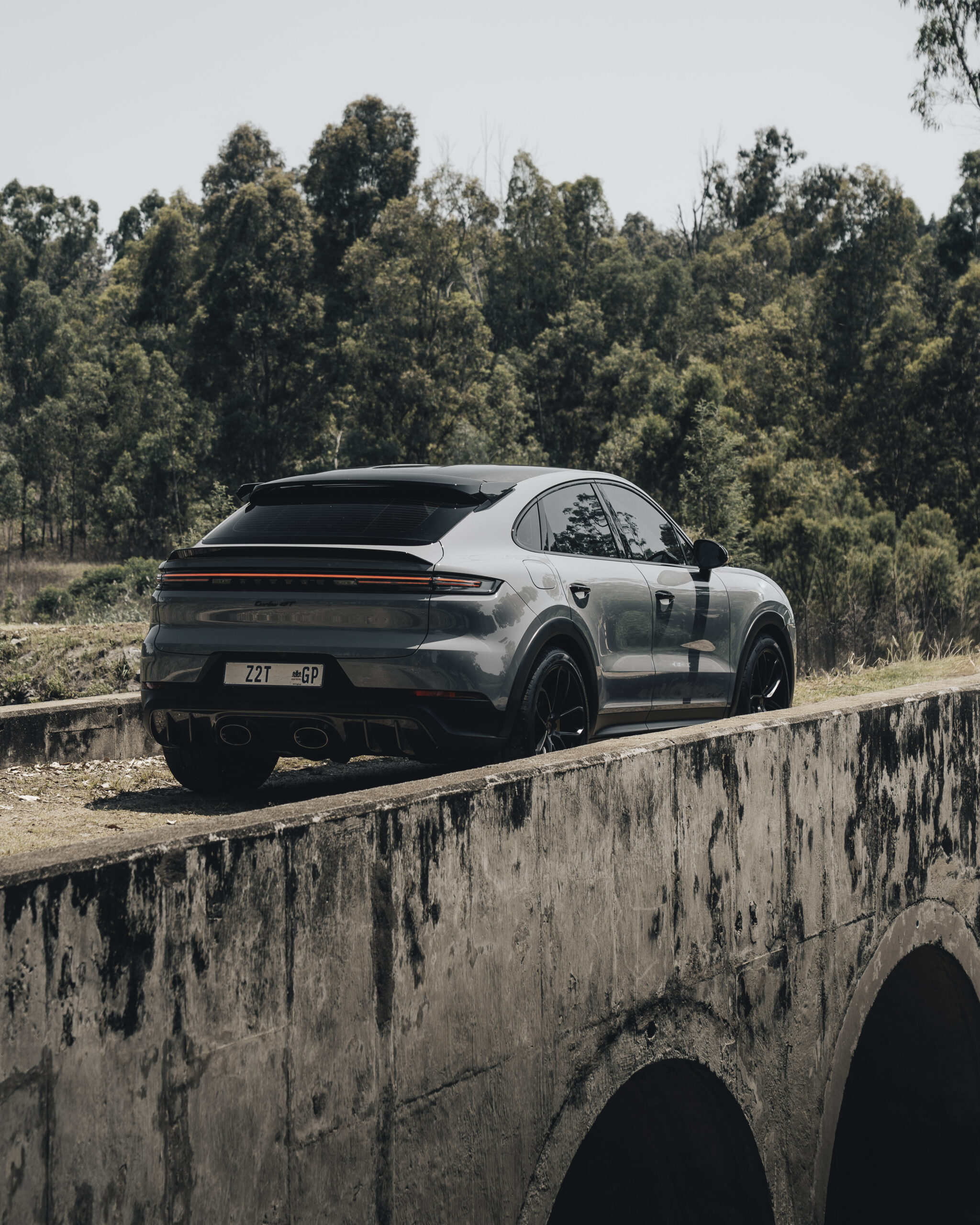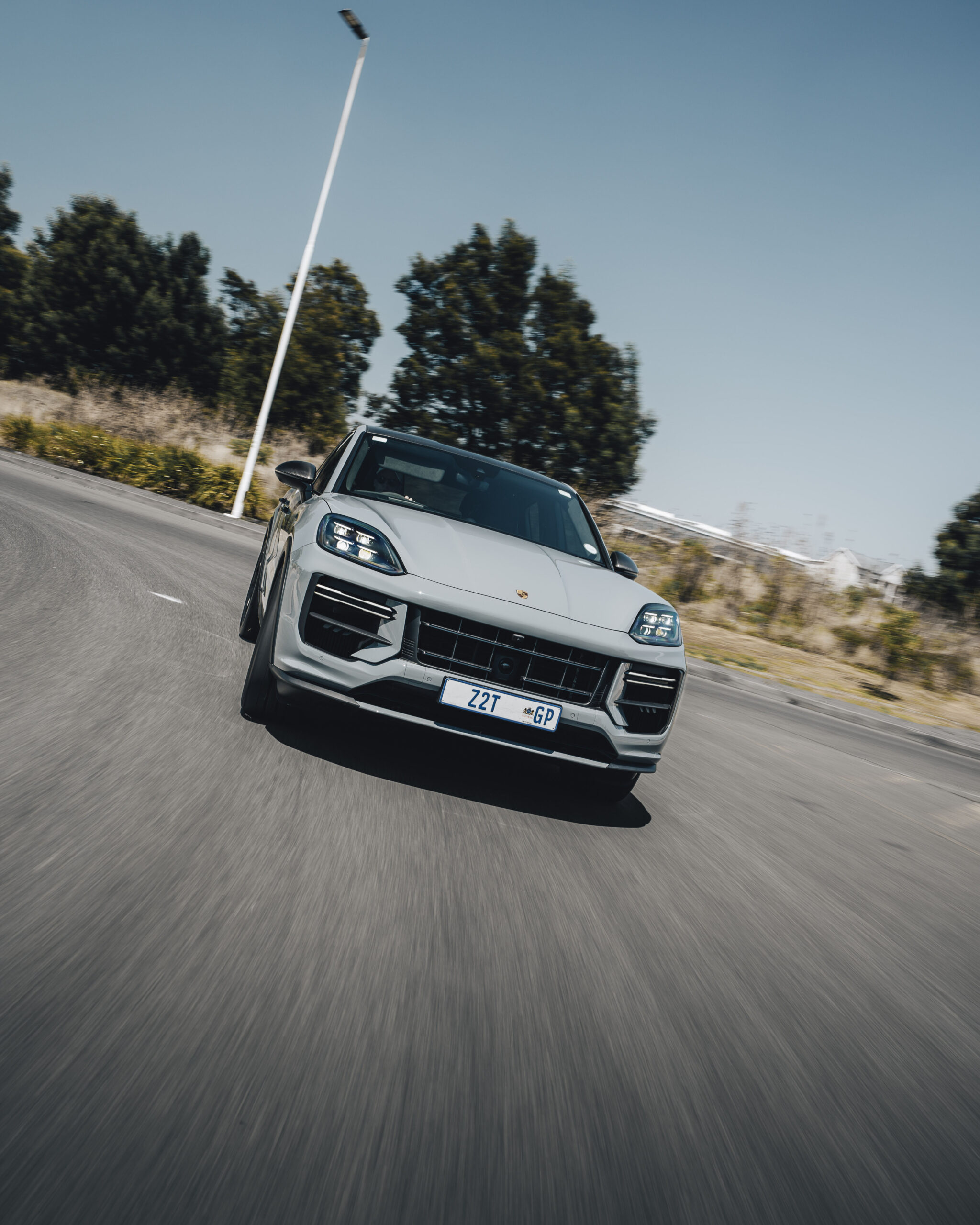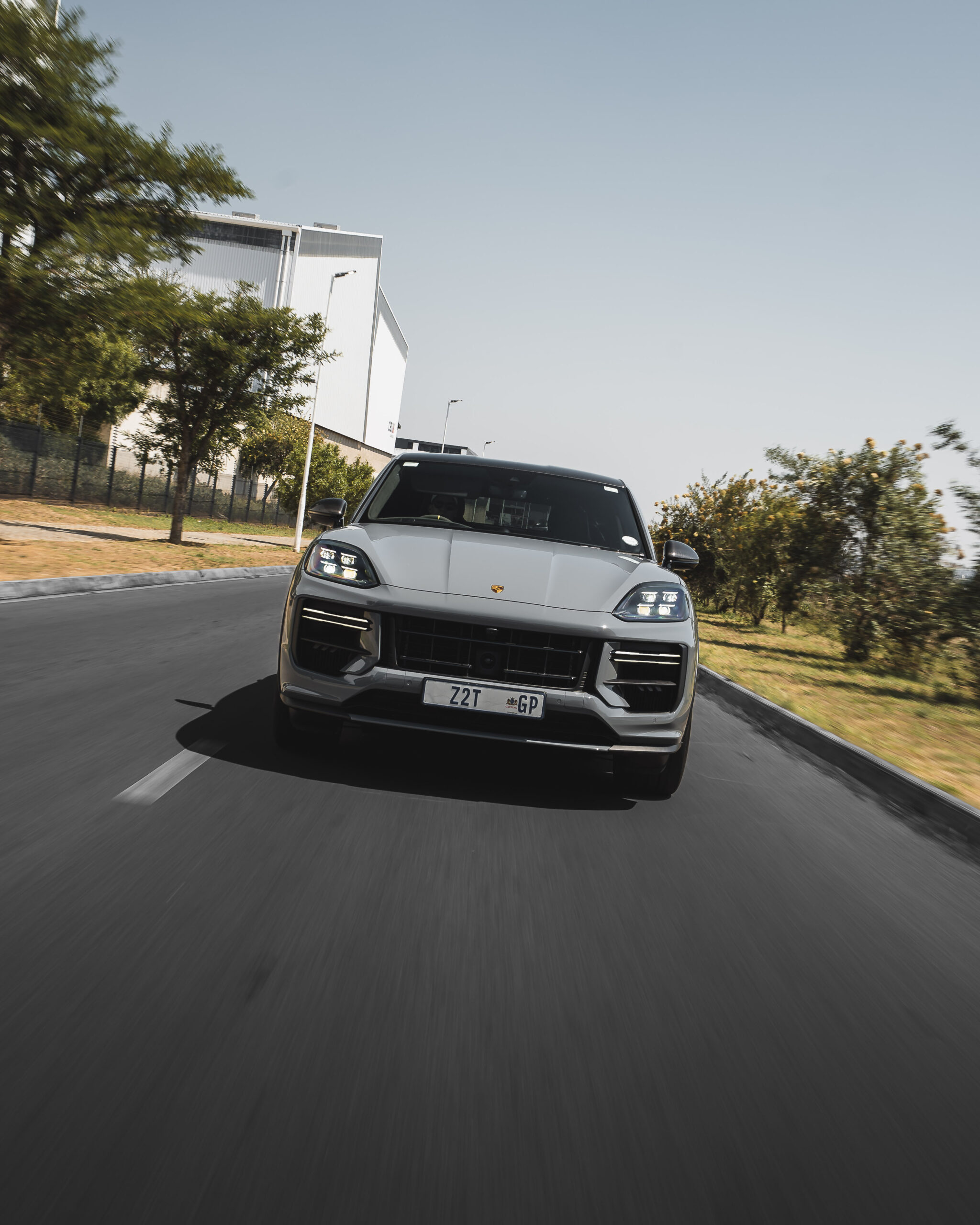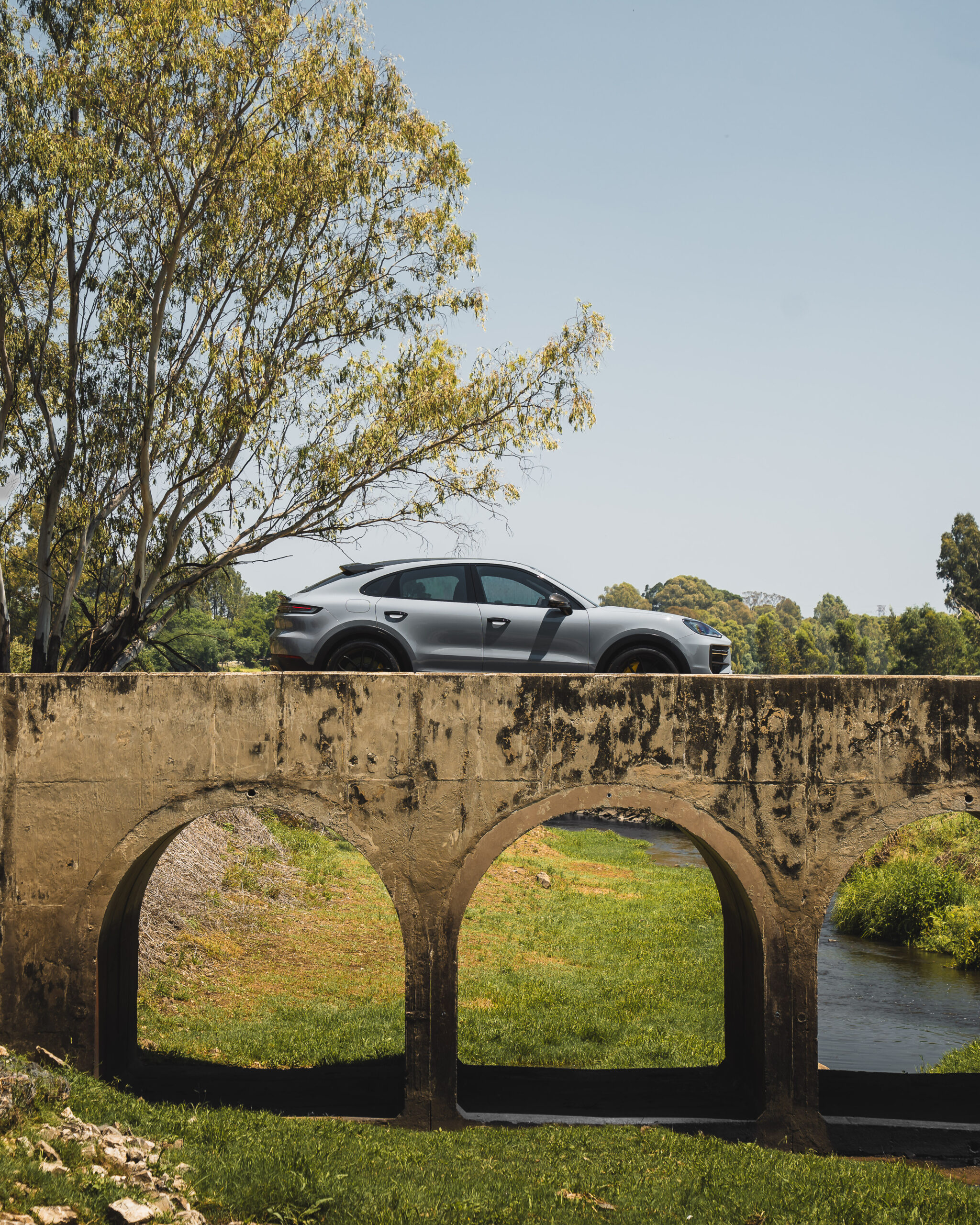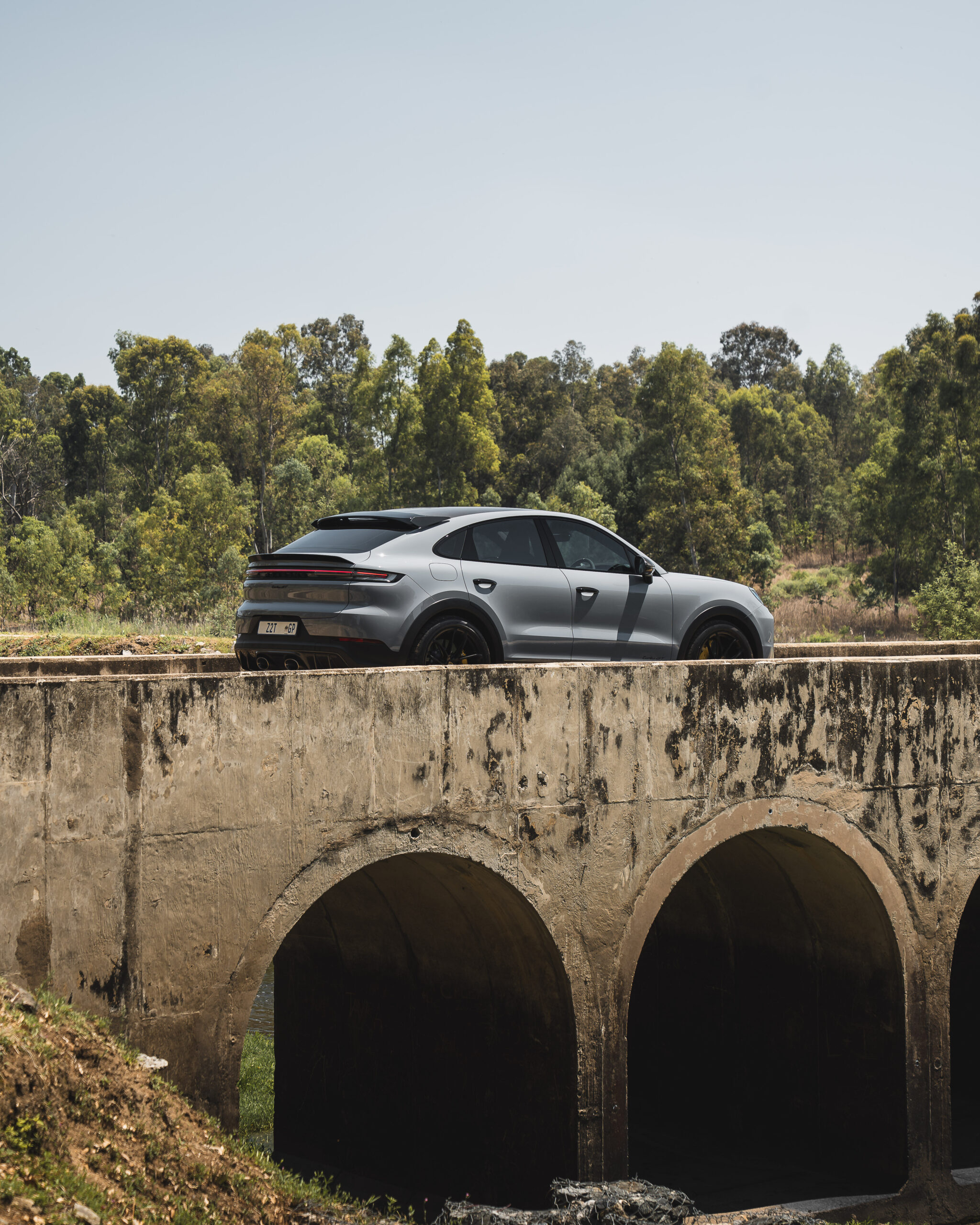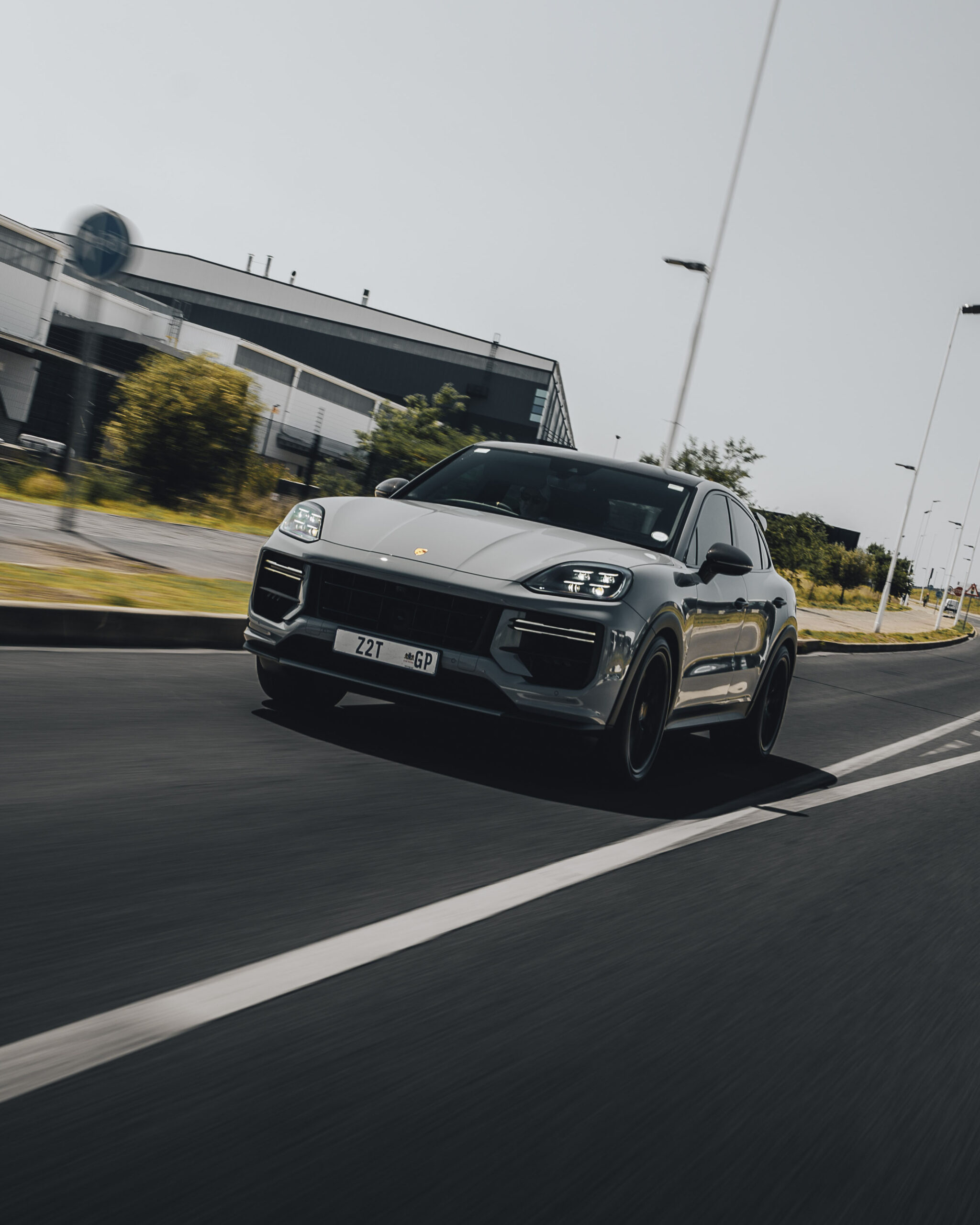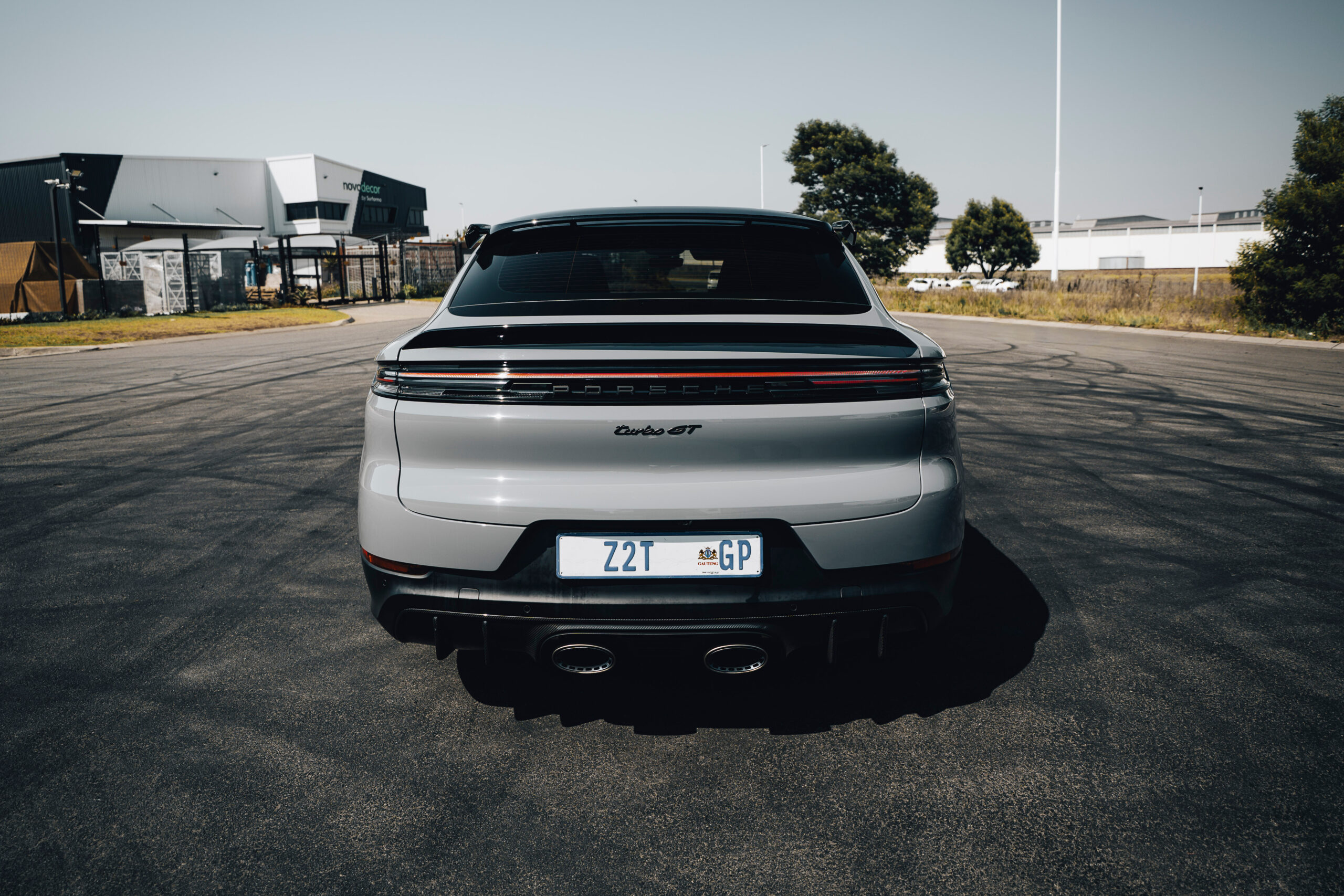
The updated Porsche Cayenne Turbo GT is a total beast on the road but the best comes when you lift off. Brake for a corner with the exhaust valves open and the eight-speed auto punctuates each downshift with a bark from the two pipes beneath the rear bumper. There’s a moment to enjoy it, then the nose turns in and you’re reminded that this is a Porsche with four proper seats and a boot big enough for a family weekend. It takes a few corners for those facts to sit comfortably together.
The original Turbo GT made its case with a Nürburgring SUV lap record. The facelift adds 19 hp (14 kW), revises the chassis and gives the cabin an overhaul. It’s still Coupé-only and still powered by a V8 without any electrical assistance. South Africa is among the markets that still get it, which matters when so many of the cars it competes with now come with a charging cable.
A V8 with a bit of build-up
The 4.0-litre twin-turbo V8 makes 650 hp (485 kW) and 850 Nm, with peak torque arriving at 2,300 rpm. Porsche has beefed up the engine internals, including the pistons and connecting rods, and sends the output to all four wheels through an eight-speed Tiptronic S. The factory claims 3.3 seconds to 100 km/h and we marginally improved on that with a 3.28s Dragy sprint time.
There’s a brief pause if you ask for everything from low revs. Then the turbos come in and the Cayenne covers ground at a rate that makes an overtaking gap look generous and to be fair, the build-up is part of the fun. So is the gearbox, which goes about its business quietly in town and has a knack for holding the right gear when the road gets interesting. The paddles are worth using for the pleasure of timing your own downshifts.
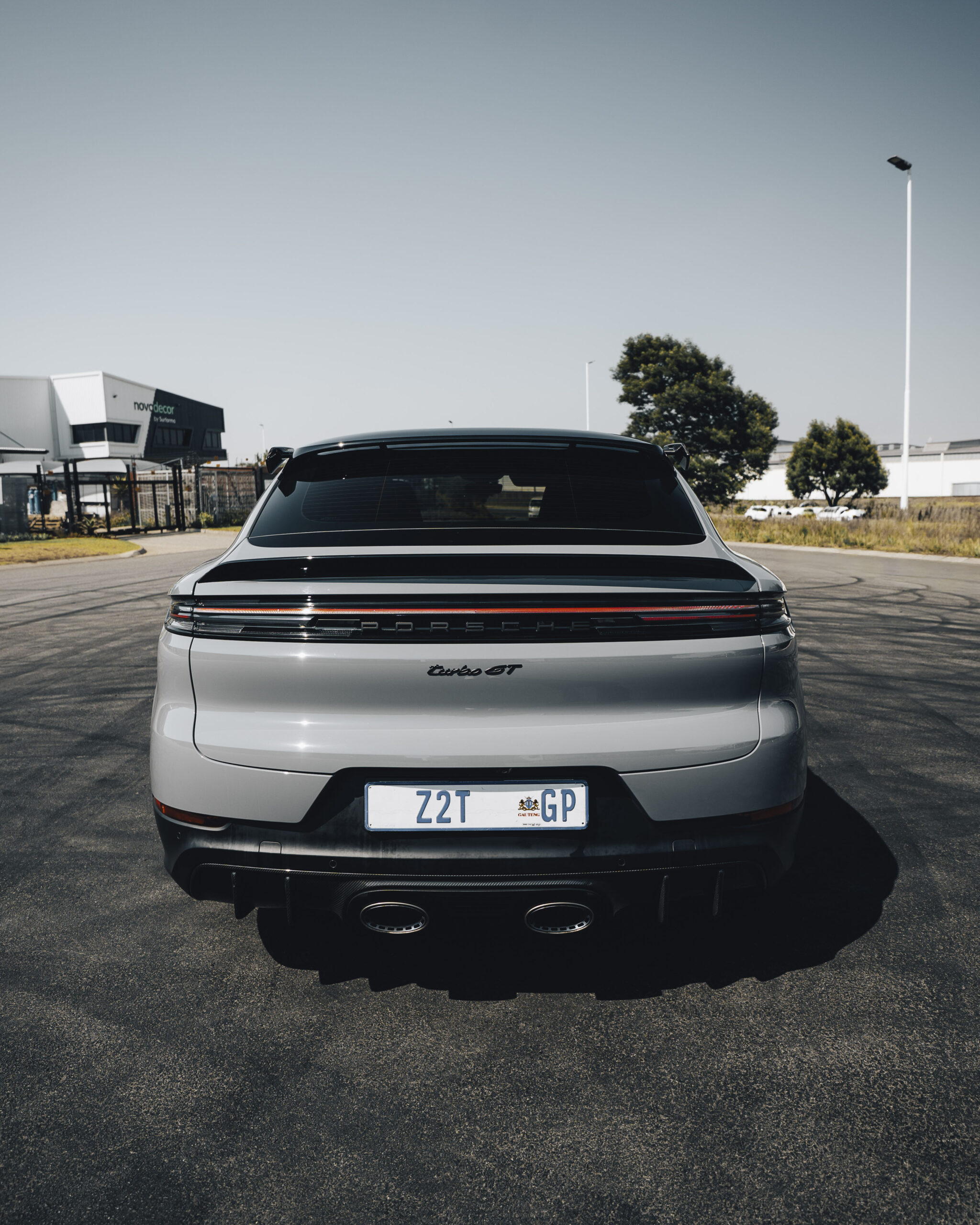
The titanium sports exhaust is exclusive to the Turbo GT. At idle it’s a low, slightly restless rumble. With the valves open, it gives the V8 a hard edge under load and makes every downshift an event. The trade-off for enjoying that soundtrack is a healthy appetite for fuel. Porsche quotes 11.9 L/100 km, but use the performance regularly and a figure closer to 16 L/100 km is a more realistic expectation.
Where the Turbo GT earns its badge
The first steering input into a tight bend tells you more about the Turbo GT than any launch-control run. The front end goes where you point it, the body settles quickly and the steering lets you place a nearly two-metre-wide SUV with surprising accuracy. String a few bends together and you start looking further up the road, confident the car will take the line you picked without much correction.
There’s a lot going on underneath. Porsche widened the front track and added more front camber, while the GT-specific air suspension lowers the car and gets its own damper calibration. Rear-axle steering helps it rotate, active roll control keeps it level and torque vectoring helps it put the power down on exit. The standard carbon-ceramic brakes, with ten-piston callipers up front, give you a firm pedal and the confidence to scrub off speed in one clean application.
You can still feel the weight if you carry too much speed into a tight corner. Ask the front tyres to do everything at once and the nose starts to push wide. Brake a touch earlier, let the car turn and feed the power in as the road opens up. That’s where the chassis makes sense. It rewards the same inputs you’d use in a much smaller Porsche, and that’s what makes it more satisfying than its straight-line numbers suggest.
What it’s like the rest of the time
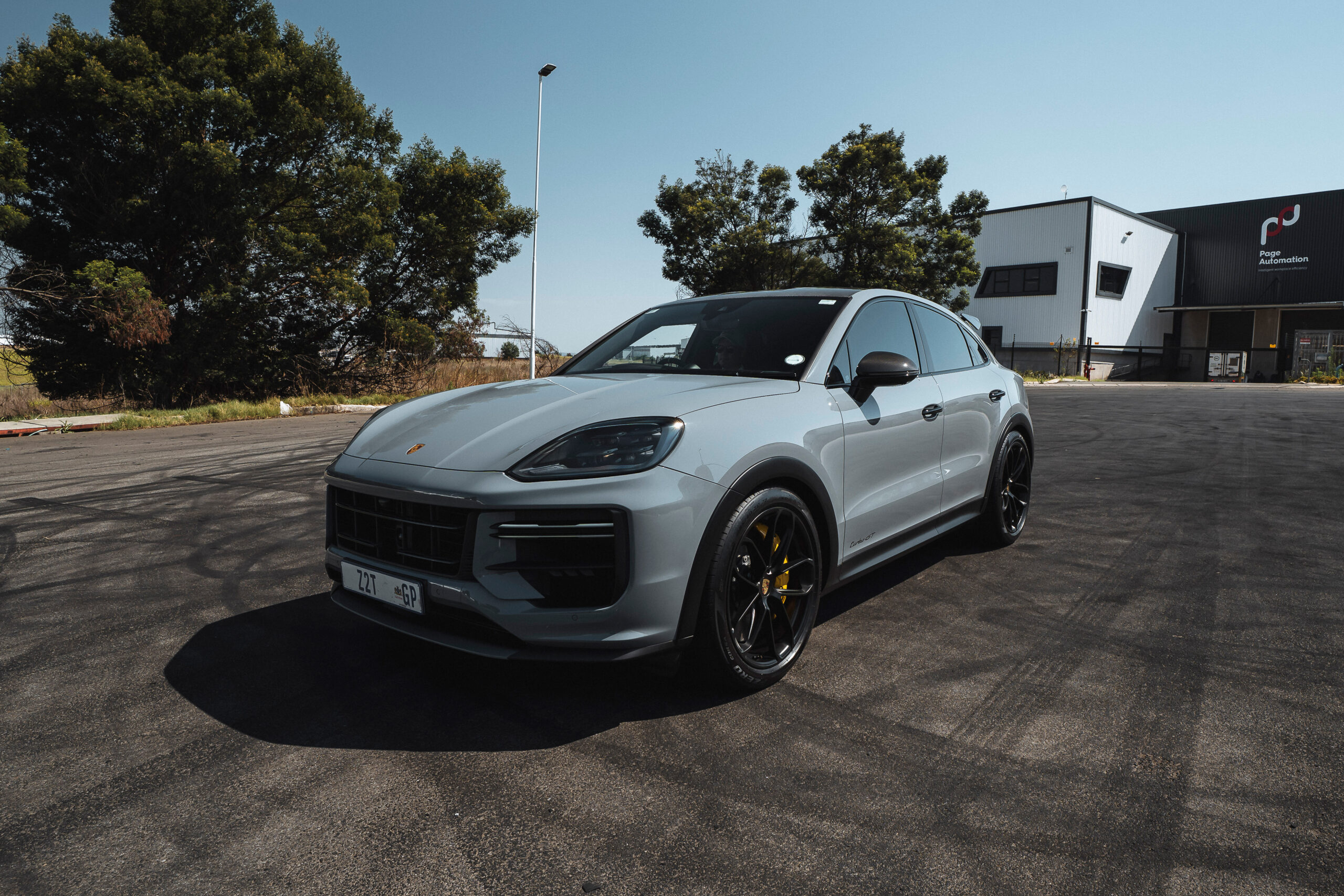
For a car on 22-inch wheels with 315-section rear tyres, the Turbo GT has remarkably good manners. The ride has a firm edge over sharp bumps, but the air suspension takes the sting out of scruffy tar. On the motorway the exhaust drops into the background and the V8 barely has to work. There’s enough give in the chassis that you could live with it every day, even if the width takes some getting used to in a tight car park.
It helps that Porsche kept the exterior relatively restrained. The wider front intakes and black trim give it some menace. Look closer and you’ll find a carbon-fibre roof that saves weight high up, carbon-fibre spoiler endplates and those two central exhaust outlets. Park it next to an Urus and the Cayenne looks almost discreet.
A new dashboard and four proper seats
The facelift’s curved 12.6-inch instrument display takes the place of the old cluster and its analogue rev counter. The five-dial layout is a good nod to the old design, though the real needle had more charm. The 12.3-inch central touchscreen handles navigation and phone mirroring, and Porsche has kept physical controls for temperature and fan speed, plus a proper volume knob. Those are the things you reach for without looking, so it’s good to still have them where you’d expect. The optional passenger screen does impress some occupants when they climb in but it is an easy box to leave unticked.
The parts of the cabin that give it a GT feel are the ones you touch. The Race-Tex steering wheel has a yellow marker at twelve o’clock and the sports seats hold you firmly without making a long drive feel like penance. There are two individual seats in the rear. Adults can get comfortable back there, although taller passengers may notice the sloping roof. With 576 litres of luggage space behind them, there’s enough room to pack for four. If you regularly need a fifth seat, you’ll have to look elsewhere in the Cayenne range.
Price and verdict
The Porsche Cayenne Turbo GT commands at least R4,660,000 from your wallet and that figure includes a 2-year/unlimited km warranty and a 5-year/100 000 km maintenance plan.
This variant asks you to make a few choices that an ordinary Cayenne doesn’t. You get four seats, a firmer ride and a V8 that can make a fuel stop come around rather quickly. The options list can also do some damage to the final price, especially if you start ticking boxes for things like the upgraded audio. The important hardware is already standard, from the ceramic brakes to the rear-axle steering and that titanium exhaust.
The remarkable thing about the Turbo GT is how much of its appeal survives once you’ve got over the performance. The way it responds to the first few degrees of steering, the confidence in the brake pedal and the sound of a downshift are there to enjoy on an ordinary drive. When the road straightens out, it settles into being a comfortable four-seater with room for everyone’s bags. The next time the road forks, you’ll probably take the longer way home.