
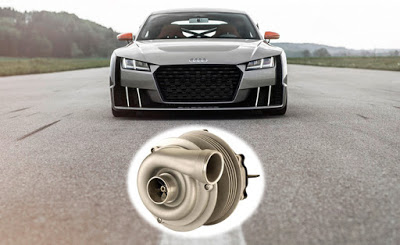
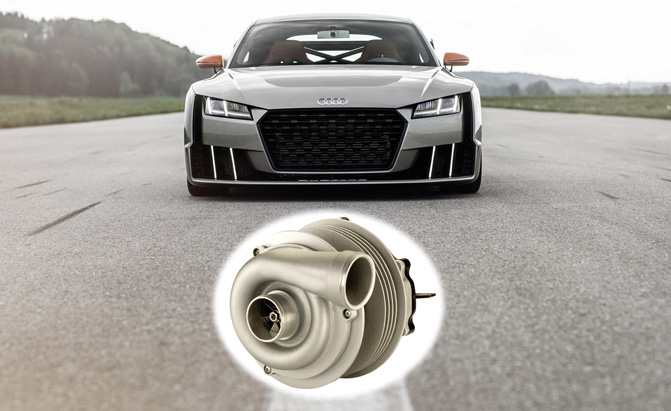
 Turbocharging is a technique whereby additional outside air is forced into an engine by a spinning turbine fan to increase its horsepower. It’s a technique that has been used for many decades. Traditionally, turbochargers were only installed on “performance cars” but that’s different today. Today we are seeing smaller engines being put into cars in order to reduce vehicle fuel consumption and adding turbochargers. By using a turbocharger, manufacturers can get “big engine performance” from a much smaller one. You will find them in many cars being produced today.
Basic turbochargers
Before we talk about electric turbos, with help from the car experts at Holt in Arlington, TX, a Dodge, Chrysler, Jeep, Ram dealer, we will explain how a turbocharger works. Standard turbochargers are like miniature fans driven by exhaust gases. They use the exhaust gases leaving an engine to power a small turbine that drives air into the cylinders. Basically, it’s sort of like a small fan with blades at either end; one end is driven by exhaust gasses and the other end “blows” air under pressure into the engine. The result is more power and higher efficiency.
Just one problem, exhaust-driven turbochargers have something called “turbo-lag.” Turbo-lag is a delay in response that occurs when power is needed. Basically, when you punch the throttle, it takes a few seconds for the turbo to spin up to speed and start working. It’s a definite lag in response. Unfortunately, turbo-lag has been plaguing turbocharged cars for years and is a common complaint. Manufacturers have done things like build twin-scroll turbochargers as a means to combat this lag, but it’s still not perfect. Bottom line, it’s hard to make a turbocharged engine deliver the immediate response of a naturally aspirated engine.
Electric Turbos
So, instead of driving the turbo blades with exhaust gases, why not drive it with an electric motor? An electric motor can respond almost instantly (within 250 milliseconds) so there essentially isn’t any turbo lag. An engine with an electric turbo on it essentially behaves like a larger, naturally aspirated engine. The problem is that that this technology is expensive. The electric motor to drive the turbo will have to be powerful, very rugged and likely need more than 12 volts to power it. The vehicle will likely need dedicated battery system just to power it.
Who is doing it
Most of the major automobile manufacturers are looking into electric turbo technology but few are broadcasting much information about their efforts yet. Except for Audi. Audi is close to putting one on the market. Their new SQ7 TDI sedan is slated to have an electric turbocharger installed. To power it it, a special 48-volt electrical sub-system will be located in the trunk. Audi says the results are impressive: with a 429-hp 4.0L V-8 installed, the SQ7 TDI sedan can hit 62 MPH in 3.6 seconds.
The future
As with all technology, if the concept works well, it should proliferate rapidly. It is unlikely to be seen on any economy cars anytime soon due to component costs but we should see it becoming common on larger, luxury sedans soon.