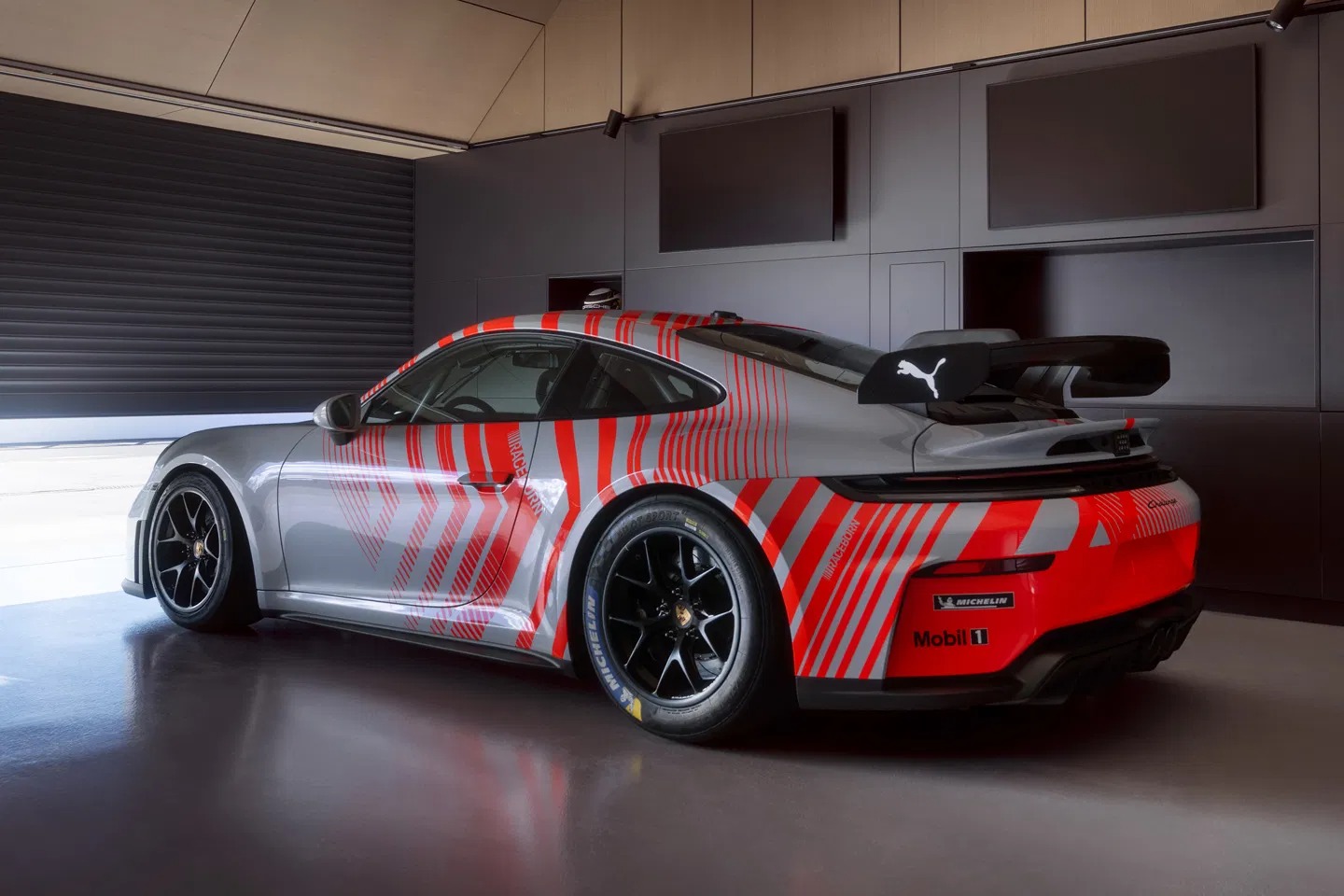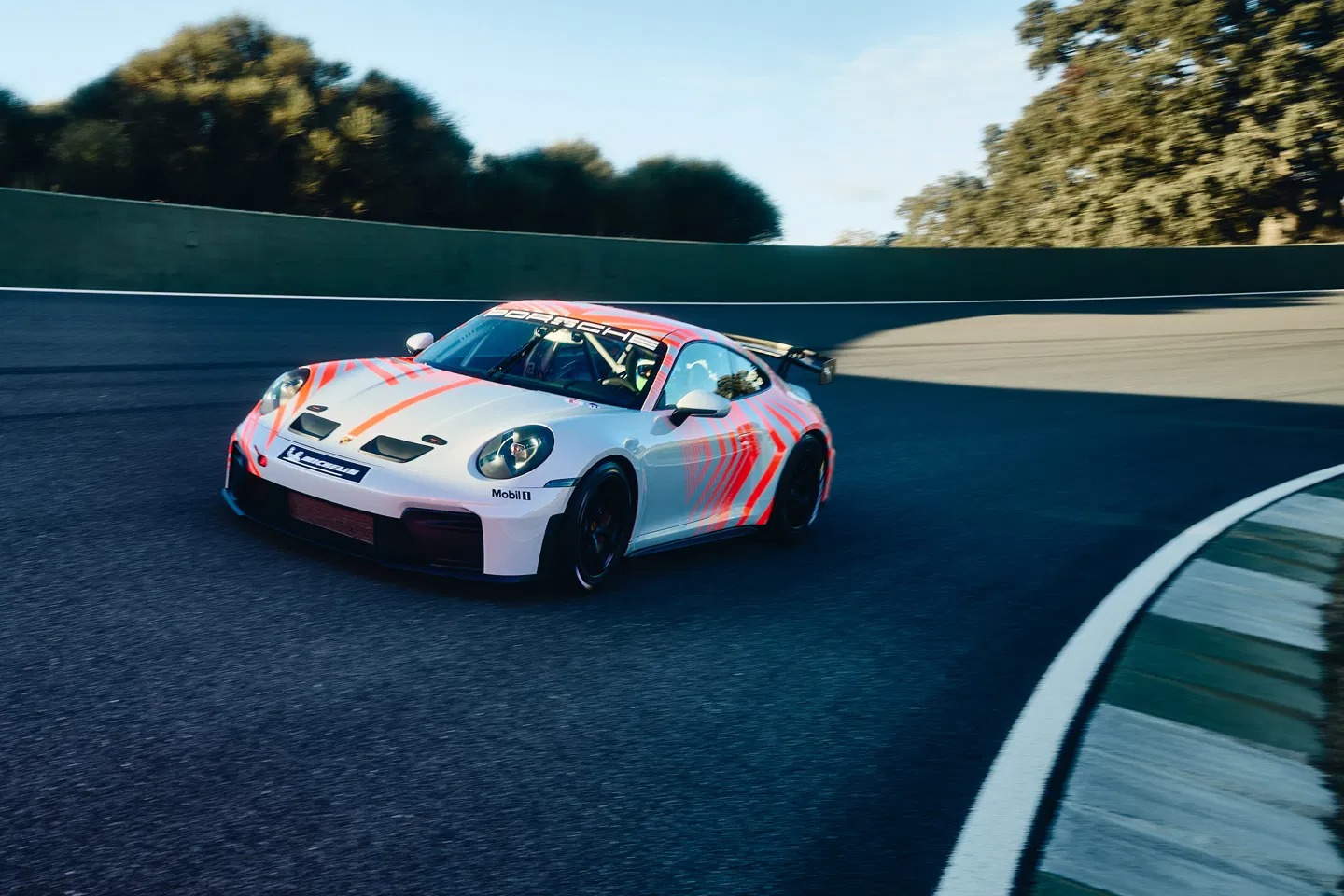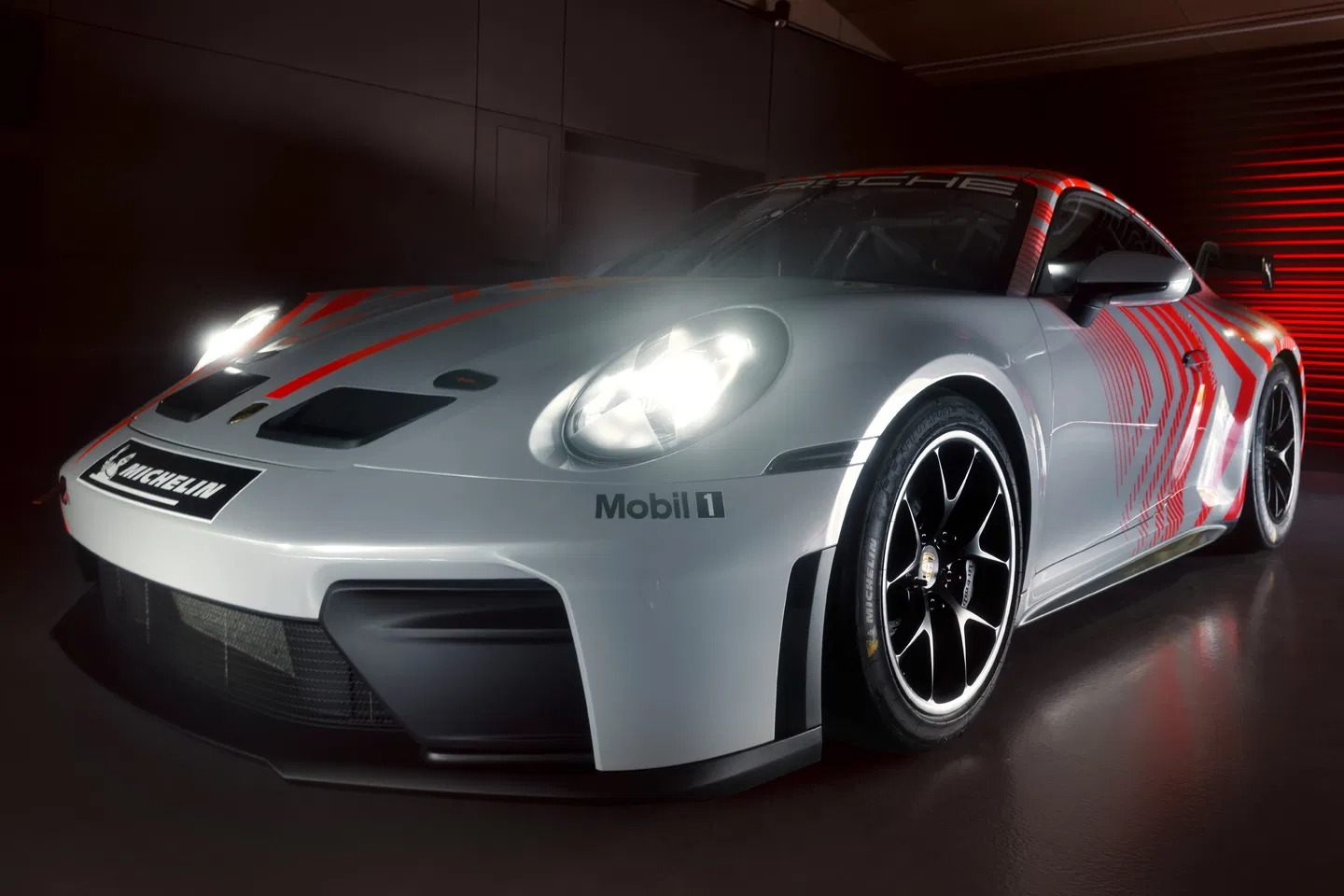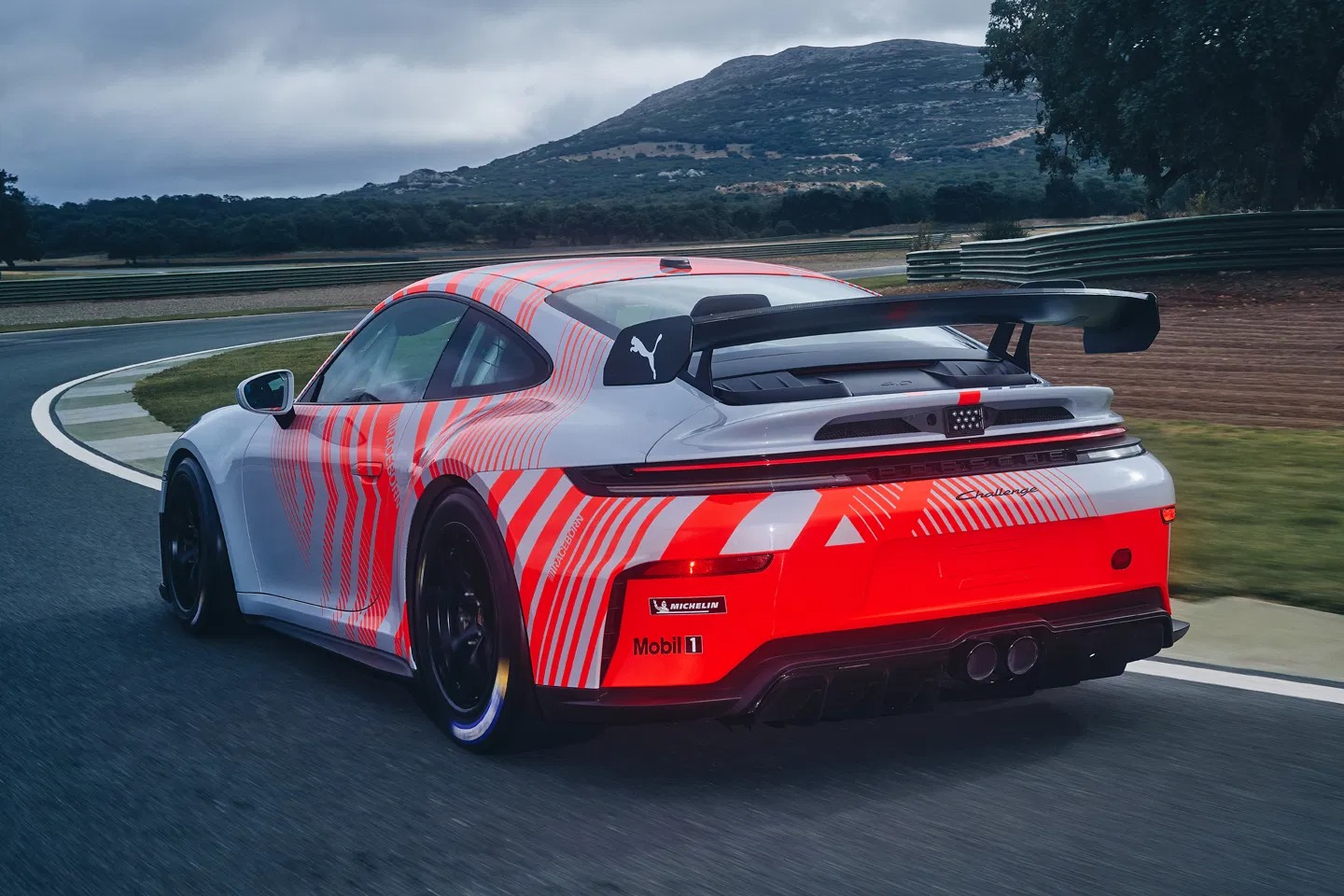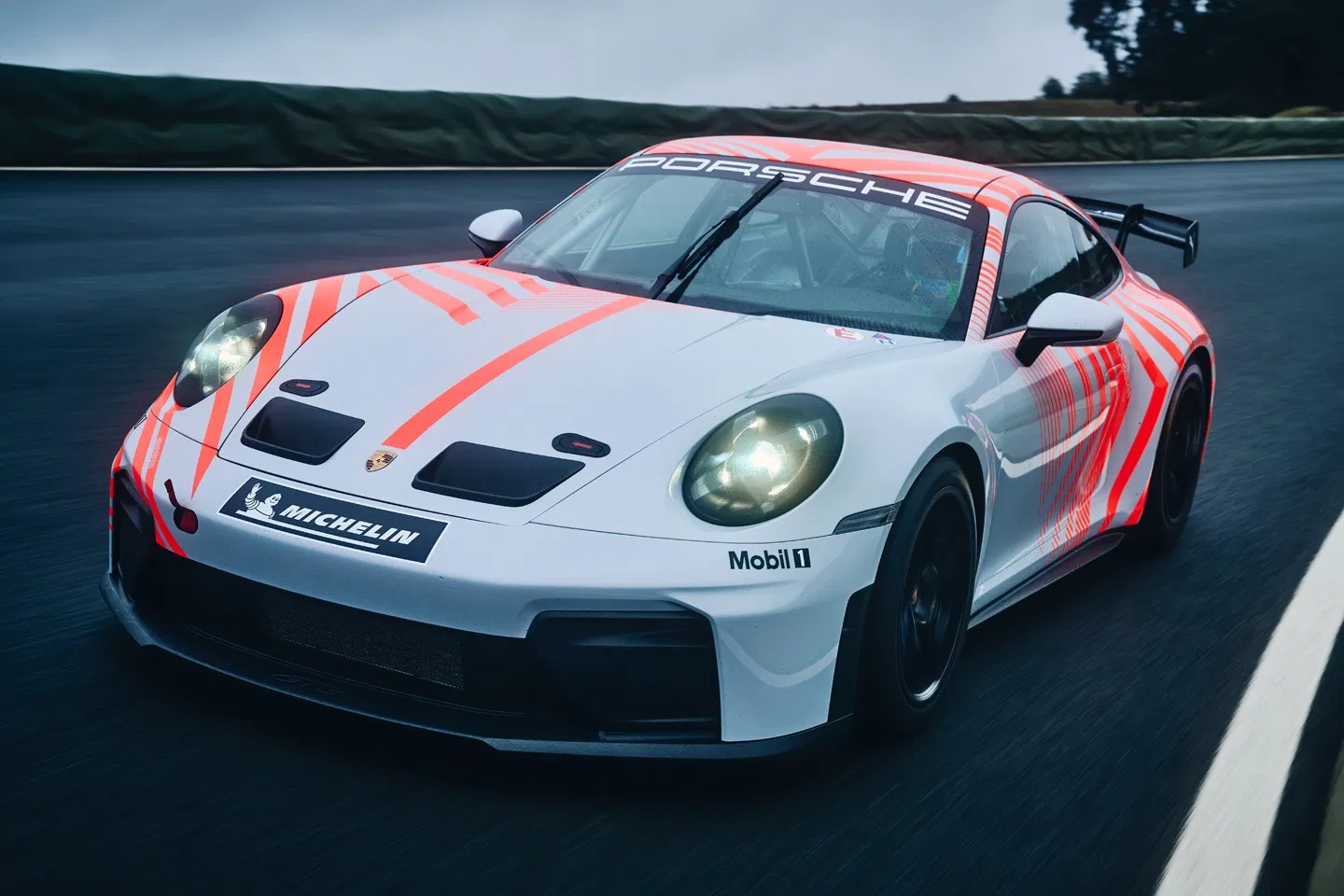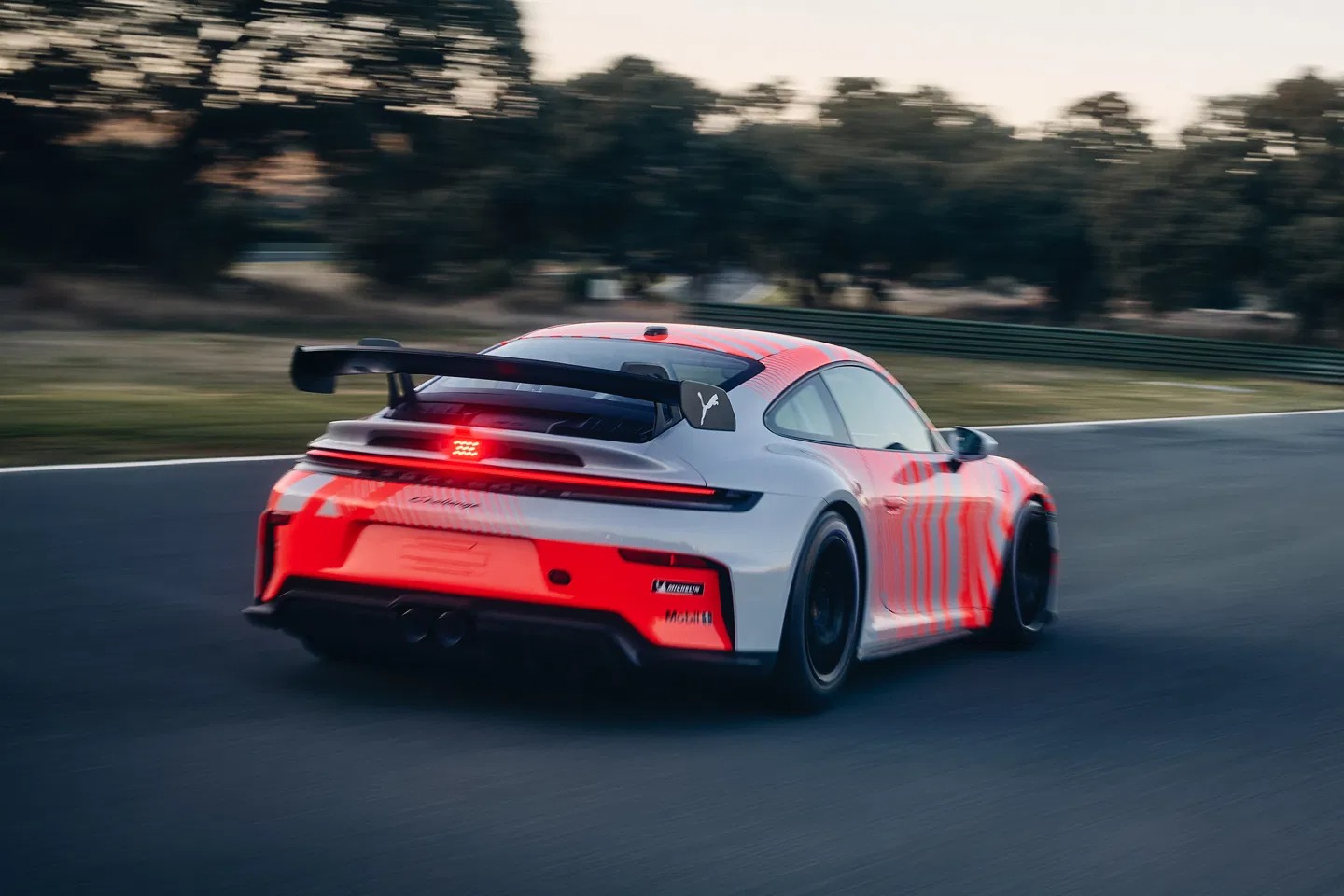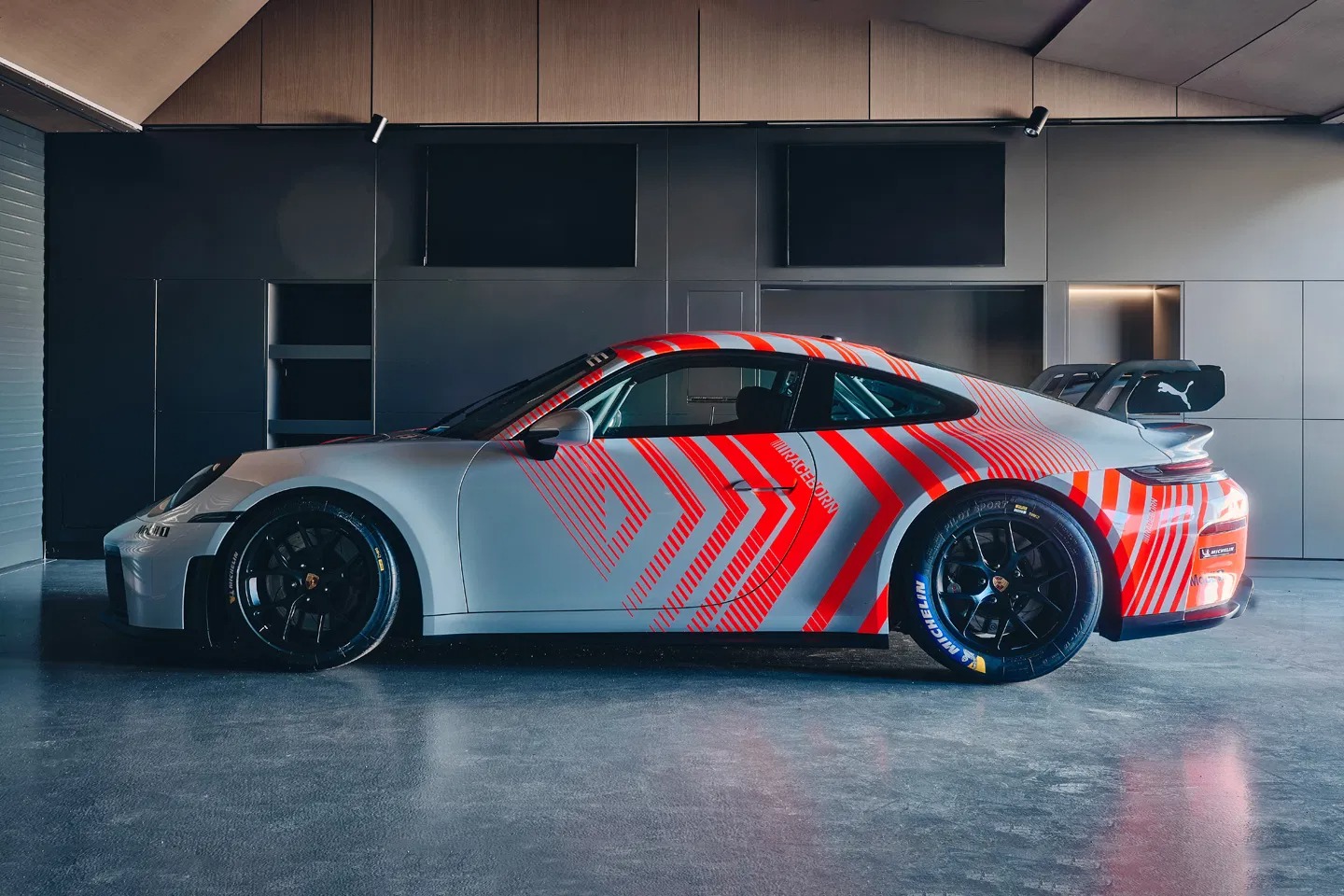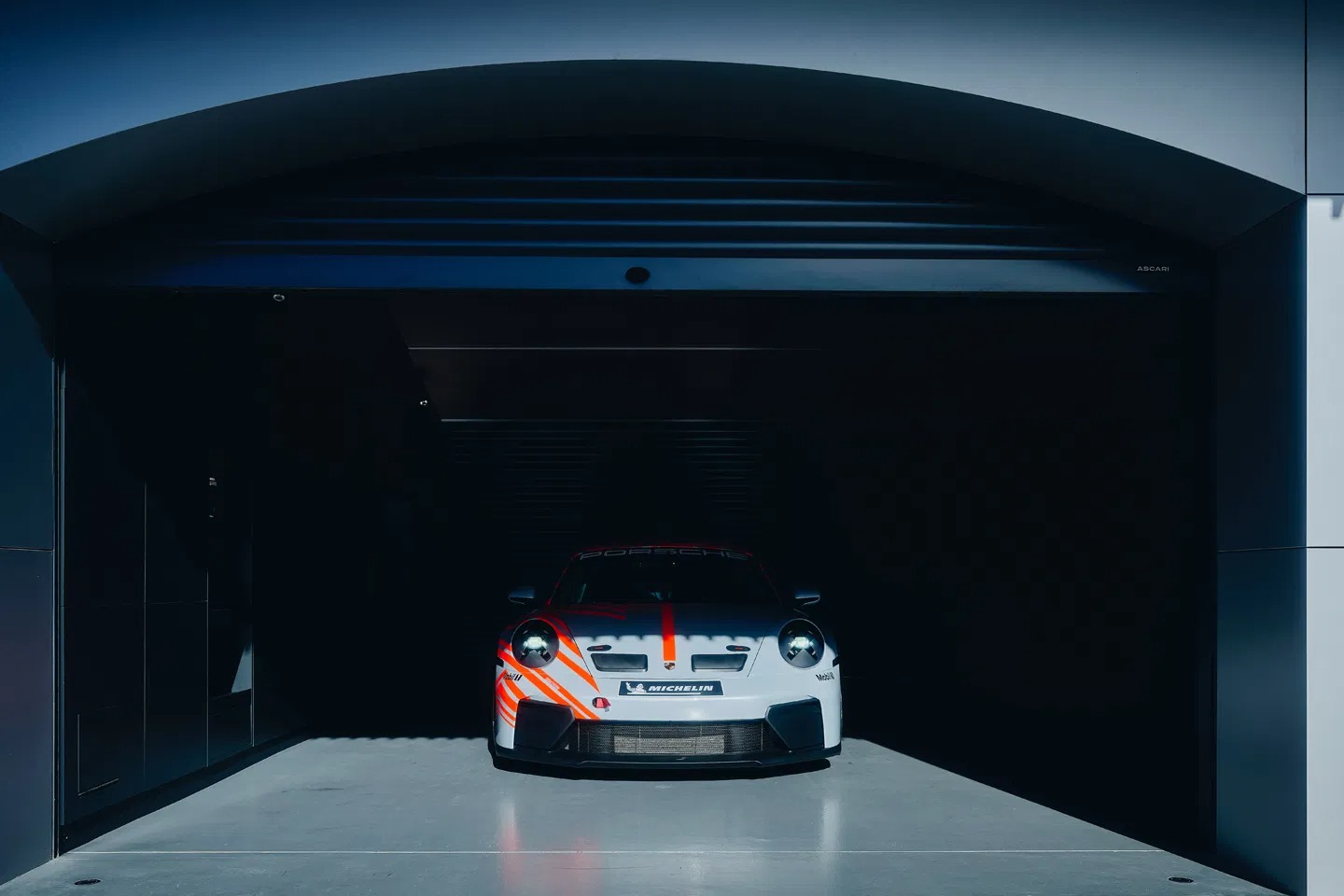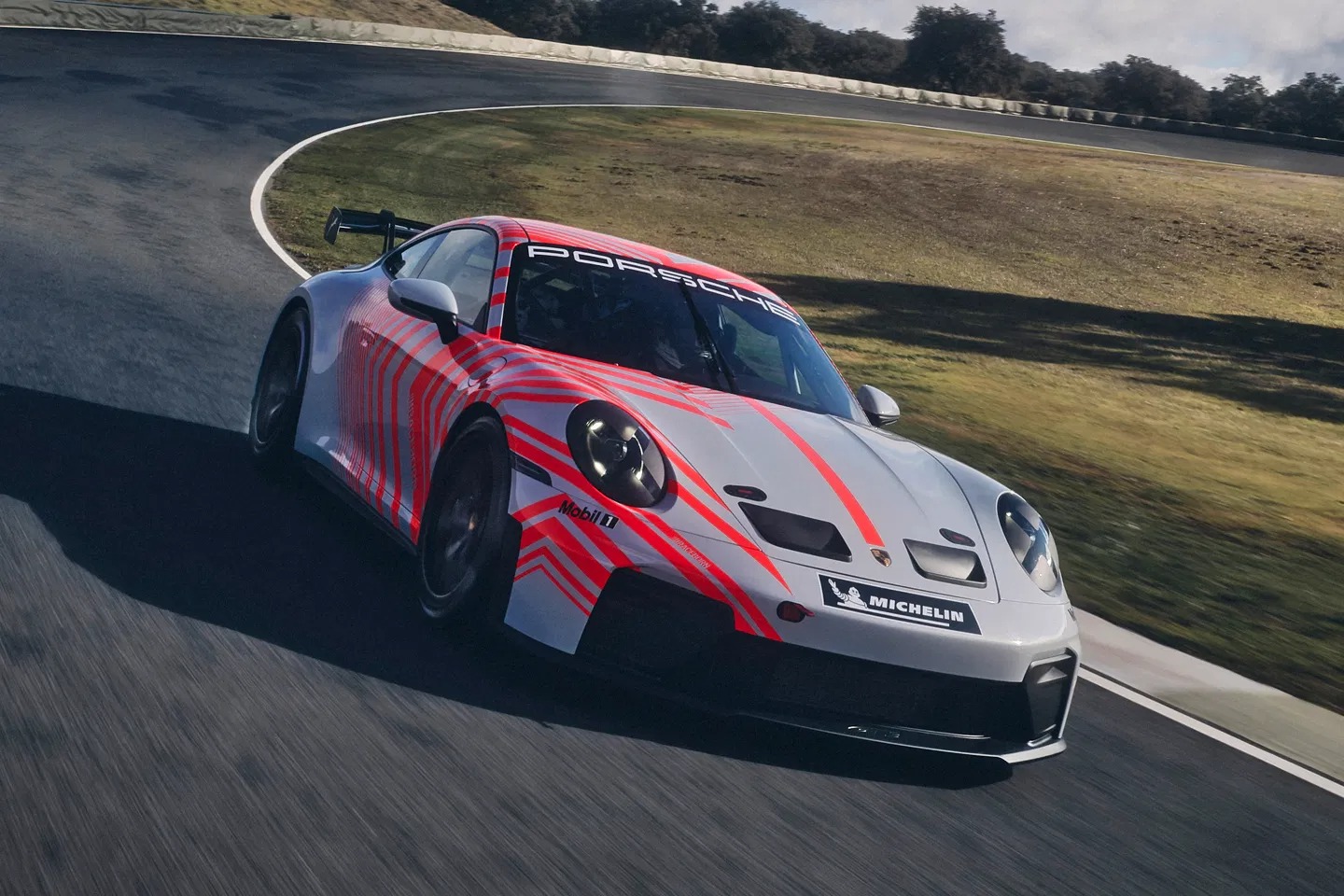
The Porsche 718 Cayman GT4 Clubsport is making way for something rather more familiar. From 2027, Porsche’s entry point into customer racing will be the new 911 Challenge, a competition car heavily influenced by the road-going 911 GT3.
Its arrival also marks another consequence of 718 Cayman production coming to an end. For drivers looking to enter Porsche’s one-make racing ladder, the starting point will now be a 911.
Porsche 911 Challenge Keeps Plenty From The GT3
Rather than developing an entirely bespoke machine, Porsche has deliberately retained a significant amount of production-car hardware. That should help keep costs under control while making the transition from road car to racing car less intimidating.
Power comes from a 4.0-litre naturally aspirated flat-six producing 508 hp (379 kW). It is paired with the familiar seven-speed PDK transmission.
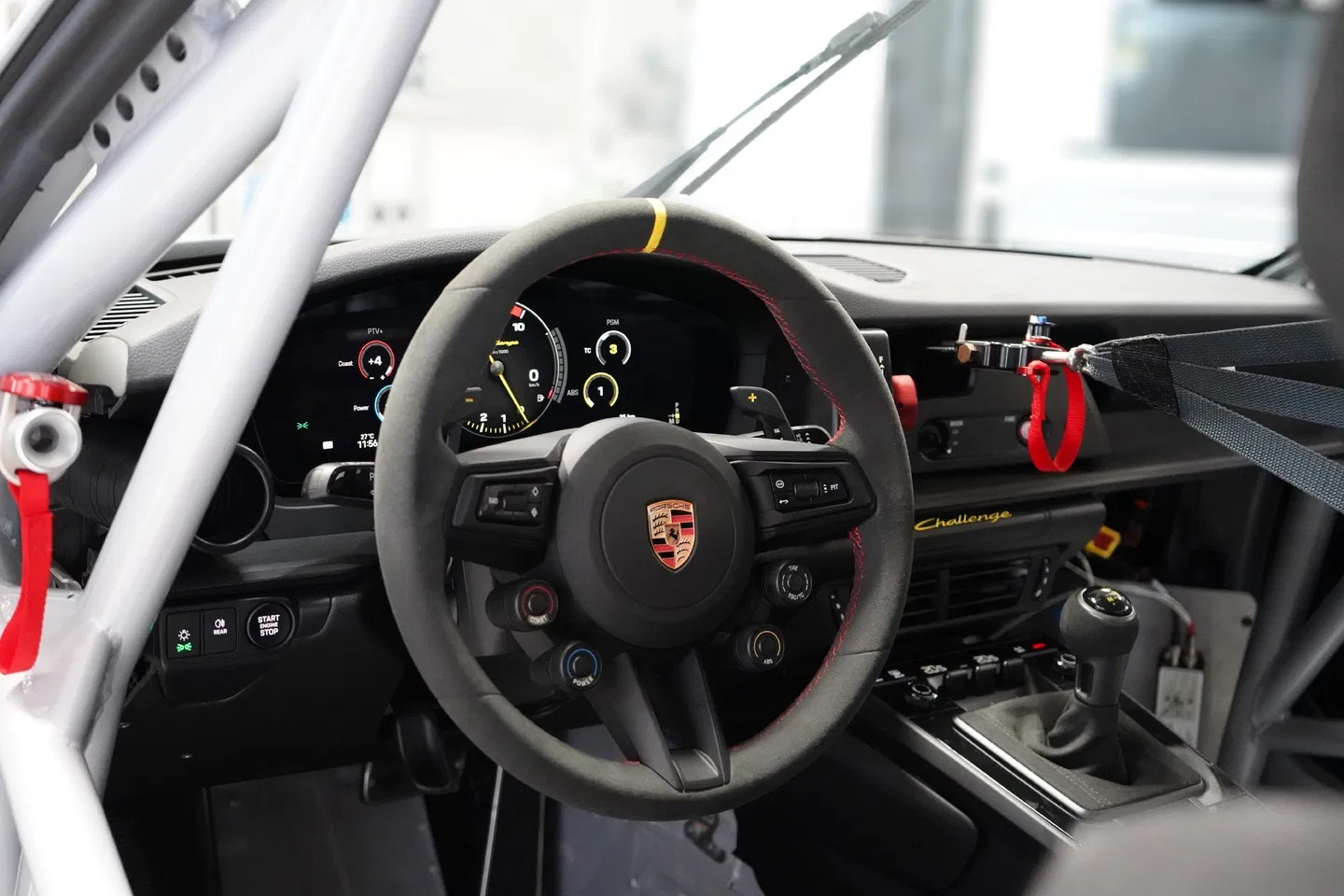
The Challenge also retains ABS, traction control and electronic stability control, along with Porsche Torque Vectoring Plus (PTV+), which can be adjusted through multiple stages.
According to Michael Dreiser, Head of Sales at Porsche Motorsport, the idea is to bring the experience of the road-legal GT3 into customer racing more directly. Drivers should therefore be able to adapt to the car without facing the steep learning curve normally associated with a purpose-built racer.
Proper Race Car Hardware Where It Matters
While the mechanical connection to the GT3 is obvious, there is no mistaking the 911 Challenge for a lightly modified road car once you climb inside.
The cabin is stripped of unnecessary trim, carpeting and sound insulation, while a welded roll cage forms the backbone of the safety package. Drivers are held in place by an adjustable racing bucket seat and six-point harness.
Underneath, Porsche has fitted a three-stage adjustable anti-roll bar and motorsport-specific damper calibration. Braking is handled by new 380 mm steel discs at both ends, while five-hole 18-inch racing wheels are wrapped in slick tyres.
It is a combination that should make the Challenge considerably more focused than the standard GT3 despite sharing much of its DNA.
Flat-Six Revs To 9,000 RPM
One area where Porsche has made few compromises is the engine.
The naturally aspirated flat-six will spin all the way to 9,000 rpm, while the competition exhaust system does without the particulate filter required by the road car. That should ensure the 911 Challenge sounds every bit like a proper Porsche race car.
A 110-litre FT3 fuel tank is fitted for competition use, along with an integrated air-jack system to speed up work in the pits.
Porsche is equally clear about its intended purpose. The 911 Challenge has been developed exclusively for competition and carries no road approval.
There are still a few concessions to usability. The steering wheel is borrowed from the 911 GT3 RS, giving drivers access to additional controls without taking their hands off the wheel, while air conditioning can also be retained.
Porsche Expands Its 911 Customer Racing Line-Up
Porsche Motorsport vice president Thomas Laudenbach sees the new model as another extension of the relationship between the GT3 road cars and the company’s motorsport programme.
That connection has existed for decades, with development of Porsche’s GT models closely linked to lessons learned on track. The 911 Challenge takes the philosophy a step further by creating a relatively accessible route into racing using a platform customers already know.
For the Porsche Sprint Challenge GB in particular, it represents a significant change. The mid-engined Cayman has long provided the first rung of the ladder, but from 2027 that role belongs to the rear-engined 911.
The new Porsche 911 Challenge will become available to order from September 2026.